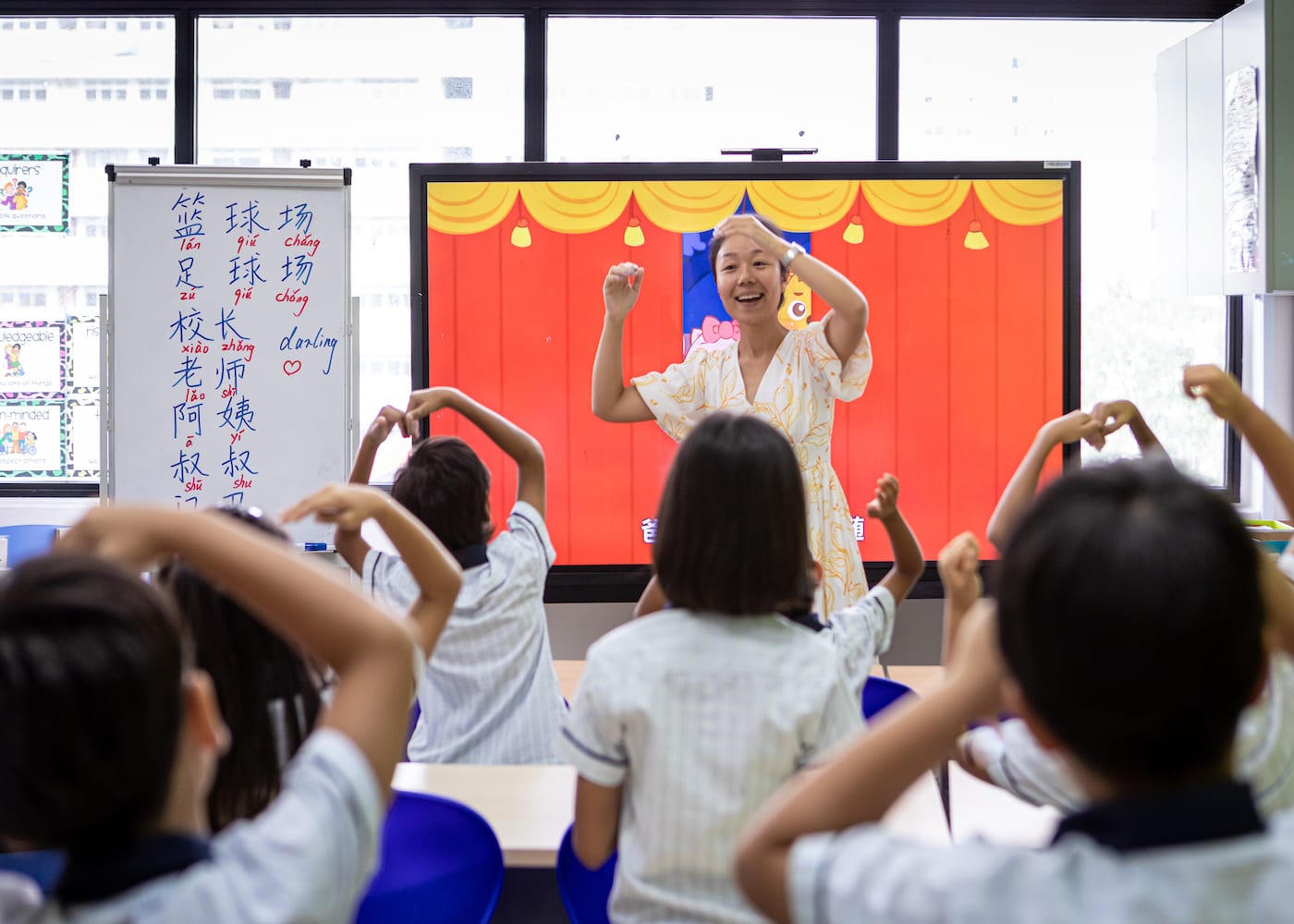
We spoke to several international schools in Singapore about how their bilingual programmes work, the role of parents, and why a bilingual education is so important.
There’s no denying the benefits of bilingual education for kids. Other than having double the arsenal of words and concepts under their belt, there’s an ongoing buzz around ‘the bilingual edge’. Both increased creativity and advanced problem-solving skills have been linked to bilingualism. But, the fact remains that learning two languages, especially if there’s one you don’t speak regularly, is hard. That’s why it’s important to enrol your child into a school with the right bilingual education programme.
What you need to know about bilingual programmes
One of the most effective bilingual teaching models is the immersion method, where both languages are used as the instructional language. For example, using Chinese and English to teach maths and science. There’s also the transitional model, where students start learning in the language they’re familiar with, then slowly transition into learning in a different language.
Sounds a tad confusing? Fret not, that’s why we turn to actual educators to explain the different bilingual teaching models, and how it can benefit your kids in the long run.
Note: Most international schools and preschools in Singapore offer Chinese-English bilingual programmes. As such, for the purpose of this article, all bilingual programmes mentioned refer to Chinese-English programmes unless otherwise stated.
Preschools and international schools with bilingual programmes in Singapore
1. Nest Preschool

- Best for: Dual language learning delivered with the Montessori approach
- Fees: From $1,520 per month
- Locations: Four centres islandwide
“At Nest Preschool, we firmly believe that when it comes to your child’s education, you can have it all. Why choose between a school where your child is happy and a school where your child is academically challenged? We think your child’s education can be both joyful and rigorous.
“Guided by our Montessori-certified teachers, your child will receive the best possible care through a personalised dual-language immersive programme driven by their interests and choices. Specially catered for children from the ages of two months to six years old, Nest Preschool’s programme takes the usual bilingual structure up a notch with a full-time full-curriculum approach. Children will be immersed in both English and Mandarin throughout the entire day, guaranteeing maximum exposure.
“Parents are very much part of their child’s educational journey as well, with real-time insight into daily activities and progression through the curriculum. Far from just being passive observers, parents are more than welcome to work with us as a team to ensure their child’s success.” – Nest Preschool
2. XCL World Academy

- Best for: Two-way immersion model with two teachers co-teaching in their respective native languages.
- Fees: From $27,580 per year
- Location: 2 Yishun Street 42, Singapore 768039
“Bilingual learning goes beyond just mastering two languages at XCL World Academy (XWA). Through our bilingual programme, the school aims to help children become confident communicators who are also open-minded and able to connect across cultures, traits that we believe everyone needs to thrive in our increasingly globalised world.
“XWA offers a true two-way immersion bilingual education model, where students learn English and Chinese equally from teachers who are native speakers. Classes are co-taught by both teachers, all of whom work closely with each other to ensure English and Chinese are integrated seamlessly into everyday learning. This immersive approach is proven to develop strong listening, speaking, reading and writing skills in both languages.
“Coupled with our inquiry-based lessons, XWA’s bilingual students achieve both language and cultural proficiency. Children gain a deeper understanding of global perspectives and develop strong cultural awareness, while enhancing their critical thinking skills at the same time. This way, our bilingual programme gives children an international education and a future-focused advantage.” – XCL World Academy
3. EtonHouse International School and Pre-School

- Best for: Bilingual programme delivered through inquiry-based approach
- Fees: From $1,784.46 per month
- Locations: 14 campuses islandwide
“Bilingual education has always been a key focus and strength of EtonHouse, having nurtured many cohorts of fluent bilingual speakers, including many non-native Mandarin speakers. In the 2021 Youth Chinese Test, EtonHouse Broadrick’s bilingual immersion programme students achieved a 100% pass rate, with 30% of the students attaining full marks!
“We offer different tracks in bilingual education to suit different learning styles and goals. Those who want to develop strong language proficiency at a very young age can opt for the full mandarin immersion programme in preschool. In primary, they can opt for the bilingual immersion programme, where students are mostly immersed in Mandarin in Year 1 to build a solid language foundation before moving to Year 2 through to 6, where Mandarin and English language time are divided equally.
“Informed by research and best practices, language is not ‘taught’ but naturally acquired through experiences using an inquiry-based approach that is meaningful and contextual so that students identify and engage with the learning. Our small classes allow us to offer a differentiated learning environment where children can learn at their own pace, maximising their potential and building confidence at the same time.” – Group Chief Marketing Officer, EtonHouse.
EtonHouse International School and Pre-School’s profile
4. Canadian International School
- Best for: Bilingual programmes – in Chinese-English and French-English – that are aligned with the International Baccalaureate Primary Years Programme (IBPYP)
- Fees: From $19,064.22 per year
- Location: 7 Jurong West Street 41, Singapore 649414
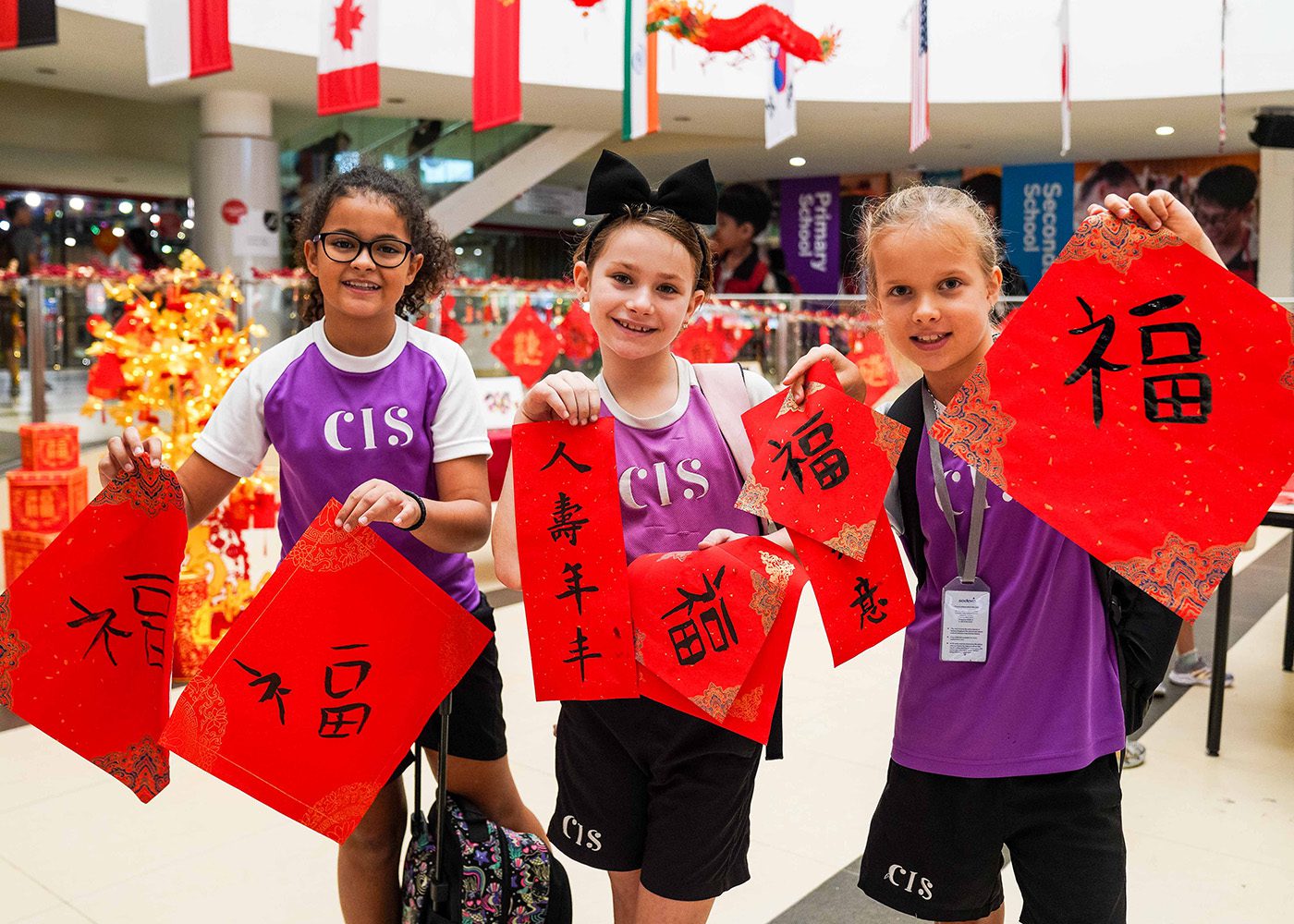
“Bilingual education has long been a strength at Canadian International School (CIS). Our school offers not one, but two bilingual programmes – Chinese-English and French-English – and we’ve seen both native and non-native speaking students thrive in both.
“CIS was one of the first schools in Singapore to offer a bilingual curriculum that immerses students in a supportive, inclusive, and language-rich environment. Both the Chinese-English and French-English programmes are fully aligned with the IBPYP. Students in Pre-Kindergarten to Grade 6 are taught by native speakers and learn within a 50:50 model, so students learn simultaneously in both languages across a wide range of subjects. This way, students achieve both language fluency and cultural understanding of both languages, which comes with more real-world value. There are also bilingual opportunities for students in maths, theory of knowledge, and humanities as they progress to our secondary school.
Ten years since we’ve first launched the CIS Chinese-English bilingual programme, we’re happy to share that our students demonstrate exceptional literacy standards in both languages. This is no mean feat given that Chinese is known for its complexity. We’re very proud of our bilingual students’ achievements.” – K-12 Director of Chinese-English bilingual programme at Canadian International School.
Canadian International School’s profile
5. Stamford American International School
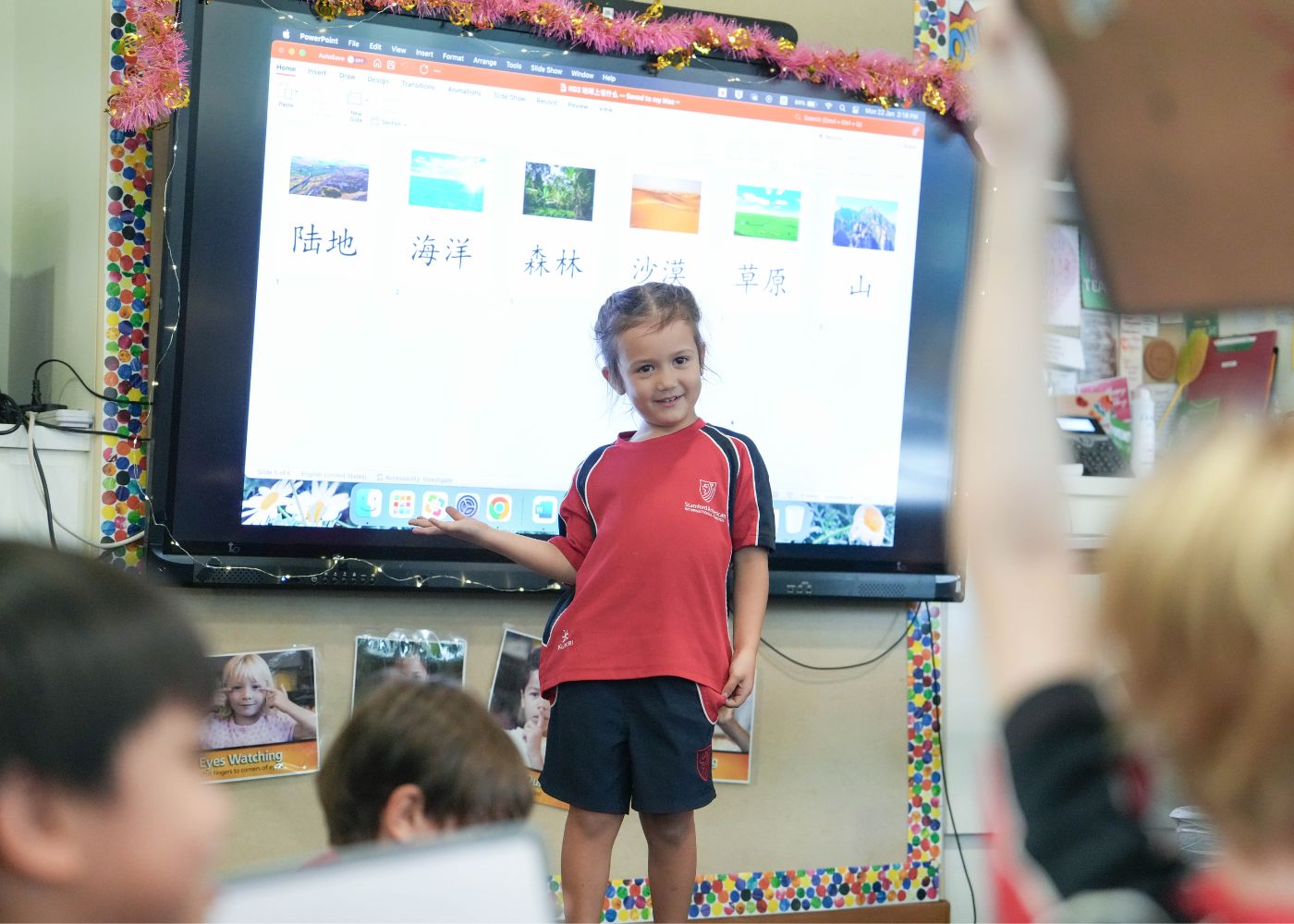
- Best for: Bilingual programme rooted in IBPYP principles, as well as aligned with ACTFL, Common Core, and China National Curriculum standards.
- Fees: From $20,420 per year
- Locations: Early Learning Village at 3 Chuan Lane, Gate 4, Singapore 554350; primary and secondary campus at 1 Woodleigh Lane (Off Upper Serangoon Road), Singapore 357684
“At Stamford American International School, we take pride in offering dynamic language programmes that empower students to thrive in an interconnected world. Through our IB Japanese and Korean Language and Literature courses and bilingual programmes, students master the skills to communicate, analyse, and lead globally.”
“Our unique one-bilingual teacher model ensures that students from pre-kindergarten to Grade 5 achieve fluency in both English and Mandarin, pushing them to become bilingual, bicultural, and biliterate. Classes seamlessly integrate content across languages, with 50% of Mathematics and Unit of Inquiry (UOI) taught in Mandarin. Guided by our bilingual teachers, students develop curiosity, adaptability, and a love for languages through inquiry-based learning.”
“Here, our language programmes do more than simply teaching words; they inspire global citizenship, cultural understanding, and academic excellence.” – Stamford American International School
Stamford American International School’s Profile
6. St. Joseph’s Institution International

- Best for: Two-way immersion model with rich cultural learning experiences
- Fees: From $41,680 per year
- Locations: 490 Thomson Road, Singapore 298191
“What sets St. Joseph’s Institution International’s (SJI International) new elementary school bilingual programme apart is the unique and enriching education experience we provide to prepare students for success in a multicultural world. The programme will be introduced in January 2024 for students in Prep 1, Prep 2, and Grade 1; and is designed for both native and non-native speakers.
SJI International aims to develop students who are not just bilingual and bi-literate, but culturally aware, and globally minded. We believe these are essential skills that will help our students thrive in this increasingly globalised world. To achieve this, our bilingual programme adopts a two way immersion bilingual education model. Our students not only improve their fluency and literacy in both English and Chinese through this immersive programme, but develop a deep understanding of culture and history too. We’re proud of the high academic standards we have in Chinese, maths, and English; and we have an intensive reading programme in both languages that will help develop our students’ language skills.
At SJI International, we strongly believe that bilingualism offers a wealth of benefits for children. The need to switch between languages and perspectives, develops enhanced flexibility and creativity in learning. It also promotes open-mindedness, improves multitasking and comprehension skills – leading to success in the classroom and beyond.” – Assistant Principal (Bilingual Programme), SJI International Elementary School.
St. Joseph’s Institution International’s profile
7. The Schoolhouse by Busy Bees

- Best for: Bilingual immersion core curriculum delivered through inquiry-embedded play and relationships-based approach
- Fees: From $1,870 per month
- Locations: 14 centres islandwide
“As the pioneer and trendsetter of the bilingual immersion core curriculum, we believe learning should be fun, hands-on, as well as intellectually challenging.
“What sets The Schoolhouse by Busy Bees apart is that children experience equal amounts of exposure to both English and Mandarin in the classroom. Our English and Mandarin teachers work as co-partners in the same classroom in a cohesive and immersive bilingual environment. This arrangement facilitates language acquisition at a very young age and encourages children to interact within context throughout the day.” – The Schoolhouse by Busy Bees
The Schoolhouse by Busy Bees’ profile
8. One World International School
- Best for: Bilingual programme with exposure to both languages for equal periods of time, aligned with IBPYP.
- Fees: From $24,158 per year
- Locations: 21 Jurong West Street 81, Singapore 649075
“One World International School’s (OWIS) Chinese-English bilingual program encourages native-level bilingualism, rather than simply Mandarin instruction for English speakers. The teachers of our bilingual programme are bilingual educators themselves. They are fluent in both languages and are able to give students the skills and support needed to learn in both languages to a native level.
“Our bilingual program is structured to give students a parallel understanding of concepts using Mandarin and English. Students are encouraged to discuss key concepts, ask questions and express themselves in both languages. This ensures that they have an immersive environment for learning, develop a rich vocabulary and gain a full working fluency as well as linguistic fluency. Native-level fluency in both languages will give our students the tools to access higher education and the world of work throughout the world.” – One World International School
One World International School’s Profile
9. Singapore American School

- Best for: Dual language immersion, with up to 80% of subjects taught in Chinese.
- Fees: From $44,480 per year
- Locations: 40 Woodlands Street 41, Singapore 738547
“The Chinese Immersion Program at Singapore American School (SAS) is a well designed and well articulated Chinese-English dual language program. We’re aiming to foster bilingualism, biliteracy and cultural confidence. Bilingualism has significant benefits; it provides our kids with two ways of knowing, thinking and being, helping to create purposeful, motivated and goal-directed learners.
“Immersion means that students are immersed in the Chinese language and culture for the majority of time in school. For example, our program uses the common SAS curriculum to deliver our content so students have a smooth transition from the English program. It’s a collaborative effort to make the program a success.” – Singapore American School
Singapore American School’s profile
10. German European School Singapore
- Best for: English-German bilingual programme
- Fees: From $40,325 per year
- Locations: 2 Dairy Farm Lane, Singapore 677621
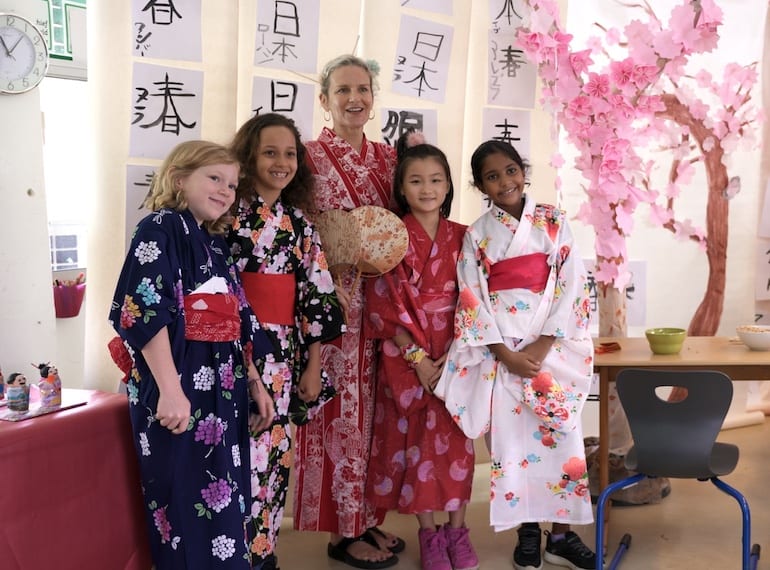
“At German European School Singapore (GESS), we encourage our students to deepen their roots through language acquisition and the understanding of cultures. From Grade 1, we offer the IB curriculum delivered in English or the German curriculum delivered in German. We also offer a German-English bilingual track in kindergarten. In order to support our multicultural community, GESS also offers a Language Enrichment Programme (LEP) in more than 10 languages, such as Danish, Dutch and Mandarin. This helps students maintain fluency in their mother tongues.
Our students have displayed confidence in communicating and a well-developed sense of global citizenship. This is supported by language learning and displayed through collaborations such as the bilingual opera, Snow Queen, which our English and German-speaking pre-primary students worked together on for their final exhibition. We believe that learning any language should be meaningful to the child and integrated into daily life. As partners in their children’s language development, we encourage parents to talk to their children, share experiences, ask questions and support their children’s answers and interests. If children are interested and motivated, they will never be bored by learning languages.” – German European School Singapore
German European School Singapore’s profile
11. HWA International School
- Best for: Full bilingual IB curriculum
- Fees: From $23,990 per year
- Locations: Marina city campus at 6 Raffles Boulevard, Marina Square, #02-100/101, Singapore 039594; one-north campus at 11 Slim Barracks Rise, NTU@One North Level 4, Singapore 138664
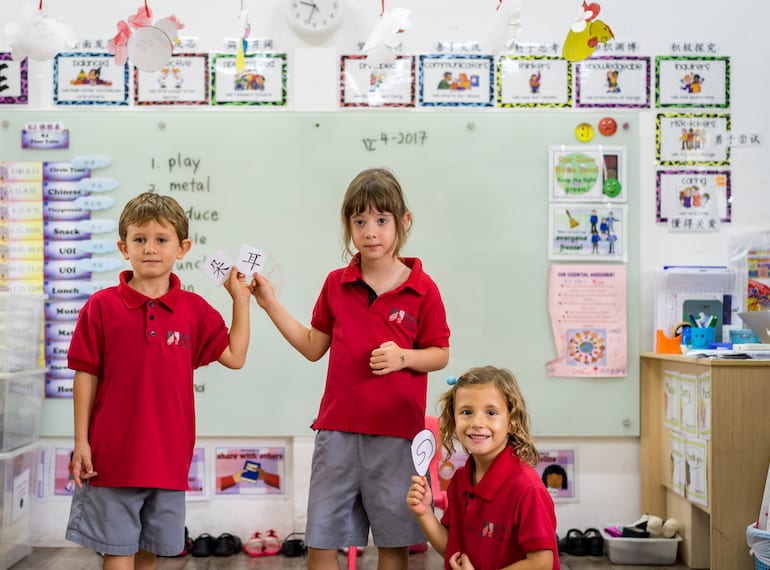
“In HWA International School, the children are true bilinguals. All subjects and activities are conducted in both English and Chinese. We have an English teacher and a Mandarin teacher stationed within class at all times, along with language support programs to support children through their learning path. Success in today’s globalised world calls for more than just the acquisition of knowledge in any one language. As such, HWA offers a dual-language immersion programme and a multi-cultural environment from the earliest stages of a child’s education. Our students have the best possible head-start to becoming a thinking global citizen and a caring bilingual world leader.” – HWA International School
HWA International School’s profile
Like the sound of these bilingual education programs in Singapore? Visit the schools’ profiles via the HoneyKids School Selector to learn more!