
All the deets for those of you who have ever been baffled by a red packet (AKA ang bao) on Chinese New Year – ang bao rates, etiquette and more!
If you’re new to Chinese New Year then you may not yet have encountered the ang bao: but you soon will! And once you do, you will need to navigate the minefield of how much to give (yes, ang bao contains money!), who to give it to and how to avoid major red packet faux pas situations. If you’re on the receiving end, this is definitely something you should look forward to every Chinese New Year (in addition to shopping for cute cheongsams and deciding where to eat out for your reunion dinner). So whether you’re a CNY newbie or a seasoned giver wading into the red packet exchange, here’s a quick ang bao 101 with all the ang pao rates and rules you need to know…
But before that, from 27 January 2026, make your reservations online to collect new and fit currency notes from the banks. Collection will only begin from 3 February onwards. There will be more pop-up atms islandwide.
All the red packet (ang bao) rules you need to know
What is an ang bao?
Ang bao is essentially a red envelope that contains a gift, AKA money. These red envelopes are often given at celebrations including weddings, birthdays and festive holidays like Chinese New Year. The red colour of the envelope symbolises good luck and prosperity. It’s also believed to ward off evil spirits…
Who gives the ang bao? And who to give it to?
Red packets are blessings made practical. Besides the older generation giving ang pows to the kids, young adults who have started working would also give ang pows to their parents as a form of blessing and gratitude. But these young adults are not expected to give ang pao to other kids until they get married.
There is a sort of hierarchy in the ang bao giving etiquette. Rooted in Chinese values like filial piety, your parents and in-laws will get the biggest ang bao. This is followed by the level of closeness so your children gets the second biggest ang pow, then the list moves down to your younger siblings, younger cousins, nephews and nieces, and that random aunty’s children. How about your friends’ children? Well, that also depends on how close you are. If it’s the bestie who has officially or unofficially made you the god parent of their child, then you want to place them higher up on the list.
Outside of the family, it is common to give ang bao to service staff, especially those who prepares and recites the lucky words for your yusheng during the CNY reunion dinner! Usually it’s the host’s job but really, anyone can show their appreciation to those working on a public holiday.
How much money should you put in an ang bao? Current ang bao rates
Like any other financial decisions you make, the rule of thumb is to give what you can. There’s no sense in stuffing the red packets just to look good in front of your judgemental relatives you see once a year (yes, the pressure may be real but not as real as your empty pockets!).
Having said that, “saving face” is a thing in the Chinese culture. We don’t want to be seen as being cheap and we sure don’t want to bust the bank so there is some kind of ang bao rate or guideline that we follow. Here’s what we know:
Parents: $188 onwards
Grandparents, in-laws, children: $88 onwards
Siblings, cousins: $38 onwards
Nieces, nephews: $28 onwards
Other children (friends’, colleagues’, neighbours’ etc): $10 onwards
Acquaintances and other people you are not close to: $6 onwards
Random people you may have to give to be polite: $2 onwards

What about the friendly security guard downstairs, or the cleaning auntie?
Here’s the ultimate red packet rule: ang bao giving is, first and foremost, about goodwill, so you don’t have to go OTT. They’re usually handed out to singletons and kids, but nothing is stopping you from giving ang baos to anyone who deserves a little appreciation. So if you want to give a small cash gift to your helper, bus auntie or the kindly uncle who always holds the lift door open for you, go for it. Spread the love! Alternatively, you can choose to gift them some snacks and mini hampers too.
What’s the story with fours and eights?
Any figure that includes the number four is a big no-no: it’s traditionally associated with death and misfortune (it sounds like the Chinese word “si”, which means death) and so best avoided! Eight is always a good bet as it’s seen as a lucky number (as it sounds like the Chinese word “fa”, which symbolises earning wealth), so often ang bao amounts are in denominations of eight. It’s also best to give in even numbers: the Chinese believe this to be auspicious, mostly because of the traditional saying “good things come in pairs”. So here are the big red packet rules in a nutshell: no fours, eights are awesome, and even numbers rule. Got it?
Is it a deal-breaker if you don’t use new currency notes?
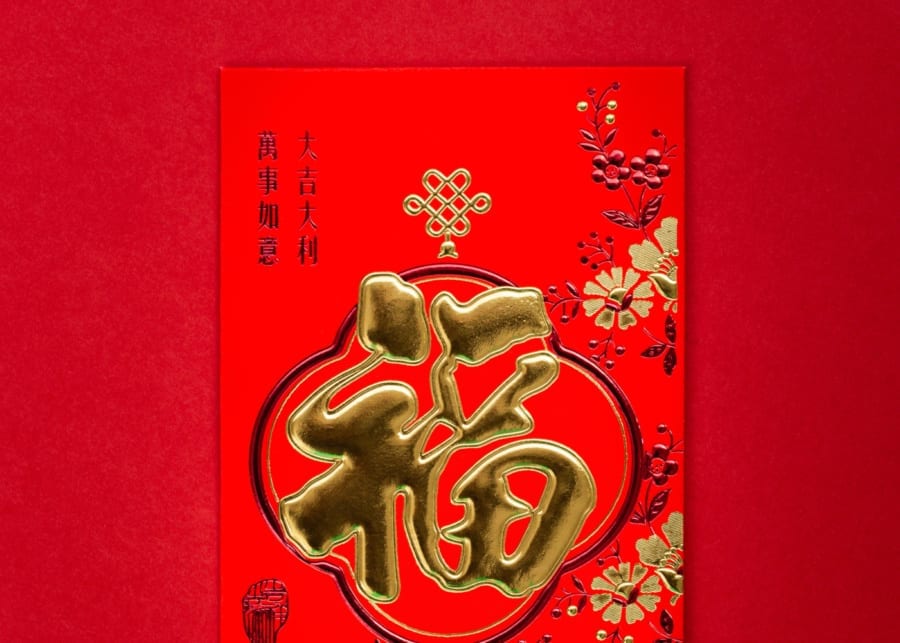
It’s not! In Chinese tradition, new things are always top of the requirement pile. This is why you’ll see everyone donning new threads and giving their homes a major spring clean just before the festivities. The same goes with red packet: when it comes to ang bao notes, older folks believe the crisper and newer, the better. But new currency notes are causing unnecessary carbon emissions. According to MAS, up to a 100 million new currency notes are used only once! That equates to the annual electricity bill of 1,600 four-room HDB flats! A good alternative would be fit-for-gifting notes or just use e-ang baos; banks like OCBC, DBS, and UOB lets you do it easily from the app. Or, use QR ang bao.
Remember the final touches…
Give or receive red packets with both hands, and take note that it’s generally considered rude to tear into the ang bao in front of the giver (try explaining this to your excited kids when they are presented with their very first ang bao… sigh). And don’t forget to acknowledge the gift with your own well-wishes – a simple “Xin Nian Kuai Le (Happy New Year)” or “Gong Xi Fa Cai” (wishing you an abundance of fortune) will do the job.
So now you know. No more getting into a pickle with your red packets – you know the rules!
[This article was originally published in 2018, updated in 2021 by Esther Chung, updated in 2026 by Andrina Loo]