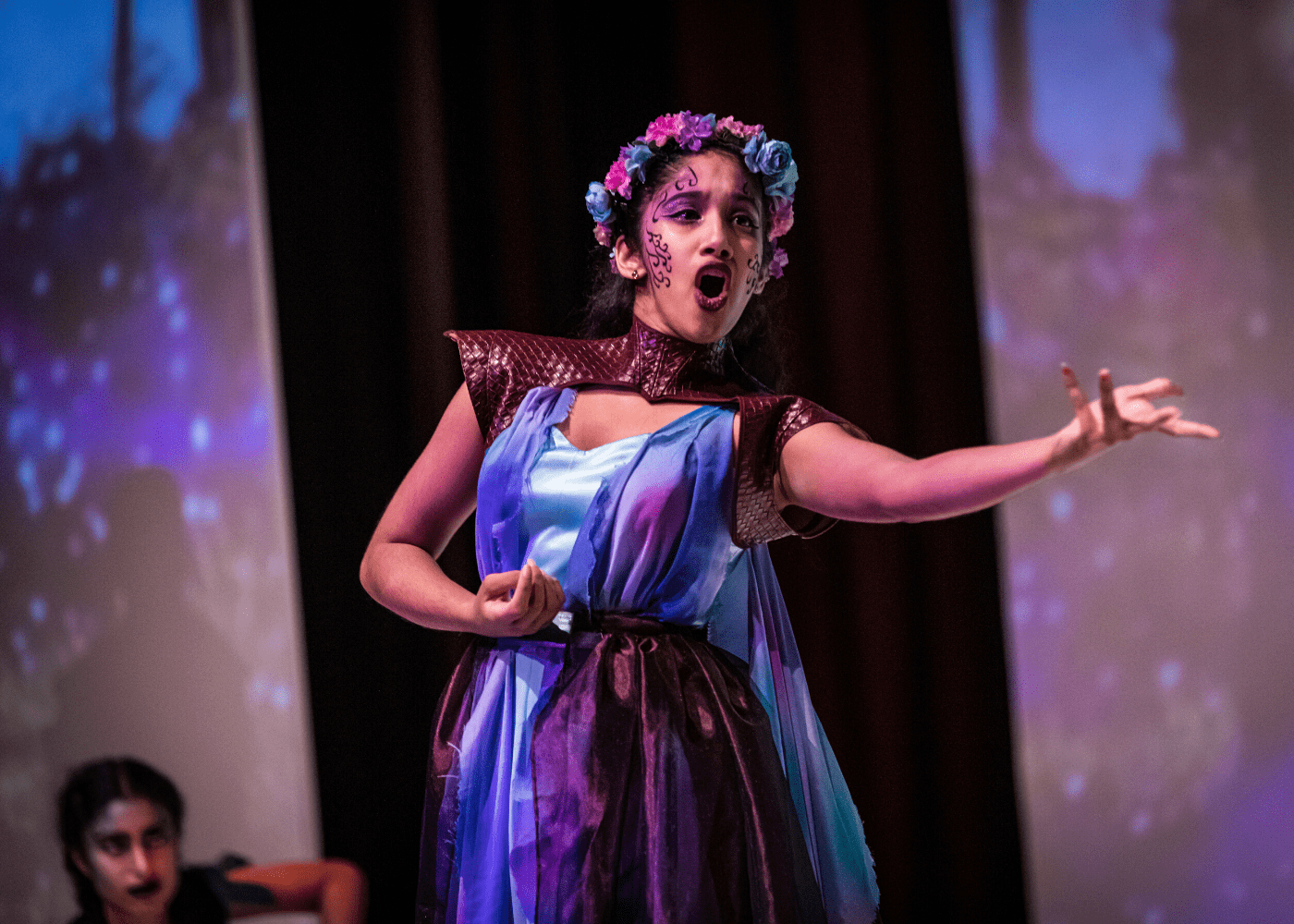
Love the arts and the theatre? We spoke to several international schools to find out why a performing arts education is advantageous for your child, and how you can get them involved.
Whether it’s in the form of movies and TV shows, or through performances in the theatre, our kids are so easily influenced by what they view in the media nowadays. But that isn’t necessarily bad, especially if it spurs them to pursue the arts academically in school. Being involved in performing arts can take many forms – it can be on stage in front of an audience, or by learning the ropes and inner workings of a production backstage. So, if you’re curious to find out more about the benefits of a performing arts education, we spoke to several international schools to get some insights and how and when you can get your kids involved. Read on below!
Benefits of a performing arts education
1. It builds confidence and creativity
– XCL World Academy
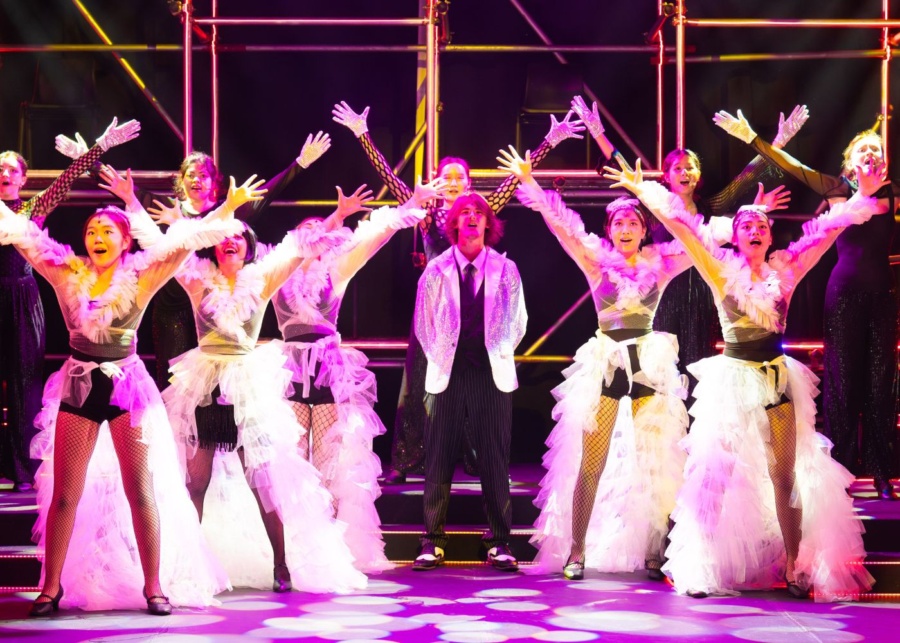
The performing arts are more than just an extracurricular activity at XCL World Academy (XWA); the school offers a comprehensive K-12 performing arts programme that specialist teachers teach to all students. The reason? It believes that the performing arts are crucial to developing confident, creative, and globally aware young people.
Theatre, music, visual arts, media arts, and dance are taught through the inquiry-based learning approach, aligned with the International Baccalaureate (IB) curriculum that the school follows. This way, students don’t just learn pick up skills related to each area of art, but develop creativity and cultural understanding as they progress.
What’s a performing arts programme without actual lights, camera, and action? XWA provides its students with ample opportunities to create and showcase their work. The campus has facilities to support this, including a 750-seat auditorium, black box theatre, specialist art studios, digital media labs, and more. Performances and exhibitions are school-wide affairs as well, like Arts Week, music recitals, and annual musicals like the recent Chicago (by Senior Year students) and Annie (by Primary Year students) – both performed to a sold-out crowd. These experiences help students uncover new talents, gain confidence, and collaborate with each other through different roles.
2. It strengthens communication and collaboration across cultures and backgrounds
– North London Collegiate School (Singapore)
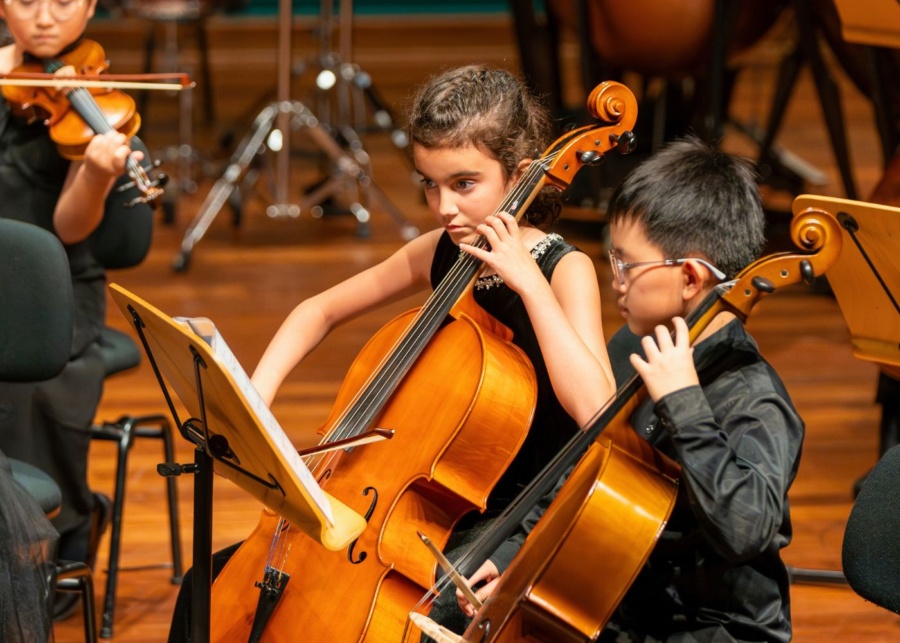
The ability to communicate and collaborate effectively are key to a successful performance. So it comes as no surprise that these are some of the soft skills that students will develop through a performing arts education. And in an international school setting like North London Collegiate School (Singapore), the skills acquired through performing arts can bring together students across different cultures and backgrounds.
Take the biennial NLCS Music Festival as an example, where students from the NLCS family of schools worldwide get together to celebrate their shared passion and talent in music. Students get to collaborate and perform with peers from overseas. The school’s annual Arts Festival encourages students to collaborate with their peers across disciplines, combining their individual talents in music, dance, drama, and visual arts to bring multiple performances to life. Annual drama productions, such as the recent Julius Caesar (by the Senior School) and The Amazing Adventures of Super Stan! (by the Junior School), help students make connections and develop teamwork across grades and classes.
Besides having the facilities to support these, NLCS (Singapore) also provides students with opportunities to learn from global industry specialists. From being able to perform alongside a professional symphony orchestra as part of the Young Musician Award, to following the LAMDA syllabus, the school ensures students have many opportunities to collaborate with each other and learn from the best. Plus, all students at NLCS (Singapore) start learning an instrument from as young as KG1 (four to five years old) from a team of specialists.
3. It provides students with a creative platform to express what they learned
– Chatsworth International School
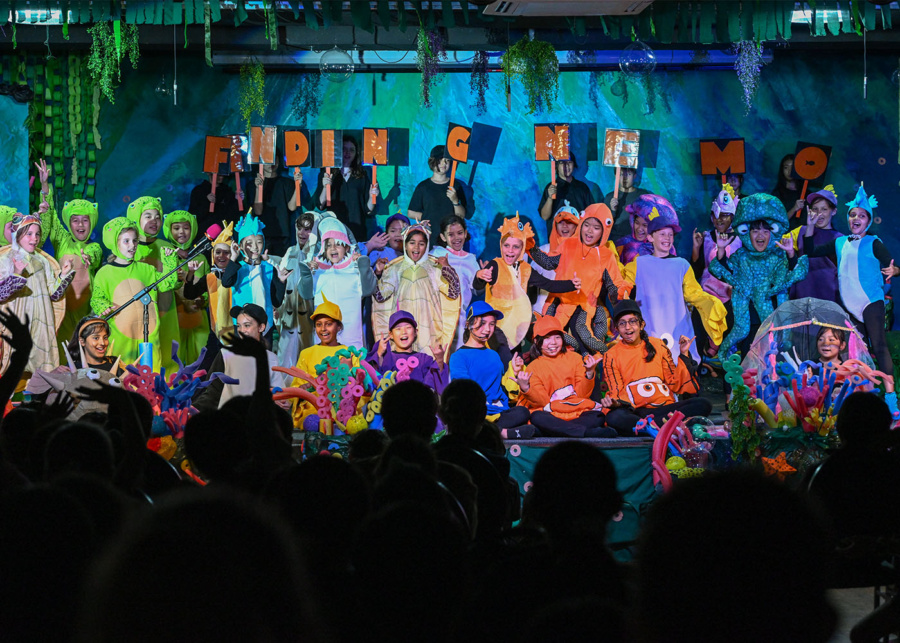
Opportunities for students to take the stage aren’t just limited to music and performance lessons or cocurricular activities. At Chatsworth International School, the performing arts is built into the International Baccalaureate curriculum framework. Students get to showcase what they’ve learned in their own way to wrap up a Unit of Inquiry, and the performing arts is one of the many avenues they get to do so. Think: musicals adapted from popular hits, or a short performance about learning human body systems – whichever it is, students are encouraged to exercise their creativity to share what they’ve learned.
Beyond academics, the performing arts also acts as a safe space for Chatsworth students to express themselves. More than just giving students a voice on campus, it also allows students to develop their own unique set of talents. This aligns with the school’s non-selective philosophy, where it involves students in performances without a selection process. They also get to learn performing art techniques from teachers who are subject experts, and even accomplished producers as well as actors through drama workshops.
Needless to say, Chatsworth has a vibrant performing arts scene, where every child is given the chance to shine. Students get to be involved in concerts, sing and dance competitions, and even annual musical productions that are well-loved by the school and parent community. As Middle Years Programme Music Teacher, Jake Eades, shared, “I love watching our students grow in the performing arts during their time at our school. Students arrive with diverse levels of experience, and it’s inspiring to see them hone their skills to an impressive standard as they progress. Many eagerly participate in our performance opportunities, showcasing remarkable talent that’s always a joy to witness.”
4. It helps students adapt and innovate
– ISS International School

The Head of Arts for Grade 6-12 at ISS International School shares that not only do the arts sustain our minds just as sport sustains the body, but it’s also important when the kids progress to higher learning at a tertiary stage, too. In fact, most universities recognise the need for sustained arts study from an early age through to high school. Not only does it help students develop flexible and creative minds that can adapt and innovate, but they form a foundation of crucial skills in a constantly changing economy and world.
ISS offers courses as part of its IB programme. And its many extracurricular arts offerings allow students to achieve individual and creative artistic growth and confidence. This includes interdisciplinary units of study that allow students to recognise and explore the relationships between the arts and literature, history, science and mathematics.
5. It encourages collaboration
– Stamford American International School

The Head of Drama and Performance at Stamford American International School agrees that performing arts help students engage their mind, body, and emotions into a collaborative expression. Not only do the arts encourage teamwork as everyone involved in a production – whether they are the leading actor, a member of the ensemble, a musician or a member of the stage crew – everyone strives towards a mutual goal of creating an outstanding performance.
Stamford American also ensures its students have an opportunity to perform from kindergarten through to high school. Think: regular music concerts throughout the year, eight theatre productions including four musicals and four plays every year. Not forgetting its co-curricular dance classes and music ensemble programme for budding musicians.