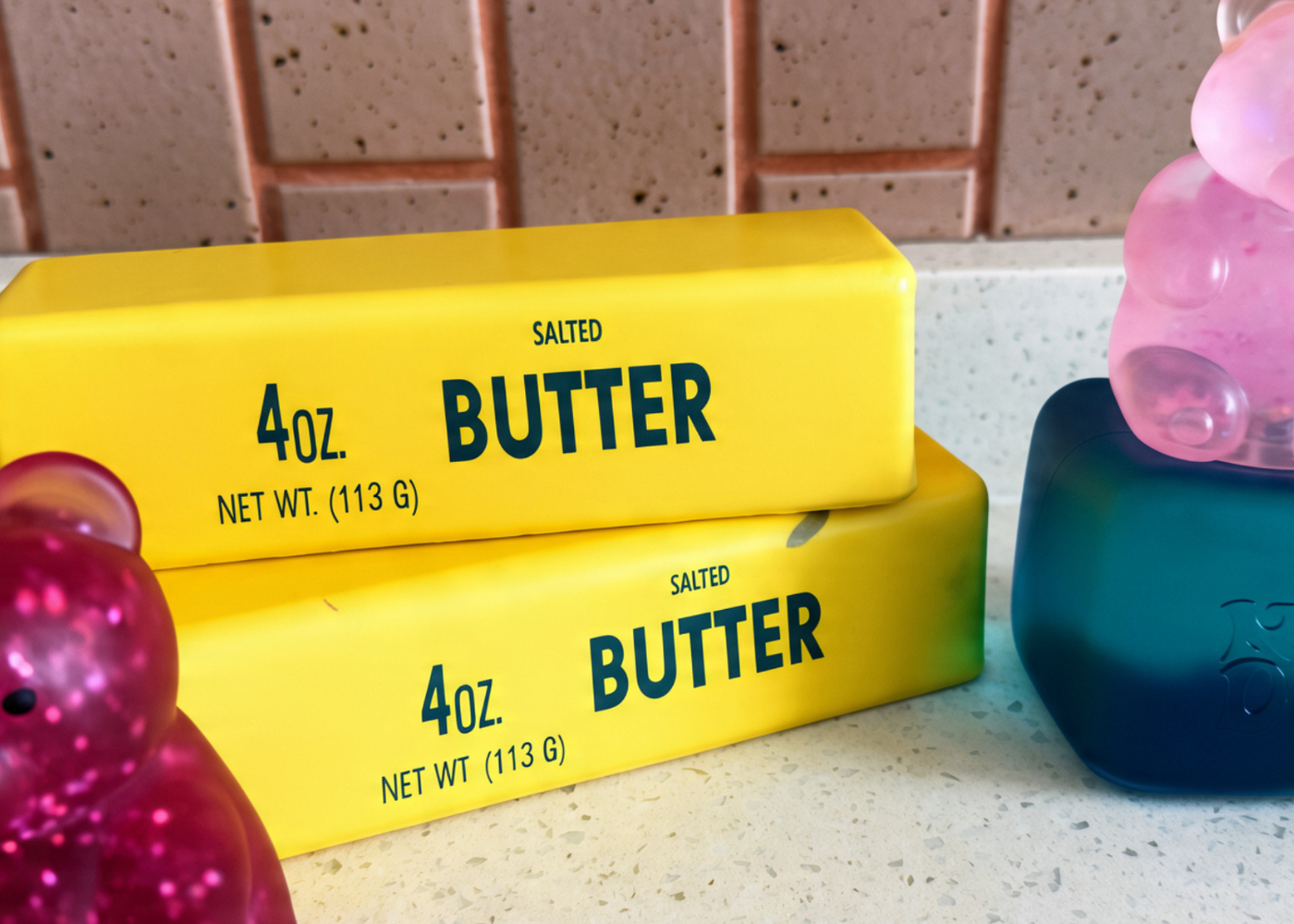
From slow-rise buns to NeeDohs and gel stress balls, here's where Singapore parents can find the good stuff, the safety checks to run before you buy, and the one squishy you should never bring home.
Squishies are having another moment. Not that they ever entirely went away; they simply sat quietly on bedroom shelves, collecting dust and waiting for social media to declare them essential again.
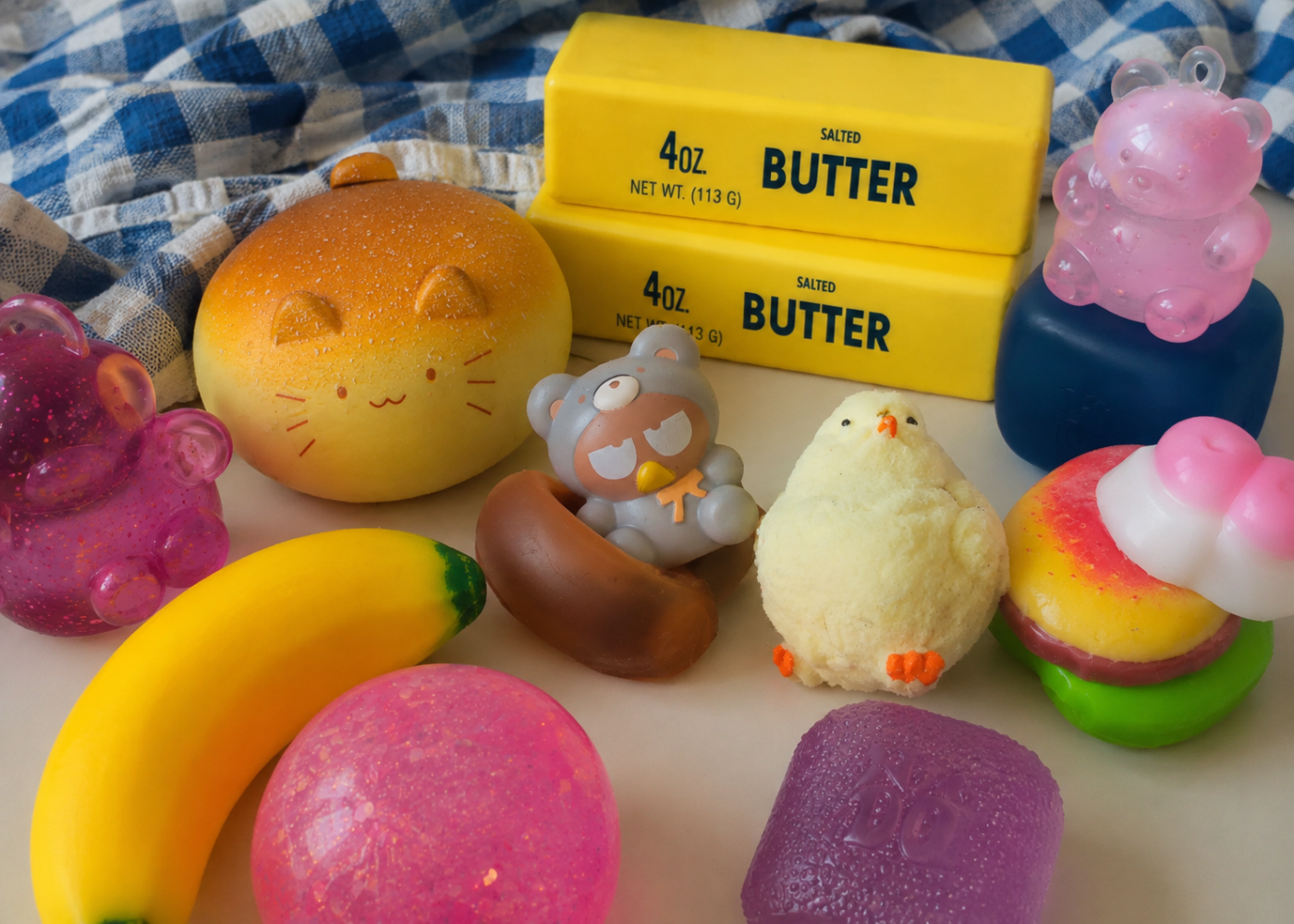
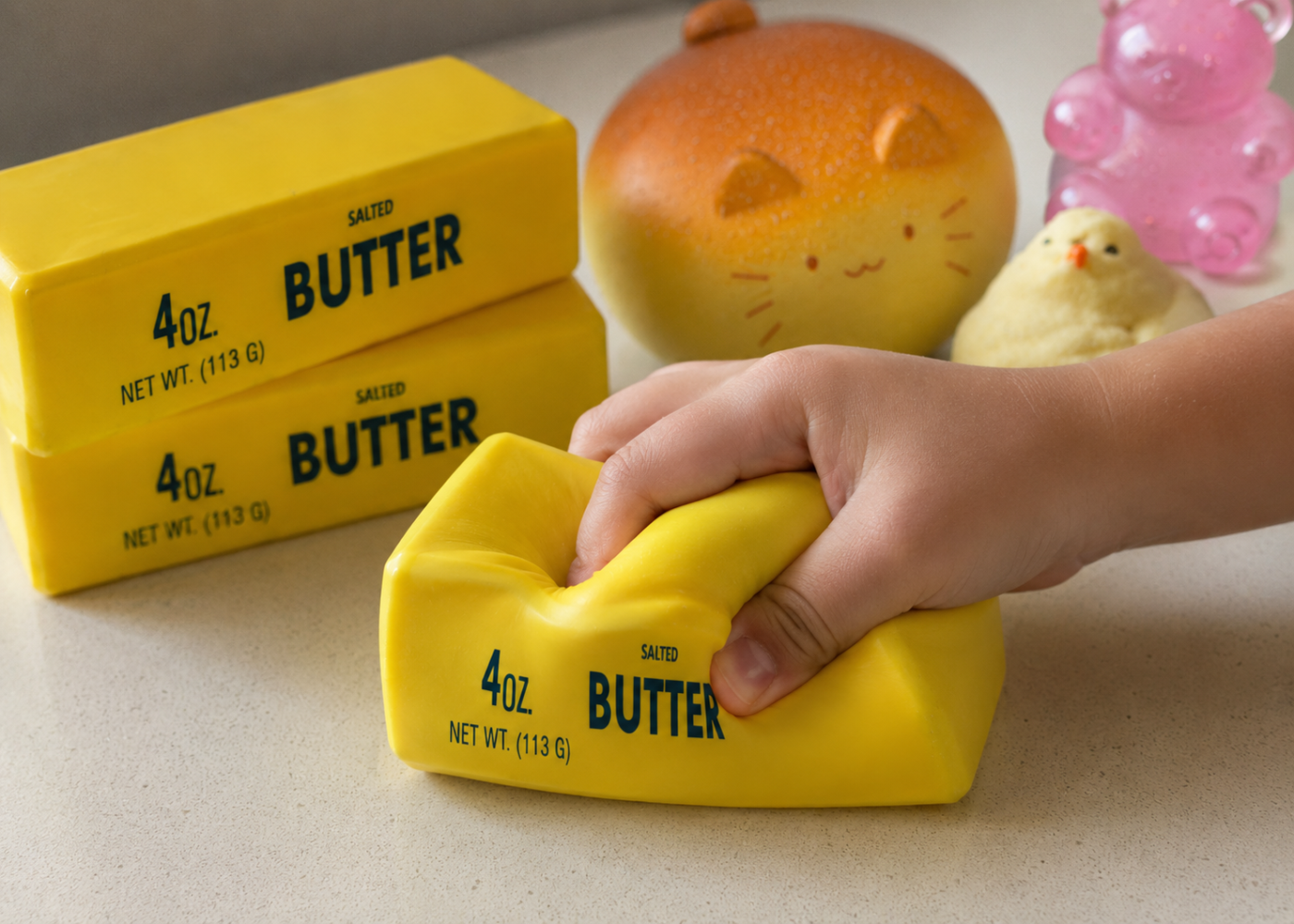
Today’s squishy universe includes slow-rising foam pastries, tiny silicone animals, goo-filled stress balls, fuzzy NeeDohs, mysterious dumplings and objects that look so convincingly like food that someone, somewhere, will inevitably try to bite one. They can be fun to squeeze, collect and use as fidget toys. Some children and adults also find repetitive squeezing calming or helpful when they need something tactile in their hands.
But not all squishies are made in the same way—or to the same safety standard. Some can split and leak. Foam can tear into small pieces. Strong scents may be unpleasant or irritating. Food-shaped toys can be mistaken for the real thing, particularly by younger children. Singapore’s Consumer Product Safety Office has also warned consumers about a particularly alarming type of squishy toy supplied with a sharp syringe.
So, where can you buy reliable squishies in Singapore, and what should you check before adding one to your basket? Let’s squeeze out the facts.
TL;DR: Buying squishies safely in Singapore
- Buy from an established retailer or an authorised brand stockist.
- Look for a clear age recommendation, manufacturer or importer details and safety instructions.
- Ask whether the toy meets a recognised toy-safety standard such as ISO 8124, EN 71 or ASTM F963.
- Never buy an air-injection or “pimple-popping” squishy supplied with a sharp needle syringe.
- Keep food-shaped and scented squishies away from children who may bite or mouth them.
- Inspect filled stress balls for thinning, bubbles, splits and leaks before every play session.
- Throw damaged squishies away rather than attempting a heroic repair with household glue.
- Squishies can be enjoyable sensory or fidget toys, but they are not medical treatments.
What exactly is a squishy?
| Type | Description |
|---|---|
| Slow-rise foam squishies | Usually made from polyurethane foam that slowly returns to its original shape after being squeezed. |
| Filled stress balls | Stretchy outer skins filled with gel, dough-like material, beads, sand or another soft substance. |
| Mochi squishies | Small, soft and stretchy rubbery toys, often shaped like animals. |
| Mesh or bubble balls | Filled balls that push through an outer net when squeezed. |
| Plush squishies | Soft stuffed toys such as Squishmallows. These are not the same as foam or gel-filled squishies and require different care. |
| Popping or pimple toys | Toys designed to simulate squeezing spots or bubbles. Some versions have been sold with syringes and should be avoided. |
Knowing which kind you are buying matters. A solid foam squishy and a liquid-filled stress ball may look equally adorable, but they fail in quite different—and occasionally spectacular—ways.
Why you should trust this guide
This guide was independently researched and curated by the HoneyKids Asia editorial team, a group of parents based in Singapore who understand that the phrase “everyone at school has one” can cause an abrupt change in the household shopping agenda.
We checked current retailer information, official distributor lists and product warnings available at the time of publication. Our safety recommendations are informed by guidance from Singapore’s Consumer Product Safety Office, including its toy-safety advice and published product alerts.
Stock changes quickly, particularly when a particular cube, gumdrop or dumpling goes viral. Contact individual retailers before making a special journey, and inspect the packaging and product yourself before purchase.
This article is general consumer-safety information and is not medical advice. Inclusion in this guide is not a guarantee that every product sold by a retailer will suit every child.
Where to buy squishies in Singapore
1. Toys“R”Us Singapore
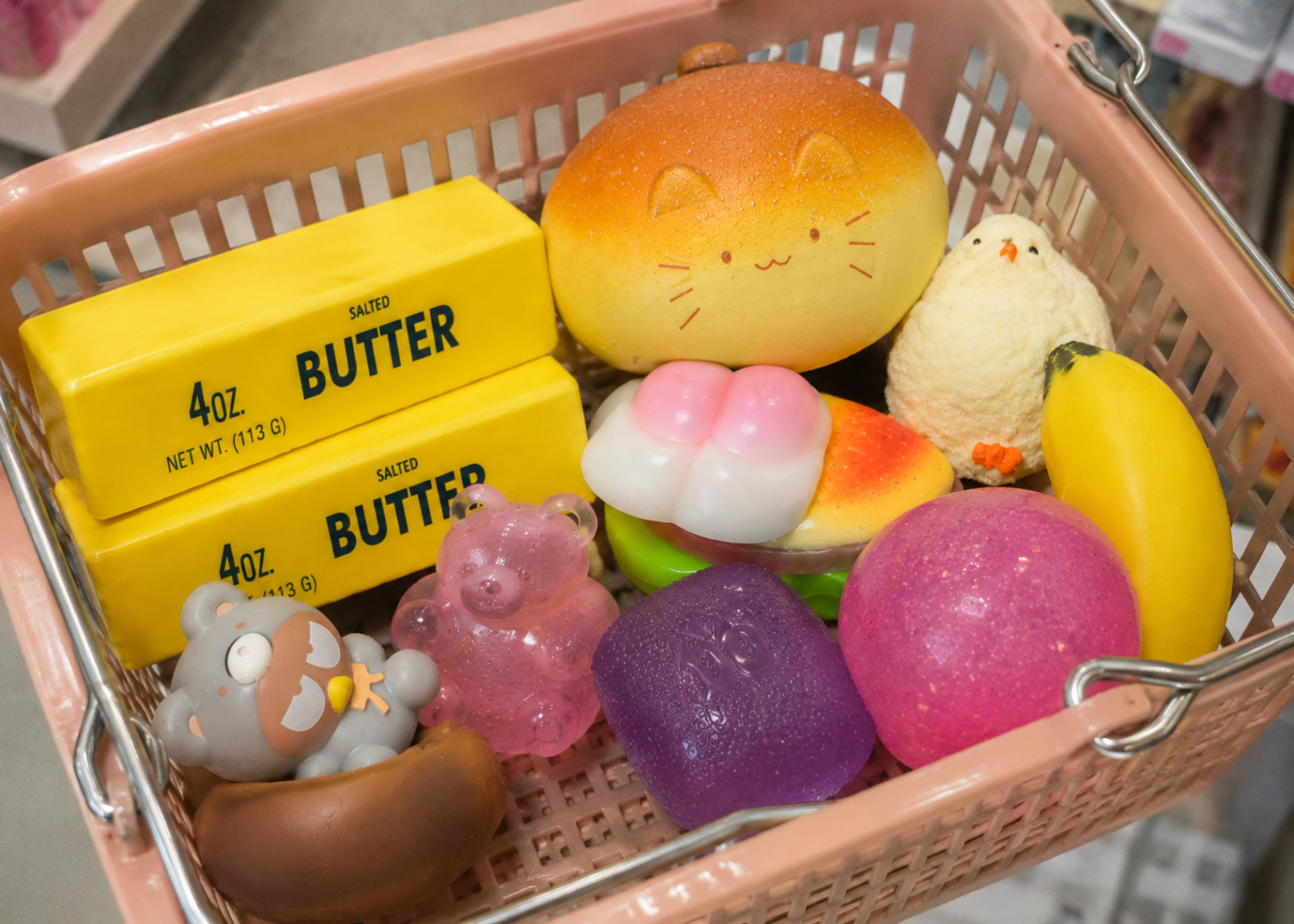
Toys“R”Us is one of the easiest places to begin if you want to examine a squishy in person, read its packaging and check its age recommendation before buying. The range changes regularly but can include slow-rise food squishies, stress balls, stretchy toys, sensory products and squishy-making kits. At the time of research, Toys“R”Us Singapore listed Molynk slow-rising restaurant squishies and Doctor Squish products.
The Molynk product listing includes useful warnings: the squishy is not food, should not be bitten, is unsuitable for children under three, and should be discarded if material begins coming off. That is the sort of labelling parents should expect to see.
Why shop here: Physical stores, recognisable product packaging, click-and-collect on eligible items and clear product warnings.
Things to note: Many designs are assorted or randomly packed. If your child will only accept the pink bao with the extremely specific facial expression, ordering “one assorted piece” may prove emotionally ambitious.
Where: Various outlets across Singapore and online.
2. LittleShop Toys and authorised NeeDoh retailers
NeeDoh is one of the best-known names in filled stress balls and sensory squeeze toys. Its range includes the viral Nice Cube, Gumdrop, Dream Drop, fuzzy balls and textured varieties. LittleShop Toys identifies itself as an official Singapore distributor and publishes a list of authorised NeeDoh retailers. This is useful because popular products tend to attract counterfeits, especially when social-media demand outpaces supply.
According to the distributor’s current list, authorised Singapore stockists include:
- LittleShop Toys online
- KABOOM and Times Travel at Changi Airport
- The Toy Folks at Forum and Marina Square
- TANGS at Orchard and VivoCity
- Double Spring at Holland Village
- Isetan at Scotts and NEX
- Singapore Discovery Centre in Jurong
- Elm Tree at 888 Plaza, Parc Point, Pasir Ris Mall, and Raffles Xchange
- Rysel Toys online
Stock can vary between locations, so call before heading down if you are looking for a particular model.
Why shop here: Traceable supply, authorised stockist information and a broad range of genuine NeeDoh products.
Things to note: NeeDoh toys are filled products rather than solid foam. They must be inspected for thinning, tears and leaks, and they should never be bitten or cut open.
3. My Toy Shop
My Toy Shop carries a changing selection of branded sensory and fidget toys, including NeeDoh products. Listings have included varieties such as the SnowBall Crunch, Gumdrops, Noodlies and glow-in-the-dark designs. The online format makes it easier to read individual product descriptions, compare textures and check age recommendations before buying.
Why shop here: Branded products, local pricing and online ordering.
Things to note: Check whether the design is supplied in an assorted colour. Also confirm current stock rather than announcing a successful purchase before the checkout page has had its say.
4. The Toy Folks
The Toy Folks is listed as an authorised NeeDoh retailer, with outlets at Forum The Shopping Mall and Marina Square. A physical store is particularly useful for children who care about texture. “Squishy” can mean soft and slow-rising, firm and resistant, sticky, fuzzy, crunchy or oddly clammy. One child’s perfect fidget is another child’s immediate no-thank-you.
Why shop here: Authorised branded stock and central physical locations.
Things to note: Ask staff before opening or squeezing packaged products. Being enthusiastic about tactile research does not automatically suspend normal shop rules.
5. TANGS and Isetan
Selected TANGS and Isetan stores are listed as authorised NeeDoh retailers, making them convenient options if you prefer buying from a department store. At the time of research, listed locations included TANGS at Orchard and VivoCity, and Isetan at Scotts and NEX.
Why shop here: Convenient mall locations, recognised retailers and authorised branded stock.
Things to note: Department-store inventory changes frequently. Call the relevant toy department if you are looking for a specific viral product.
6. SgSquishies
SgSquishies is a Singapore-based specialist that has been part of the local squishy scene for years. Its current range appears more limited than during the original squishy boom, with the business noting that it now focuses mainly on Ichiban Kuji and other products. Some squishies remain available, and the seller currently allows visits to its Tampines storage location by appointment, subject to availability and visitor limits.
Why shop here: Local specialist knowledge and the possibility of finding older or collector-focused designs.
Things to note: This is not a conventional walk-in shop. Arrange an appointment and confirm what is available before visiting.
7. Bunnie Squishy Mart
Tucked into Pearl’s Hill Terrace, Bunnie Squishy Mart is a small specialist shop for anyone who takes their squishy hunting seriously. Expect a dedicated crowd and, on busy days, a digital queue before you even get near the shelves.
Why shop here: A squishy-focused independent store where you can inspect textures, packaging and age labels in person.
Things to note: Opening days are limited and a digital queue system is in use, so check Instagram before heading down. Bring patience: enthusiasm for slow-rising bao is not evenly distributed across the week.
Where: 195 Pearl’s Hill Terrace, #01-15, Singapore 168976
When: Wed–Thu, 1pm–7pm; Fri–Sun, 12pm–7.30pm
8. Meowiie Squishy
Over in Sin Ming, Meowiie Squishy is another dedicated squishy shop with a physical storefront at Thomson V Two, handy for families in the north and central regions who would rather not cross the island for a dumpling.
Why shop here: Specialist stock, a walk-in location and the chance to squeeze before you commit.
Things to note: Closed on Mondays, with shorter weekday hours. Stock of viral designs moves fast, so a quick Instagram check saves a wasted trip.
Where: Thomson V Two, 11 Sin Ming Road, #01-26, Singapore 575629
When: Tue–Fri, 1pm–7pm; Sat–Sun, 11am–7pm
9. The Squishy Town
The Squishy Town operates out of a unit in Eunos on weekends only, which gives it the feel of a members-only clubhouse for the tactile-toy community. It is the kind of place you visit on purpose rather than stumble across.
Why shop here: A specialist seller for collectors and children with very particular texture preferences.
Things to note: Weekend hours only, and the address is a unit inside a larger building rather than a mall shopfront, so follow the room number closely. Confirm opening on Instagram before you go.
Where: 113 Eunos Ave 3, #07-09 (Room 6), Singapore 409838
When: Sat–Sun, 12pm–6pm
10. Shopee, Lazada and other online marketplaces
Online marketplaces offer an enormous range of squishies, including inexpensive slow-rise foam toys, character designs, imported Japanese brands and products from Singapore-based specialists.
They are also where parents need to do the most homework. A high seller rating is useful, but it does not replace proper labelling, safety information and a traceable manufacturer or importer.
Before buying a squishy from an online marketplace, check:
- Whether the shop is the brand’s official store or an authorised retailer
- Where the product ships from
- Whether the listing names the brand and manufacturer
- Whether an age recommendation is shown
- Whether materials and filling are identified
- Whether recognised toy-safety standards are mentioned
- Whether product warnings are visible
- Whether reviews show the actual item received
- Whether buyers report splitting, leaking, strong smells or paint transfer
- Whether returns are permitted if the product arrives damaged
Be cautious when a listing uses several contradictory descriptions—for example, calling the same toy foam, silicone, gel-filled and suitable for the bath. This may indicate copied product text rather than reliable information.
Marketplace prices can be tempting, but saving a few dollars is less thrilling when the toy bursts on the sofa.
What to check before buying a squishy
Singapore’s Consumer Product Safety Office recommends buying age-appropriate toys from reputable brands and sellers, reading safety instructions and checking toys frequently for damage.
1. Look for a clear age recommendation
Many squishies are unsuitable for children under three because pieces can tear off and become choking hazards. Age labels also matter for older children who tend to chew, bite or place non-food objects in their mouths. Use your knowledge of the individual child rather than treating the number on the box as the only consideration.
2. Check for proper product information
Packaging or the online listing should identify the product, manufacturer, brand or local supplier. It should also include instructions and relevant warnings. If there is no reliable way to determine who made or supplied the toy, it will be more difficult to check recalls or seek help if something goes wrong.
3. Ask about recognised toy-safety standards
The Consumer Product Safety Office advises consumers to ask whether toys meet recognised requirements such as:
- ISO 8124
- EN 71
- ASTM F963
A standard printed in a product description is not an absolute guarantee, particularly if the claim cannot be verified. However, a seller who cannot provide any safety information deserves additional scrutiny.
4. Read what the squishy is made from
Check whether it is solid foam, silicone-like material, thermoplastic rubber or a filled stress ball. For filled toys, look for information about the filling. A vague description such as “magic liquid” may sound whimsical, but it is not especially useful when the magic liquid is spreading across your carpet.
5. Smell with caution
Some foam squishies are intentionally scented. Others may have a noticeable manufacturing smell when first opened. Follow the manufacturer’s ventilation instructions. Stop using a toy if its smell is overwhelming, causes headaches or irritation, or does not dissipate as expected. Do not heat the squishy or leave it inside a hot car in an attempt to remove the smell. Heat may damage the material and increase emissions.
6. Examine seams, plugs and thin areas
Filled squishies often fail around a seam, valve or particularly stretched patch. Avoid products that already have air bubbles, weak-looking joins, sticky patches or uneven thinning.
7. Be careful with food-shaped squishies
Squishies shaped and scented like buns, fruit, sweets or cakes can look surprisingly convincing. They should be kept away from toddlers and any child likely to bite them. Make sure children understand that the product is a toy and not edible. Keep it away from real food, lunchboxes and kitchen surfaces.
Important warning: Do not buy squishy toys supplied with sharp syringes
In April 2026, Singapore’s Consumer Product Safety Office issued a safety alert about air-injection “popping” toys sold with syringes.
These products may be described as:
- Pimple-popping toys
- Acne squeeze toys
- Bubble-squeezing toys
- Inflatable squishy toys
- Pinch toys
Some versions are supplied with a real sharp needle used to inject air into the toy. The needle can puncture skin and is not sterile, creating a risk of injury and infection.
Do not buy or use these products. If you already own one, stop using it and remove the syringe and toy from children’s reach.
Do not assume that a product is safe simply because it is marketed as a stress-relief object or demonstrated in a cheerful social-media video.
Check current alerts: Singapore children’s toy safety alerts and recalls
Different types of squishies and what parents should know
Slow-rise foam squishies
Main concerns: Tearing, small foam pieces, paint flaking, strong odours and damage from biting or overstretching. Foam squishies are designed to be compressed, not pulled apart. Once the surface cracks, pieces may continue to loosen.
Gel- or dough-filled stress balls
Main concerns: Splitting, leaking, unknown fillings and ingestion. These toys can feel robust until they suddenly are not. Inspect the outer skin regularly, particularly if a child squeezes with fingernails or twists the toy.
Mesh stress balls
Main concerns: The net cutting into the outer material, detached netting and ruptures around the closure. Check where the mesh is secured and stop using the toy if the net begins cutting into its surface.
Tiny mochi squishies
Main concerns: Choking, collecting dust and hair, and being mistaken for sweets. The smallest designs are not suitable for children under three or children who mouth objects.
Water-bead-filled squishies
Main concerns: Rupture and access to water beads. Singapore’s Consumer Product Safety Office advises caregivers to keep water beads inaccessible to children and avoid using them as sensory toys. Water beads can expand after being swallowed and may cause internal obstruction or injury. If a squishy contains water beads, we would not recommend it for a child.
Magnetic squishy toys
Main concerns: Small, high-powered magnets can cause serious internal injury if swallowed. Avoid toys with accessible or detachable magnets. Seek urgent medical attention if magnet ingestion is suspected.
Best practices when children use squishies
- Supervise younger children. Pay particular attention if the toy is small, food-shaped or filled.
- Keep squishies out of mouths. They should not be bitten, chewed, licked or used as teething toys.
- Use clean hands. Oils, food residue and dirt can degrade surfaces and make squishies unpleasantly grubby.
- Keep them away from heat. Do not leave squishies in direct sun, hot cars or near cooking appliances.
- Keep them away from sharp objects. Pencils, scissors, pet claws and enthusiastic fingernails can puncture filled toys.
- Do not overstretch them. Squeezing is generally safer than pulling, twisting or attempting to discover the toy’s final structural limit.
- Inspect before play. Look for tears, weak seams, thinning, leaks, stickiness and loose pieces.
- Keep older children’s toys away from younger siblings. A product suitable for a tween may still pose a choking risk to a toddler.
- Follow school rules. Some classrooms welcome quiet fidget tools; others do not welcome a desk covered in scented bread.
- Do not present a squishy as treatment. It may be a useful tactile tool, but it is not a substitute for professional support for anxiety, attention difficulties or sensory needs.
How to clean and store squishies
Always follow the manufacturer’s care instructions because different materials respond differently to water and cleaning products.
Cleaning slow-rise foam squishies
- Avoid soaking them unless the manufacturer specifically says it is safe.
- Wipe gently with a slightly damp cloth.
- Do not scrub painted surfaces.
- Allow the toy to air-dry fully away from direct heat and sunlight.
- Do not use bleach, alcohol or harsh household cleaners unless approved by the manufacturer.
Cleaning filled stress balls
- Wipe the exterior gently according to the brand’s instructions.
- Do not submerge a product with a plug or valve unless the manufacturer permits it.
- Check carefully for damage after cleaning.
- Stop using it if the surface becomes sticky, brittle or discoloured.
Storing a squishy collection
- Store squishies in a cool, dry place.
- Keep different painted foam squishies in separate bags to reduce sticking and colour transfer.
- Do not compress them under heavy objects for long periods.
- Keep them away from food, pets and very young siblings.
- Retain packaging containing safety information where practical.
And perhaps do not store the realistic croissant squishy in the bread cupboard. We should not have to explain this, yet here we are.
When should you throw a squishy away?
Retire a squishy immediately if:
- It has split or started leaking
- The outer skin is visibly thinning
- Foam or paint is flaking off
- Small pieces have become loose
- The toy has become permanently sticky
- It develops sharp or hardened edges
- Its seam or plug is separating
- Its filling is accessible
- It has been bitten or chewed
- It develops an overwhelming or unusual smell
- It is subject to a safety alert or recall
Do not give a damaged squishy to another child, donate it or attempt to patch it unless the manufacturer provides an approved repair method. A squishy is ultimately a relatively inexpensive toy, not a family heirloom. When its structural integrity has left the building, let it go.