You’ve seen some international schools use the term ‘non-selective’ to describe themselves, but what does it actually mean? Most importantly, how does it affect your child’s educational experience? We explain this in parent-friendly terms for you.
International schools in Singapore aren’t just categorised by the curriculum they offer; there are other differentiators as well. Another common term that you’ll come across when searching for international schools is “non-selective”. Some schools, like Overseas Family School (OFS), fall into this category.
But what does it mean for a school to be “non-selective”, and how is this different from schools who are the opposite (ie. selective)? Here’s a simple explainer to help you navigate the international school scene in Singapore.
What are selective and non-selective international schools?
You’ll notice that some international schools may require your child to sit for an entrance exam or interview as part of the admissions process. The exam and interview are performance-based, designed to gauge your child’s academic and cognitive abilities to see if they meet the school’s selection criteria for a prospective student.
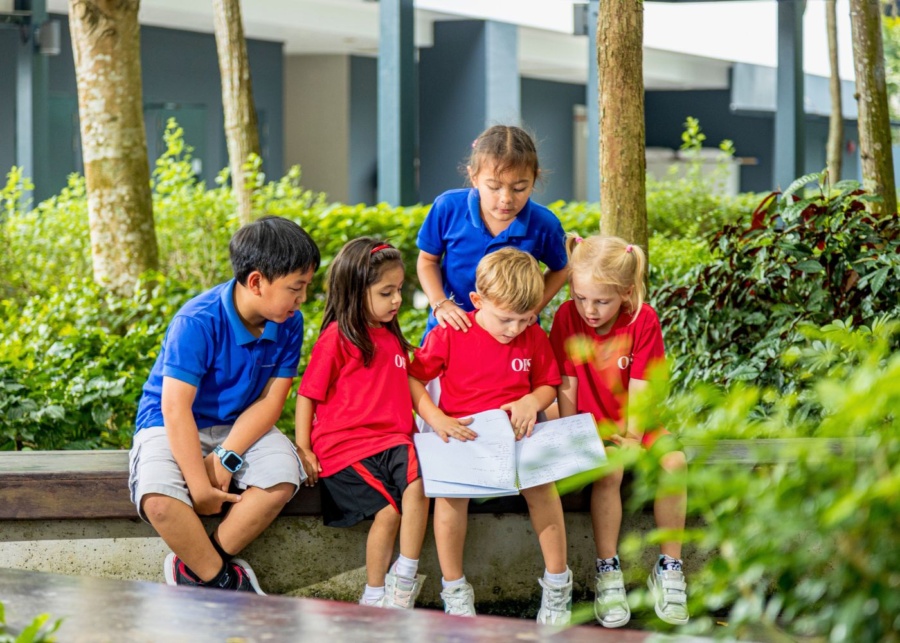
On the other hand, a non-selective school does not have a list of selection criteria for children intending to enrol at their school. Some schools, like OFS, don’t require children to sit for entrance exams or attend interviews. However, some non-selective schools may still have assessments. These may be on a case-by-case basis, and the results are usually used by the school to identify your child’s academic and social-emotional needs.
Does this mean that non-selective schools are not academically rigorous?
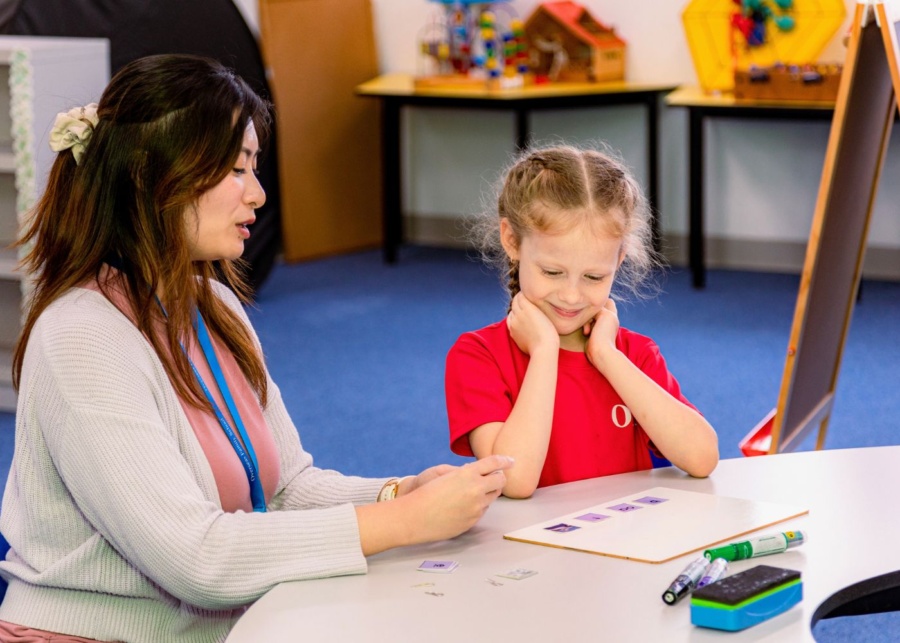
That’s not necessarily true. While it’s true that a non-selective school welcomes children of all abilities (some, like OFS, also offer places to children with mild special education needs), its teachers are also equipped to challenge and stretch academically bright children. In fact, some of the non-selective international schools in Singapore have consistently nurtured top students and produced fantastic results.
Take OFS again as an example: the school’s 2025 IB Diploma Programme (IBDP) cohort produced an average score of 35 points, well above the global average. On top of that, 23.2% of the IBDP candidates achieved 40 points and above, including two who scored an impressive 44. OFS has also been producing perfect scorers consistently between 2015 to 2024.
And among these are countless success stories that involve students with different struggles. OFS’ IBDP Coordinator Ms. Trapti Trivedi shared some with us, “I’ve had the privilege of working with many incredible young people in the last three years. There was a student who was on our at-risk list due to her challenges in Higher Level Biology and Higher Level Chemistry. We supported her with the school’s peer tutoring programme and personal tutoring. She managed to improve around eight points compared to her Grade 11 results and was able to go to the university she wanted. Another student I remember vividly is one who lacked some foundational knowledge for the IBDP. I noticed her strengths in reflection, organisation, and commitment, and built on those. With help from our after school support programme, additional resources from teachers, and optimising her study plans, this student improved by 13 points and also got into a university of her choice.”
Non-selective policies may extend beyond academic abilities

The non-selective at most international schools usually apply to academic abilities. However, there are also schools like OFS that extend to sports, arts, and other extracurricular activities.
A notable mention is the school, which welcomes all students to participate in its Sports Program regardless of their skills and abilities. Students have access to different developmental sports pathways that are catered to their interests and skill level.
Looking for a non-selective international school?
While academic rigour is prioritised at non-selective schools like OFS, the school places equal focus on helping students grow holistically. Ms. Trivedi puts it aptly, “The bigger success isn’t our students’ academic improvement – it’s the fact that they developed faith in their own abilities, and realise that they can succeed with effort and the right strategies.”
Learn more about how OFS supports children of all abilities, and how its educators help them realise their own unique potentials at its upcoming open day this 11 April. Register now to attend.
This post is in partnership with Overseas Family School.