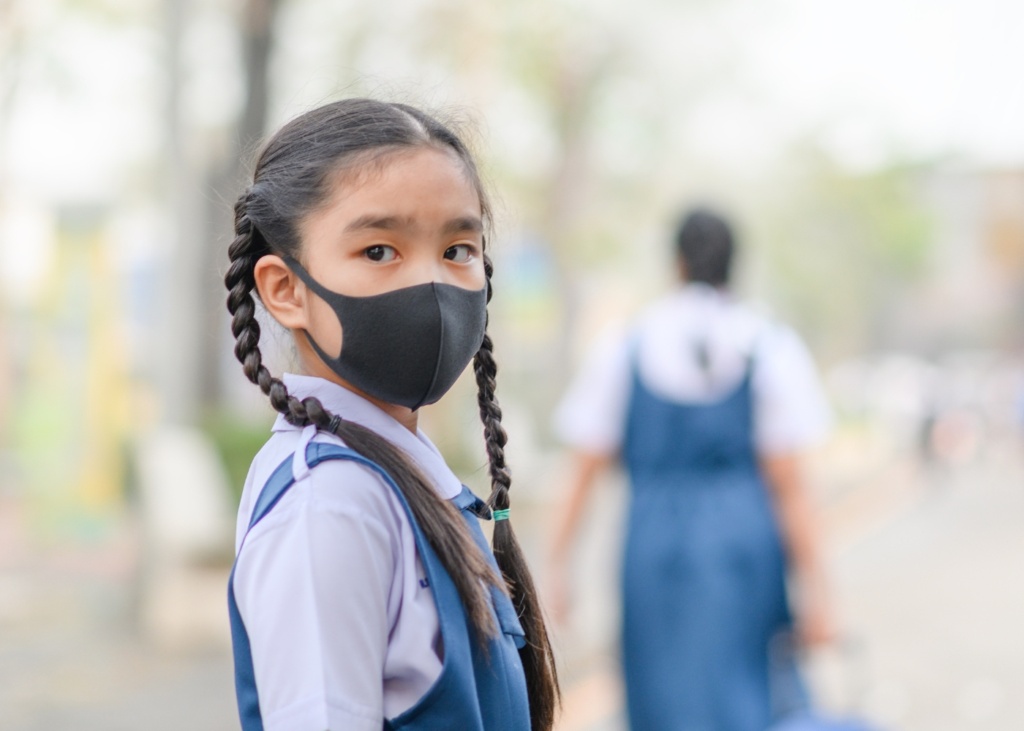
22 April marks Earth Day or วันคุ้มครองโลก every year, first held in 1970 to demonstrate support for environmental protection. And this year’s theme is "Our Power, Our Planet".
22 April marks Earth Day or วันคุ้มครองโลก every year, first held in 1970 to demonstrate support for environmental protection. And this year’s theme is “Our Power, Our Planet”.
A few weeks ago as I was deciding what to do for the Songkran holiday, I texted my friends who live in Chiang Mai to ask if they were around, as I was considering flying up to celebrate there.
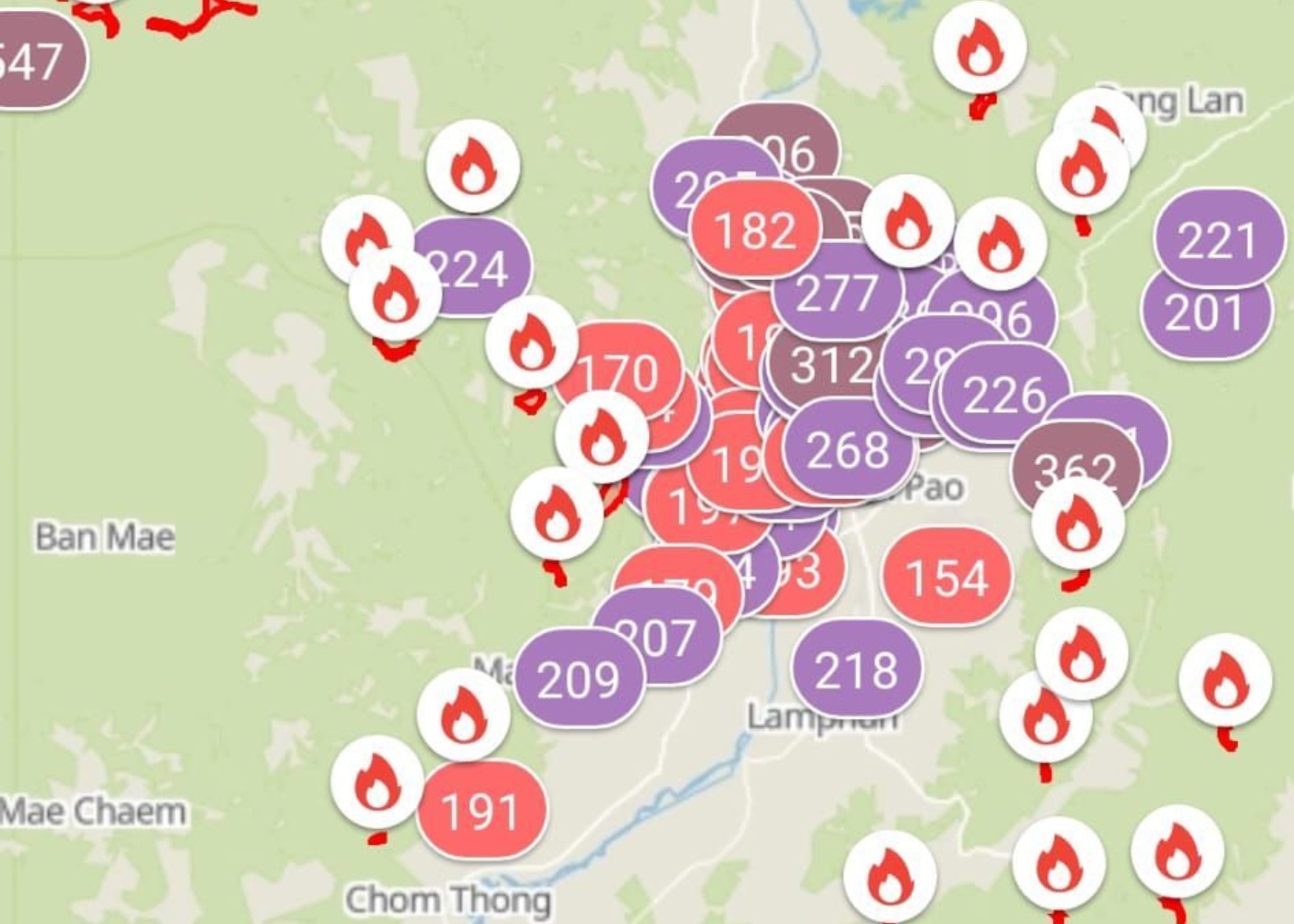
They then sent me screenshots of the PM2.5 readings and it genuinely sent me into shock.
The PM2.5 levels in places like Pai and Chiang Mai had soared into the four digits. The numbers felt so unreal that my first instinct was that it had to be AI-generated.
But it wasn’t. And no, I didn’t end up going to Chiang Mai.
What is PM2.5?
PM2.5 stands for tiny air pollution particles that are so small you can’t see them.
The “2.5” means they are 2.5 micrometres or smaller, or about 30 times smaller than a human hair.
Why does it matter?
Because they’re so tiny, they don’t just stay in your nose or throat. They can go deep into your lungs and worse – enter your bloodstream.
Burning season
They also recorded over a thousand new fires in a single day – something that had never happened before.
For those who are privileged enough to never have to deal with pollution in their country, let me put it simply: the number needs to be near zero. The colour needs to be green.
Before it gets to dark purple, it goes:
green → yellow → orange → red → purple → dark purple
So you do the maths.
Absence from the news
I’d say I consume news very regularly. Since I don’t use social media, my morning routine usually involves going on Google to read the news or scrolling through YouTube to catch up on headlines.
But prior to my friends sending me those screenshots, I had absolutely no idea this was happening in the north.
I did not see any local reporting that reflected the severity of this year’s PM2.5 situation.
Adapting to new lifestyle
Recently, I went on a school tour at a soon-to-open international school in Bangkok. One of the things they highlighted was that their sports centre is indoors by design. Their air conditioning system is “hospital-grade,” designed to purify air and remove bacteria, specifically for when PM2.5 levels are high.
It was positioned as a feature, but it also says a lot about how bad things have become in Thailand that we’ve sort of “normalised” living with this issue.
Because the reality is, it has been bad for years now. For as long as I can remember living in Bangkok.
We’ve adjusted our lifestyle around it. We check air quality apps. We limit our outdoor time or wear a mask when we go outside. We invest in air purifiers at home.
We adapt. But what if this isn’t enough?

Sweeten up your inbox! Subscribe to HoneyKids Asia Thailand
What’s the government doing?
Thailand does not currently have a single, comprehensive Clean Air Act in force. Instead, it relies on a patchwork of laws – public health law, environmental law, vehicle emissions rules – which many experts say are fragmented and weak on enforcement.
Earlier this month, an article in the Bangkok Post carried the headline: “Clean Air Bill could hurt economy, says Bhumjaithai MP.”
For context: the current prime minister of Thailand is from the Bhumjaithai Party.
And that, in many ways, says everything.
Imagine if we regarded nature as though it was a living entity, entitled to the same rights as us humans?
Actually, it’s possible. In 2017, New Zealand’s Whanganui River became the world’s first river granted legal personhood, recognised as a living entity (Te Awa Tupua) with the same rights, duties, and liabilities as a human being.
Why this is important for our kids
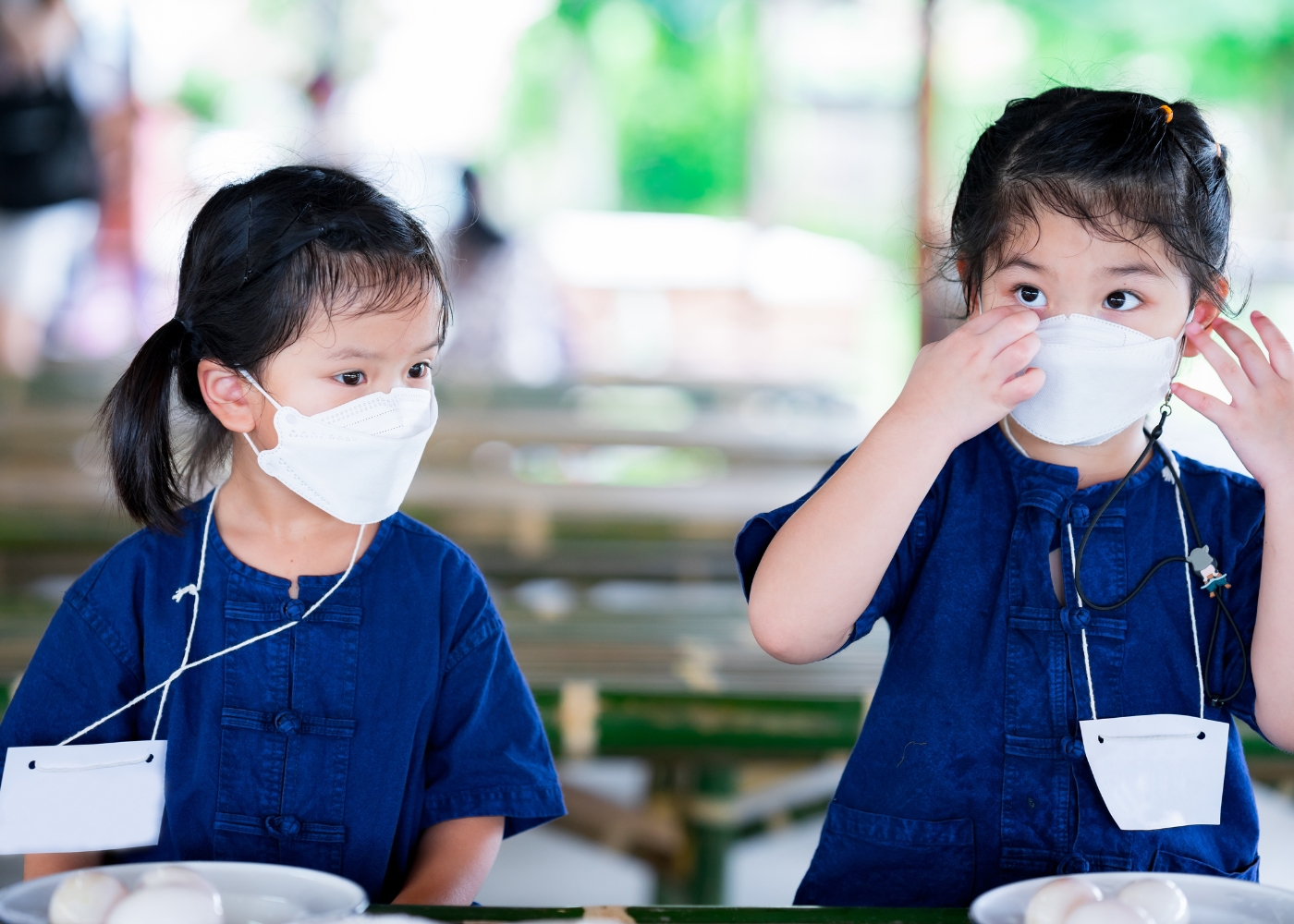
We adapt our lifestyles. We adopt technologies to cope. But the root problem remains.
And this is exactly why it’s so important that we raise our kids to care about the environment. They need to understand that this isn’t normal and shouldn’t be accepted as such.
Because if they grow up thinking this is just how things are, then nothing changes.
We don’t need to raise perfect environmentalists. But we do need to raise kids who are aware, who ask questions and who feel empowered to want something better. Especially the air they breathe in.
Because at this point, it’s hard not to feel like meaningful change isn’t coming fast enough from the top. And if that’s the case, then it has to start somewhere else.
At home.