
This quick guide helps parents and kids understand how to use Thailand’s most common polite words, and why they matter more than you think
If you’ve spent even a few hours in Thailand, you’ve probably heard it: “thank you ka”, “hello krab”, “yes ka”.
It’s one of the first things you’ll notice as a visitor to Thailand and one of the easiest ways to sound more polite (and more local) straight away.
If you’re travelling in Bangkok or anywhere in Thailand with kids, this is also a great, simple cultural lesson you can pick up together. And the good news? It’s really easy to understand.
What are “ka” and “krab”?
“Ka” (ค่ะ) and “krab” (ครับ) are polite particles in the Thai language. And no, this is totally different to Singaporean “lah”
They don’t have a direct translation in English, but they’re added to the end of sentences to make what you’re saying sound polite and respectful.
Think of them like a built-in “please” or a “polite tone marker”. It’s something that softens your sentence and shows good manners.
You’ll hear them used all the time in everyday situations, especially in places like restaurants, shops and taxis.
What’s the difference between “ka” and “krab”?
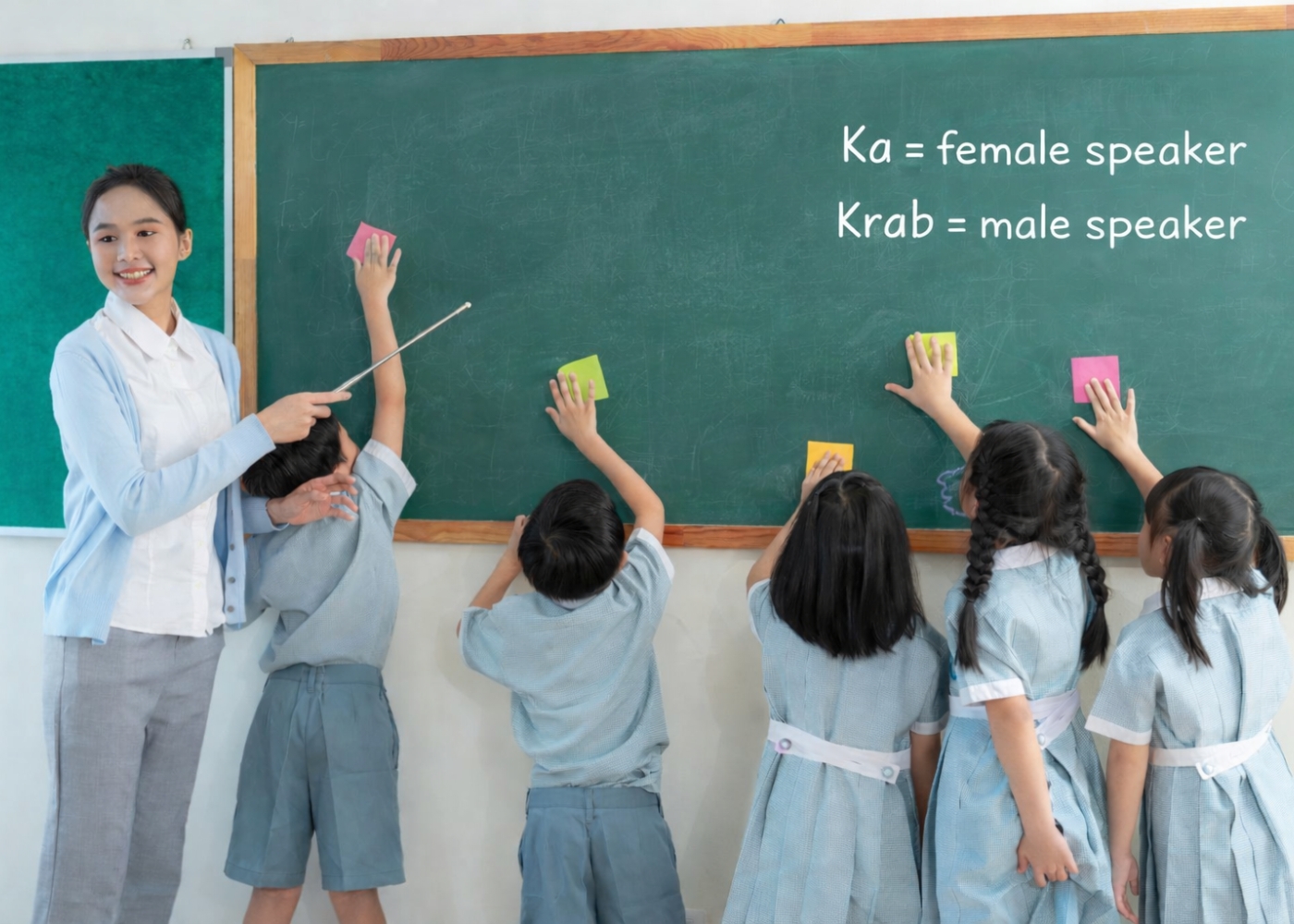
The difference is simple:
“Ka” (ค่ะ) is used by female speakers
“Krab” (ครับ) is used by male speakers
That’s it. It depends on the speaker and not who you’re talking to.
So if you’re a mum speaking, you’ll use “ka”.
If you’re a dad speaking, you’ll use “krab”.
When should you use “ka” and “krab”?
You’ll typically add them to the end of common phrases:
Hello: Sawasdee ka / Sawasdee krab
Thank you: Khob khun ka / Khob khun krab
Yes: Chai ka / Chai krab
No: Mai ka / Mai krab
In general, you can use them anytime you’re speaking to someone you don’t know, or in service situations, or in any situations that you might just want to sound polite.
Kids can follow the same pattern too.
Why it matters (especially when travelling with kids)

Using “ka” and “krab” might feel like a small detail, but in Thailand, politeness goes a long way.
For families visiting Thailand, it’s also an easy way to help kids learn basic cultural respect, feel more confident interacting with locals and turn everyday moments (like ordering food) into small cultural learning experiences.
We as a local will definitely appreciate the effort even if your pronunciation isn’t perfect.

Sweeten up your inbox! Subscribe to HoneyKids Asia Thailand
Is it okay if we forget to use them?
Yes, don’t worry.
We, Thai, are generally very understanding, especially with visitors. You’ll still be understood without using “ka” or “krab”.
But adding them in makes a noticeable difference in how polite and friendly you are making the effort to sound.
Quick tips for families
- Don’t stress about perfection, just try
- Encourage kids to copy what they hear
- Start with “hello ka/krab” and “thank you ka/krab”
The bottom line
If you remember one thing, it’s this:
“Ka” = female speaker
“Krab” = male speaker
Add it to the end of your sentence, even if your sentence is in English, and you’ve instantly made it more polite.
Simple, right?
And once you start using it, you’ll hear it everywhere and probably won’t stop saying it even after your trip.