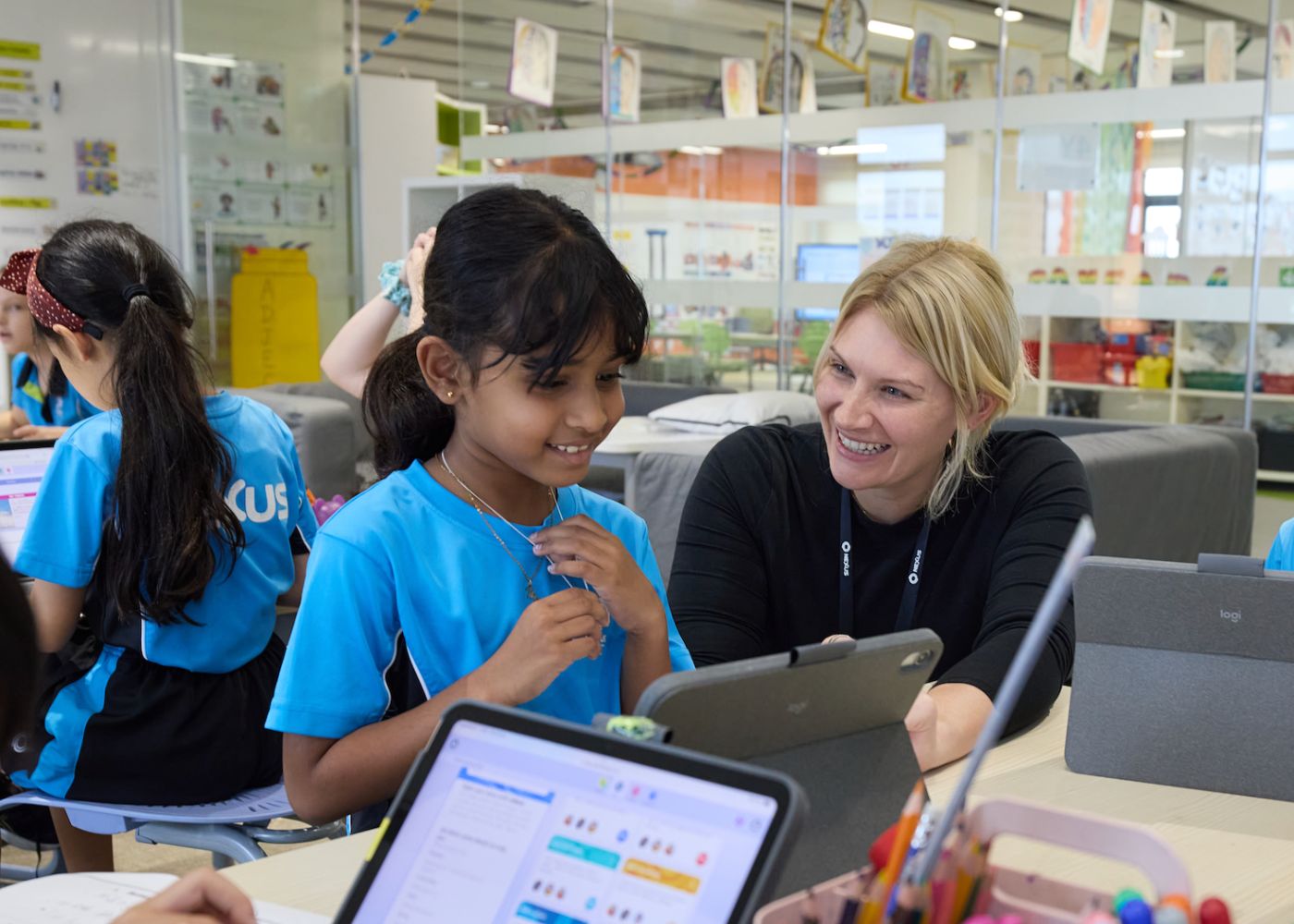
Can technology help children become stronger writers? Nexus International School (Singapore) certainly believes so. Here’s what we know about Writer’s Toolbox, the nifty digital tool that the school uses to help learners elevate their written work.
As a two-time winner of the Digital Technology in Learning Award in our Singapore Education Awards, Nexus International School (Singapore) is tops when it comes to integrating technology into classroom learning in meaningful ways. Writer’s Toolbox is the latest example of this, where teachers use the AI programme as a coaching tool to help Nexus’ primary school learners build strong writing foundations.
Curious to know more about this initiative? Here’s what we’ve found.
What is Writer’s Toolbox?
Writer’s Toolbox is an educational writing programme that’s designed to help students master and improve their writing skills. It provides children with direct, visual feedback as they write, coaching them in areas like grammar, sentence structure and construction, as well as paragraphing.
The great thing about this writing programme is that it can be personalised for each writer. Each learner at Nexus follows a pathway that tailors itself to their writing abilities, so they can take on immediate feedback on how to improve their writing skills.
How is the programme used during lessons at Nexus?
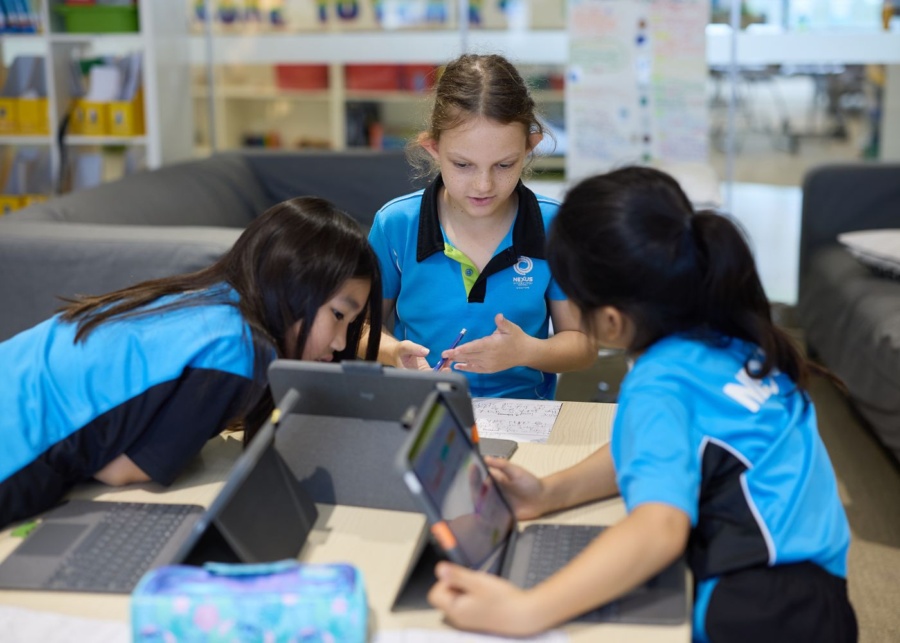
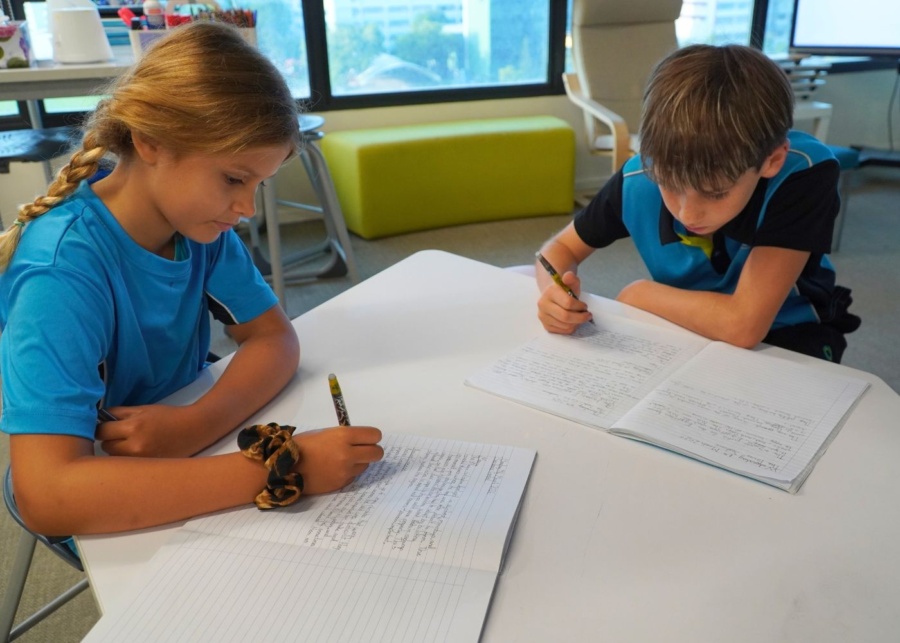
If you’re concerned about screen time, rest assured that Writer’s Toolbox has both online and offline features that are used in the classroom. Nexus’ teachers are very clear in using the programme as a tool to enhance in-person teaching, not to replace it. In fact, children still hand-write 70% of their classwork, with Writer’s Toolbox being used to support written work with personalised feedback.
Did Nexus see any results from the introduction of this teaching tool?
You bet. Teachers from Nexus’ Year 3-6 classes reported improvements in their learners’ sentence structure and word choices. A Year 6 teacher, Ms. Shiv, shared that she also saw her learners prioritising quality over quantity in their writing.
Nexus’ learners adapted to the programme quickly, as it’s interactive and colourful, appealing even to reluctant writers. Teachers also appreciate being able to track their learners’ progression effectively, including data on each child’s strengths and areas that require more teacher support.
What’s next for Nexus?
With the success of the programme in primary school, Nexus plans to introduce it to its secondary school learners. Primary School Language Arts Coordinator Ms. Jessica Lindsay also has plans to use Writer’s Toolbox to create a “coherent Language Arts pathway” to help learners develop confident, transferable writing skills.
You can find out more about Writer’s Toolbox and how Nexus uses digital tools to enhance learning at its upcoming open day on Saturday, 18 April. Register now to book your spot.
This post is in partnership with Nexus International School (Singapore).