Have I been watching too much K-drama or did this immersive dining experience just serve up a reflection in parenting?
These days, immersive experiences are all about dimmed lights, sprawling screens, and cinematic soundscapes. They are designed to transport you to somewhere new but they rarely take you somewhere deeper. When I left the Jeju Haenyeo Singapore dining experience, I didn’t just leave with a full belly, I left with a quiet, bittersweet ache in my heart. Did this meal just conjure scenes from the K-drama “When Life Gives You Tangerines” or did the stories hit too close to home with reflections in parenthood?
Jeju Haenyeo Singapore Experience
Where: 1, Old Parliament Lane, The Arts House Annex Building, #01-04, Singapore 179429
When: Wed – Fri 11.30am – 11pm, Sat – Sun 12pm – 11pm. Closed Mon -Tue
How much: From $158++ per person (suitable for children 5 years old and above)
More info
What is the Jeju Haenyeo Singapore Experience about?
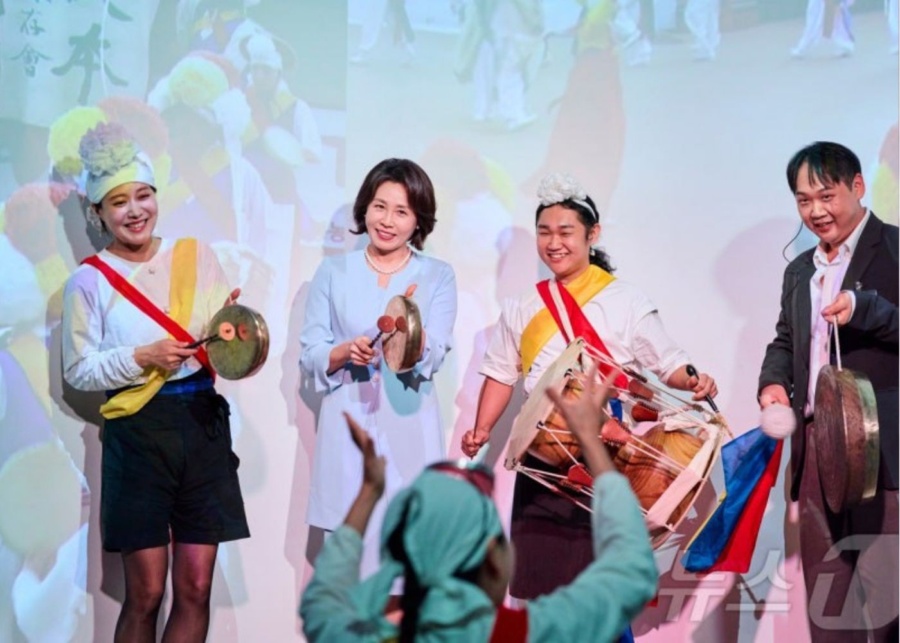
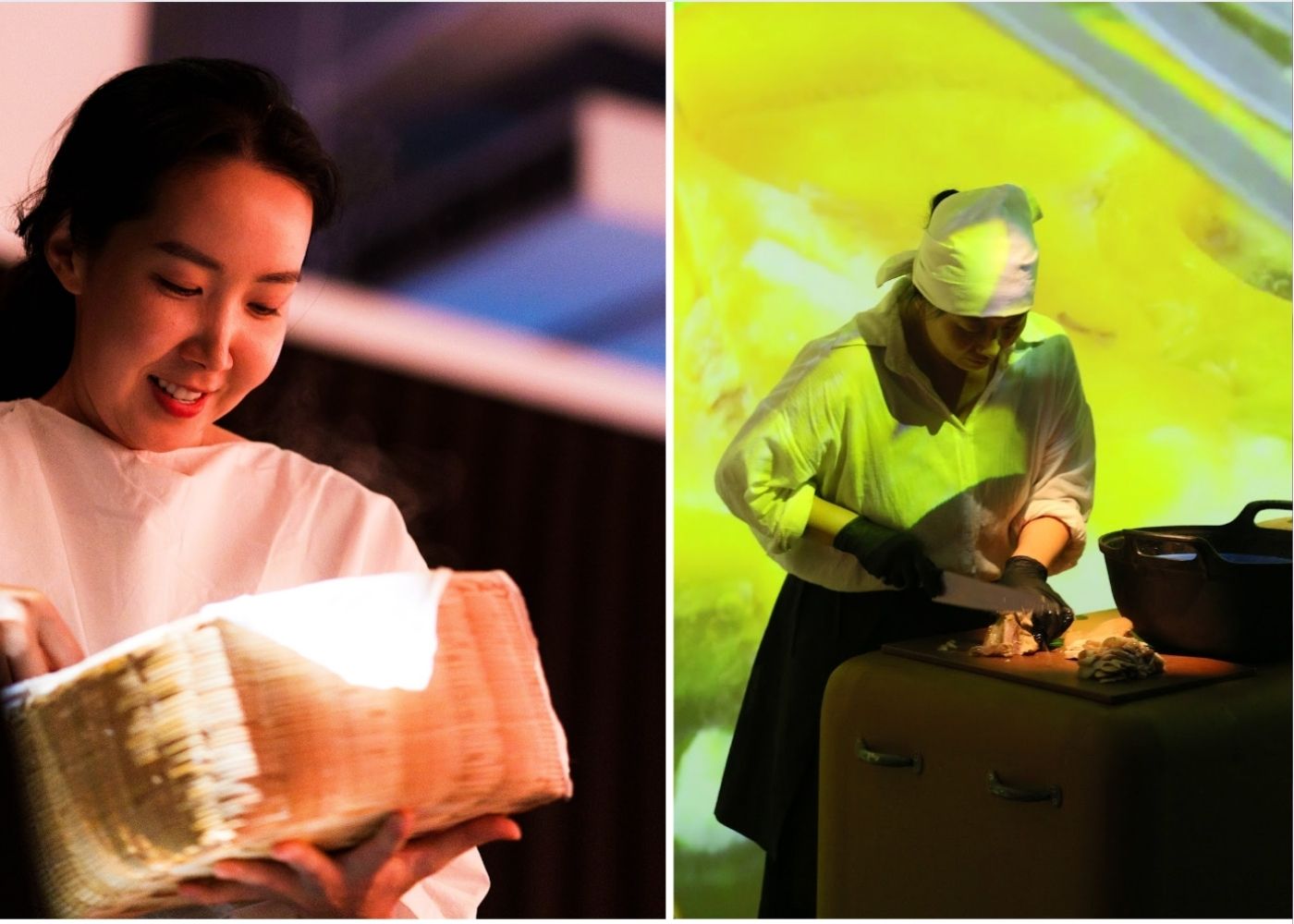
Jeju Haenyeo Singapore is the experience’s first and only international branch outside of South Korea. Even the First Lady of South Korea, Lady Kim Hye-Kyung, made a personal visit during her visit to Singapore in March. It’s a two-hour multisensory experience which brings Jeju’s stunning landscapes to The Arts House, with performances and flavours that spotlight Jeju’s culture and stories.
Think of it as an omakase with live performances and storytelling. The stories are inspired by the Haenyeos — female divers who free dive without oxygen tanks to harvest seafood — including one who continued to dive till she was 90 years old!
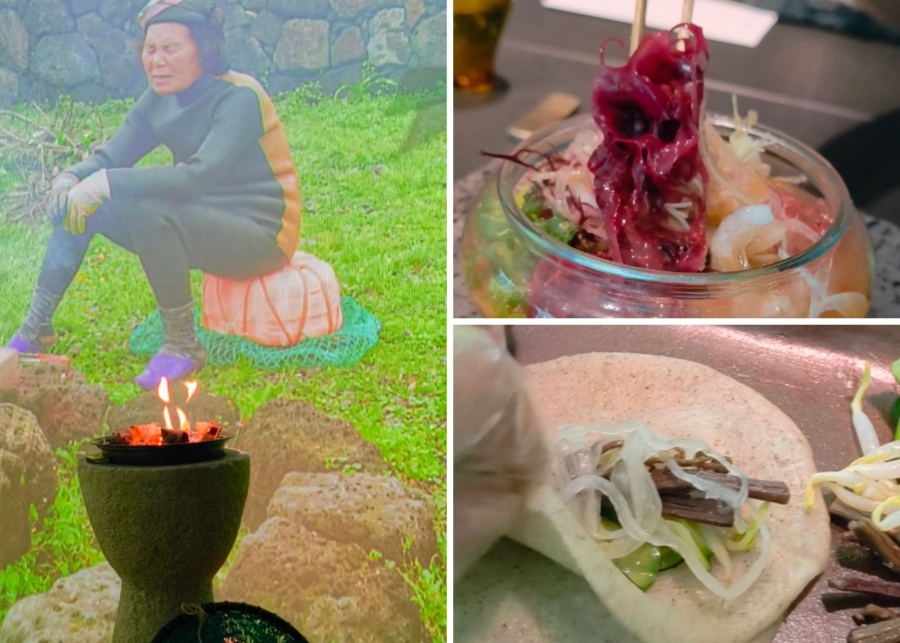
The food at the Jeju Haenyeo Singapore Experience
The seasonal menu showcases ingredients and culinary techniques that reflect life in Jeju. Unlike the big, bold flavours of a Kimchi stew, Jeju’s palate is clean and lightly seasoned with a focus on seafood and fresh vegetables. While I did not have abalone, I enjoyed the traditional Bbulsora Mulhoe, a cold and tangy soup with horned conch. I even had the celebratory Hansangcharim, a spread of side dishes, Korean pancake, leaf wraps, and Dombe pork — Jeju’s specialty boiled pork, which looks simple but carries a depth which slowly releases itself on you. Not unlike the story of Haenyeo.
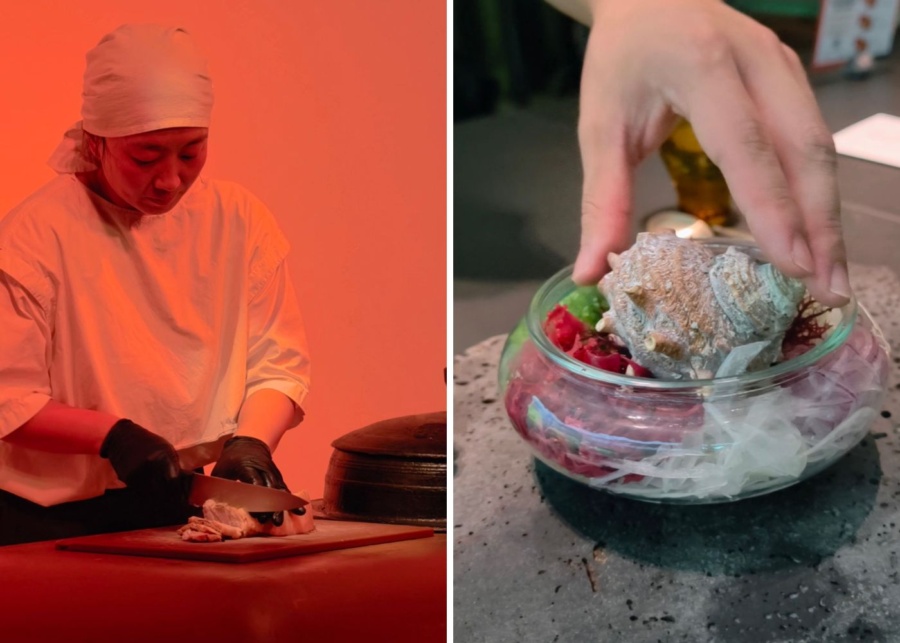
I learnt that Jeju’s cuisine is sometimes referred to as “the world’s healthiest fast food.” Not a trend but an act of love from time-strapped mothers with a garden and fresh seafood, determined to feed their children the best. For seafood lovers like me, this sounds like a dream come true. However, as I rested my weight on the seats made of recycled rubber suits and floats — the very suits the Haenyeo wore into the water. I had a feeling that this wasn’t going to be just a meal.
Who exactly are the Jeju Haenyeo?
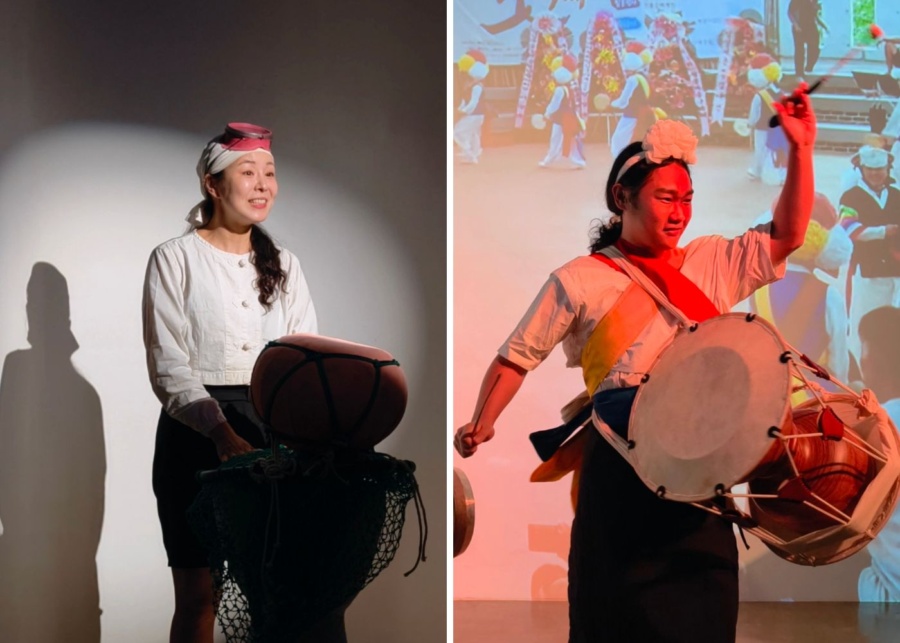
Speaking with the founder of Haenyeo Kitchen Group, Kim Ha-Won, who grew up watching her grandmother and aunties walk into the sea in the wee hours of the morning. It’s more than an occupation, it is a way of life. One that’s shaped by the fight for survival throughout time. Historically, Jeju was a place of exile. Men came and left for their original home, and those who stayed were mostly lost to storms or wars. That left women, with no property, savings, or skills, to fend for their families and themselves. So they turned to the sea. “The sea is the only place in the world that does not judge her. The sea only provides,” Ha-Won shares.
“The sea does not ask me if I can read. The sea does not ask me what I own. The sea only asks me to come in with this one body of mine. And every time I come in — the sea feeds my children.” – Haenyeo
Even today, haenyeo continue to brave the temperaments of the sea, diving to provide for their family. UNESCO recognises them as an Intangible Cultural Heritage of Humanity, but to the women of Jeju, it is an inherited destiny to feed the family.
Haenyeo are mothers who keep showing up
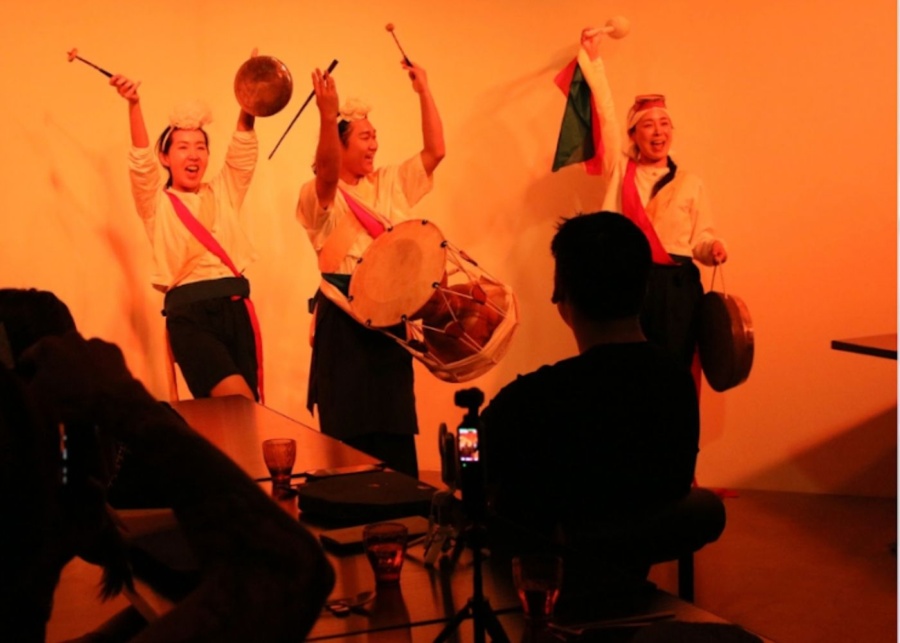
Not by choice but by circumstances, the women of Jeju carry the weight of family responsibility on their shoulders. However, what gives them life, also takes from them. Countless Haenyeo have lost their daughters, sisters, and fellow divers to the very sea that sustains them. Yet they keep diving. Ha-Won recalls her aunt’s grief of losing her daughter and granddaughter to the sea. They walked out and never returned.“She wanted the sea to take her but the sea kept saving her, the sea kept feeding her… she resents the sea but at the same time, she is grateful to the sea.”
Standing behind that fear and grief are mothers who kept showing up for people who depend on them. I think of my mother, I think of myself as a mother, I think of mothers (and parents) everywhere who keep showing up for their children; despite the fear, despite the struggle. We just keep showing up.
Community and sisterhood is everything
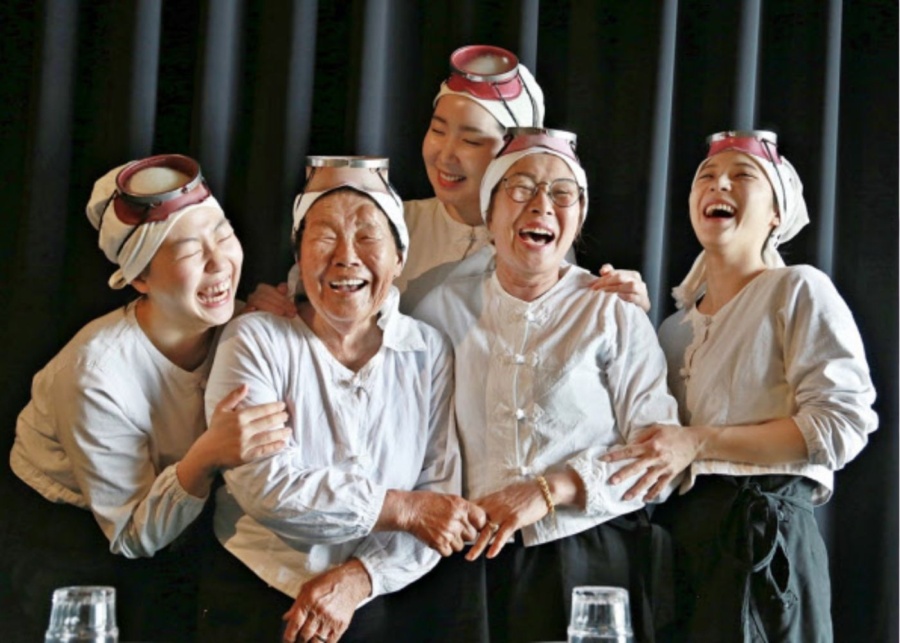
In spite of the perils of the sea, Young Hee and her fellow divers are seen smiling and laughing as they share a meal after a dive. Through the projection, she tells us, “The sea gives what it gives. Take only what you need. Leave some for tomorrow and for each other.” And that is what underpins the spirit of the Haenyeo. The all-for-one and one-for-all way of life sees that no one gets left behind, even when they are pregnant or sick. And this symbiotic relationship becomes even more vital out in the open sea where the only person who can save them is another Haenyeo.
“Haenyeo laugh together, cry together, and endure together. They share their catches and losses… this sisterhood is how they survive a life that no person can survive alone,” shares Ha-Won. That’s what makes it bittersweet — not just their resilience but the fact that they didn’t have to do it alone.
Which makes me wonder if modern parenting struggles aren’t about doing more, but about doing it without the kind of support that makes it sustainable.
A mother’s love comes in all forms
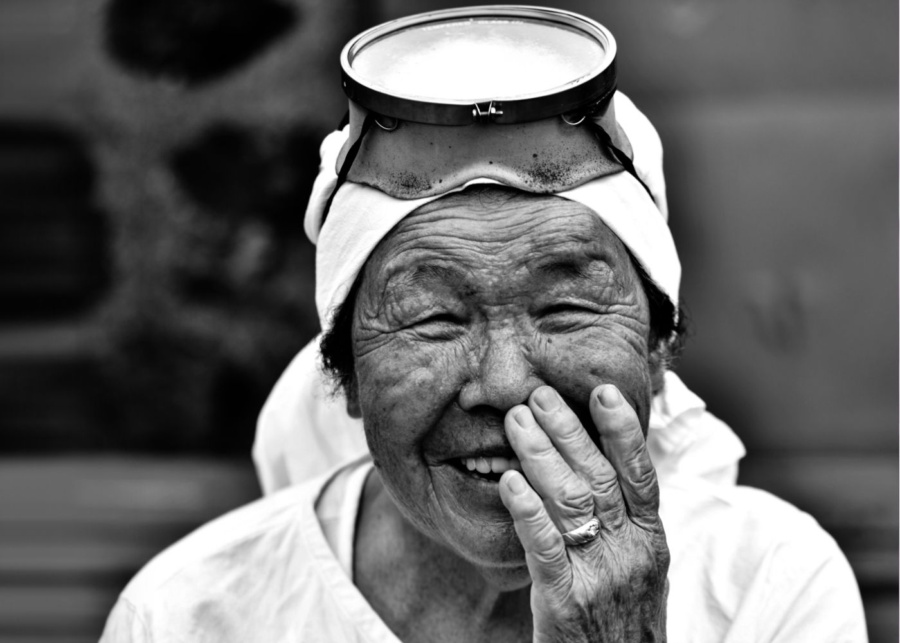
I cried buckets when Ae Sun’s mum worked herself to the brink in “When Life Gives You Tangerines.” She puts up a tough front doing everything she can to keep her daughter from a life of poverty. But beneath the cold facade lies a warm, soft heart, one that couldn’t be more proud of Ae Sun, even when she writes a poem about how much she hates abalone.
In reality, these story lines are not unusual among the Haenyeo. As Ha-Won delves deeper into life on Jeju, she shares how children are often raised by nature. They eat whatever the land and sea provides and grow up to the rhythms of the island while their mothers are out at sea. In many modern parenting circles, this might look like neglect. But love comes in different forms. Haenyeo don’t —and can’t — parent with more time or resources. They parent with their lives, carrying the weight of the family, respecting nature, and supporting one another. While their children may hold fear and resentment at first, but over time, it gives way to something else, a respect and deep pride in the work and sacrifices that have sustained them. And that work is the life of a Haneyeo.
“I was the granddaughter of a haenyeo, and that is the greatest inheritance she gave me — not money, but the knowledge that a woman can be strong enough to feed her whole family from the sea.” – Ha-Won
The Jeju Haenyeo Singapore experience lingered long after the table was cleared, it left me with reminders that as a parent, I can keep showing up and I don’t have to do things alone. Love comes in all forms and it doesn’t always look the way we expect. So, we do what we can, with what we have. And whatever that looks like, it’s good enough.
Happy Mother’s Day to all!