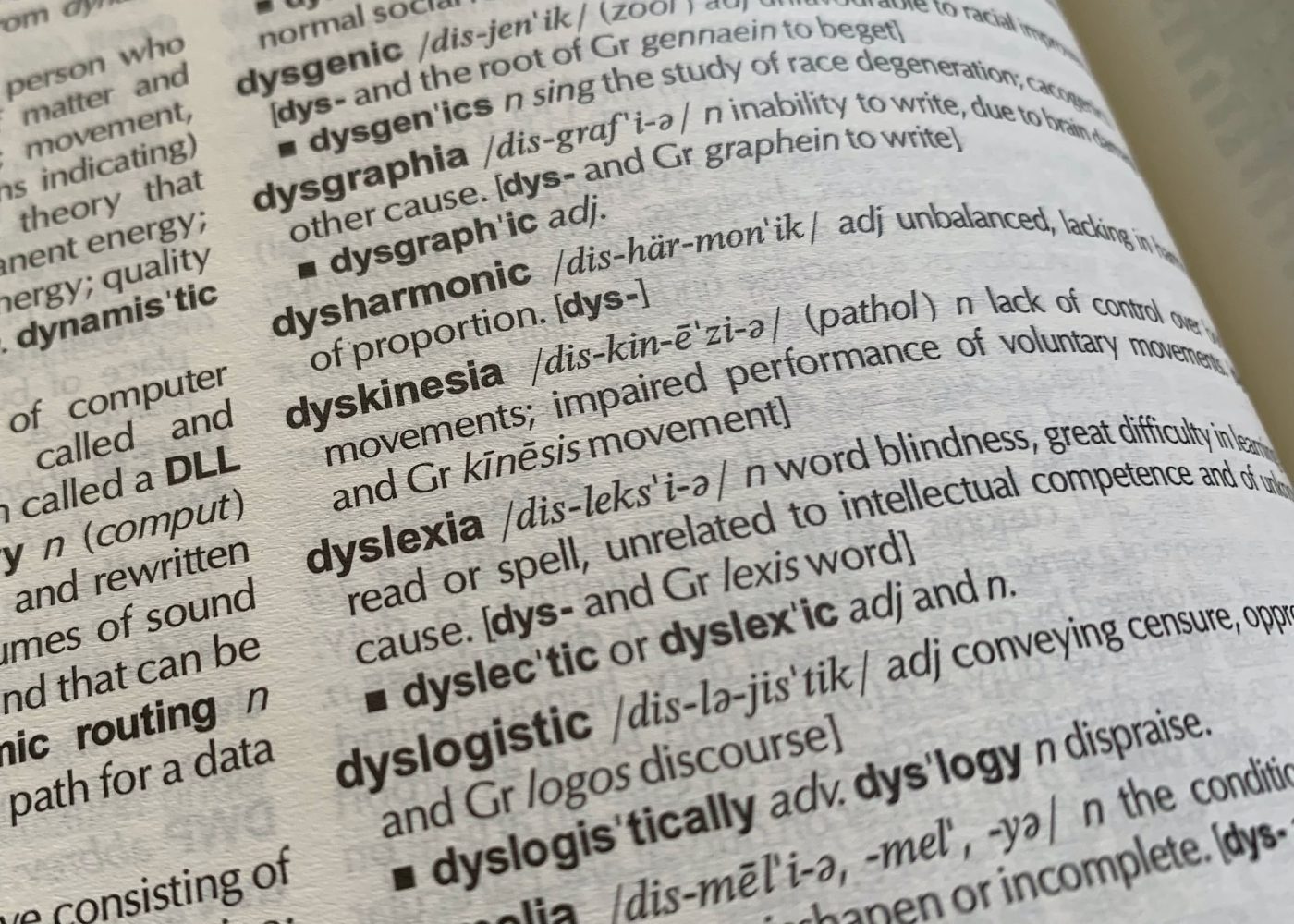
So, you suspect that your child may have dyslexia. But do you know what this learning difficulty is about, and more importantly, how you can support your child? We've got all the deets you need.
As our children grow up, they learn to read, write, and speak. And every child progresses at their own pace. But what do you do when your child has difficulty learning to read and write and begins to fall behind on certain milestones? And what are the next steps you can take to support your child and nurture their learning in the best way possible? In light of Dyslexia Awareness Week marked in October every year, here’s our comprehensive guide to this all-too-common “reading disorder”.
Dyslexia support in Singapore: At a glance
- Dyslexia Association of Singapore – Best for assessments and English and Chinese literacy programmes
- Swords & Stationery – Best for game-based literacy learning
- Singapore Brain Development Centre – Best for literacy and developmental support
- Mind.Space – Best for educational therapy and counselling
- Extra•Ordinary People – Best for arts-based participation and caregiver support
- MindChamps Early Intervention & Therapy – Best for integrated child therapy services
- Therapy Alliance – Best for speech, occupational and psychological support
What is dyslexia?
According to the Dyslexia Association of Singapore (DAS), dyslexia is a specific learning difference that makes reading, spelling, and writing difficult. Its symptoms include difficulty identifying speech sounds and decoding letters and words. Some dyslexic folks find it harder to identify and work with the individual sounds in words, and may also have difficulties with verbal memory and sequencing.
Dyslexia primarily affects accurate and fluent word reading and spelling. Some children also have difficulties with maths or motor coordination, but these can reflect co-occurring learning differences and do not necessarily indicate dyslexia. Dyslexia often runs in families, so a family history can increase your child’s likelihood of having it too.
According to DAS, dyslexia may affect around 10 percent of the population in Singapore, and difficulties can range from mild to severe. Did you know that if you’re dyslexic, you happen to be in really good company? Entrepreneur Richard Branson has spoken openly about his dyslexia!
What are the signs and symptoms of dyslexia?

There are a few prevailing signs that people with dyslexia often exhibit. The most common are difficulties associated with reading. It can look like hesitancy to read, confusing letters such as p and q, b and d, and skipping or re-reading a line of words. When it comes to writing, people with dyslexia may have poor handwriting, omit letters and words, and commit numerous spelling errors. Letter reversals alone do not mean a child has dyslexia, and are common when children first learn to read and write. DAS has a guide to signs and symptoms that you can refer to to learn more about your child’s difficulties.
FYI: If your child does exhibit some of these signs, they may also have other learning difficulties on top of dyslexia.
Getting tested for dyslexia in Singapore: How to get an assessment for dyslexia and other learning differences
If you think your child may have dyslexia, it’s vital to confirm it. Recognising literacy difficulties early can help ensure your kid gets the support they need to cope in school and life. At DAS, children must be at least six years old on the assessment date and have completed at least six months of structured phonics intervention or formal education. Younger children can still receive early literacy screening and support. In Singapore, a dyslexia assessment can be carried out by qualified psychologists at DAS or private clinics. If your child attends an MOE school, speak with their teacher about school support and assessment pathways. After the assessment, you’ll understand the condition a little better and learn how to support your child.
You can also seek an assessment via the Dyslexia Association of Singapore. DAS offers screening tests to assess the risk of literacy delay. Its published screening fees are $15 for primary school students and $95.90 for secondary school students; check the current screening details before booking. You will receive the results shortly after the screening, and staff will go through the findings, sharing your child’s strengths and challenges. From this, they can recommend suitable next steps, which may include a full assessment. Screening identifies risk; it does not provide a dyslexia diagnosis.
For the assessment, fill out the necessary forms via the online portal — you’ll need your kiddo’s teacher to provide some feedback, too. Once you’ve submitted the documentation, you will chat with a Specialist Psychologist from the Dyslexia Association of Singapore. Afterwards, you can make plans to schedule a psycho-educational assessment for your kiddo. This assessment will involve standardised tests and usually lasts around three to four hours. Once the tests are completed, the psychologist will follow up with you on the results and also provide a written assessment featuring kiddo’s performance on the tests, evaluations and recommendations. This assessment can be helpful when looking for accommodations for your child.
Before getting your little one tested, sit down with them and explain dyslexia and why you’re seeking a diagnosis. Let your child know that the condition is manageable and that you’ll always be there to support them.
Dyslexia intervention and support centres in Singapore
Dyslexia is a lifelong learning difference, rather than a disease. Early learning interventions can help children develop their reading and spelling skills. Explicit, systematic literacy teaching, including phonics, is a key part of support. Ask providers how their programme teaches reading and spelling and how they track your child’s progress. There are a few places in Singapore that offer intervention programmes:
Dyslexia Association of Singapore
Best for: Assessments and English and Chinese literacy programmes
This social service organisation offers many services, including speech and language therapy, literacy programmes for English and Chinese languages, and even holiday workshops. MOE funding is available for eligible students on its Main Literacy Programme; other programmes and assessments have separate fees. DAS also offers financial assistance, subject to eligibility.
Where: Dyslexia Association of Singapore, multiple learning centres across Singapore; enquire with DAS about the centre and programme that suit your child

Swords & Stationery
Best for: Game-based literacy learning
If you’re looking for an educational therapy programme that specifically targets children and youths with dyslexia, Swords & Stationery is it. Each session, prepped weeks in advance, combines academics, games, and digital presentations. The institution also provides tips, strategies, and resources for parents.
Where: Swords & Stationery, One Pemimpin, 1 Pemimpin Drive, #12-03, Singapore 576151
Singapore Brain Development Centre
Best for: Literacy and developmental support
This centre offers literacy programmes, developmental support and cognitive training for children with learning difficulties, including dyslexia. Ask about its literacy teaching and how the proposed programme will address your child’s reading and spelling needs.
Where: Singapore Brain Development Centre, 1 Goldhill Plaza, #01-11, Singapore 308899
Mind.Space
Best for: Educational therapy and counselling
Established by two certified special education needs professionals, this therapy and consultancy firm renders services that help individuals manage and overcome their learning difficulties. It also provides counselling, psychological services, and speech and language support.
Where: Mind.Space, Block 185 Toa Payoh Central, #02-320, Singapore 310185

Extra•Ordinary People
Best for: Arts-based participation and caregiver support
This Singapore-registered charity supports children with special needs, including dyslexia. Its current programmes include arts-based activities, music and support for caregivers. These can support participation and wellbeing; enquire about the programme that suits your child alongside their literacy support.
Where: Extra•Ordinary People, The Plaza, 7500A Beach Road, #01-313, Singapore 199591
MindChamps Early Intervention & Therapy
Best for: Integrated child therapy services
Formerly known as MindChamps Allied Care, this organisation has a dedicated team of psychologists and therapists. On top of early intervention services such as speech, occupational, and educational therapy, the organisation also offers behavioural intervention and child psychology services.
Where: MindChamps Early Intervention & Therapy, locations include Toa Payoh, Tampines, Marina Square, and more
Therapy Alliance
Best for: Speech, occupational and psychological support
Here’s another establishment that knows a thing or two about having a kid with special needs. Therapy Alliance offers speech and occupational therapy, psychological services and support for children with learning difficulties, including dyslexia. It also provides help in other areas, such as school readiness skills and behavioural therapy.
Where: Therapy Alliance, 312 Onan Road, Singapore 424703

Play can be a form of learning too! Photography: cottonbro via Pexels
How else can I help my child cope with dyslexia?
Besides seeking out early literacy intervention, parents can also play a more active role in learning. These can come in the form of simple activities like journaling, pointing out words and getting kiddo to read them, and playing word-related games like charades, Scrabble, and even Wordle. For a change of scene, take them out to the museum! Some children have preferences for how text looks. You might try out the OpenDyslexic typeface with your child, but special fonts have not been shown consistently to improve reading. Let kiddo choose a comfortable layout, and keep practising the skills recommended by their educator. Reading aloud together, audiobooks and text-to-speech tools can also help your child enjoy stories.
Is it possible to be dyslexic in other languages?
Many children in Singapore are bilingual. And as mentioned above, dyslexia is known to impact learning languages. Dyslexia can affect reading and spelling across languages, although the difficulties may look different depending on the writing system. While the English and Malay languages use similar alphabetic systems, the Chinese language uses logograms (characters), and Tamil uses an alphasyllabic writing system. Therefore, it may not be as straightforward to compare dyslexia in Chinese or Tamil to dyslexia in English. However, select organisations also provide intervention programmes to assist learners struggling with their second language.
Common misconceptions about dyslexia
Despite extensive research, dyslexia is still widely misunderstood in Singapore. One misconception equates dyslexia to a lack of intelligence. This is, of course, absolutely untrue and a harmful thought. Also, the learning challenge has nothing to do with laziness.
Another misconception is that having dyslexia limits one’s ability to go far in life. Again, this is not true – many well-known dyslexics have excelled far and beyond. Richard Branson is one example to look up to!
Resources and avenues of support for dyslexia
There’s a wealth of information about dyslexia out there, but going through it all can be overwhelming. You may feel that you are alone on this journey. Quell that thought, we say!
Here are some valuable resources to help both you and your child…
- DAS Parents Support Group — The official support group by the Dyslexia Association of Singapore
- The True Gifts of a Dyslexic Mind — This inspiring TEDx talk reframes learning differences as a powerful tool and teaches the concepts of an open mind and heart.
- The Birds in the Balcony by Josephyne Ho — Two kids move into their new home and learn more about olive-backed sunbirds. Keep a lookout for fantastic little details that may or may not be an allusion to dyslexia.
- Dr JiaJia and Big Bro’s Show — Check out this comedic sibling duo’s take on living with dyslexia in Singapore.
- Emma and Ginger: Dad’s Dyslexic Too (Book 4) by Jeanette Yap — This title delves into a child’s dyslexia diagnosis, which she happens to share with her father. Read more to find out how this impacts their relationship.
At the end of the day, early assessment and intervention programmes can help your child cope with dyslexia. Ultimately, you play the most prominent role as their support system. You can do this, parents!
This article was originally written by Sufyan Saad in 2022 and updated by Jay Panicker in 2024 and Andrina Loo in 2025 and 2026.