Does your child need to be musically talented to excel in an instrument, and what’s the right age to get them started on music lessons? We got a music school founder and teacher to answer these and more popular questions.
Music classes are some of the most popular enrichment options among families in Singapore. Everyone enjoys a good song, and don’t our little ones just love dancing to the beat? Besides, mastering an instrument is a good skill to have, and is a good outlet for children to express themselves creatively.
We can go on and on about the benefits of music classes, but how do we know if it’s a good fit for our kids? After all, not every child is musically inclined, and we don’t want to sign them up for an enrichment class if they’re not going to enjoy it. And even if they do show some interest in music, how do we know it’s not just a passing interest? To help you understand more about music lessons for kids, we posed some popular questions to Janice Ong (affectionately known as Teacher Janice to her students), founder and managing director of Presto Studios, the silver winner of our 2025 Singapore Education Awards’ Best Music School For Kids category.
Teacher Janice, will music lessons be tough for a child who doesn’t have perfect pitch, or doesn’t possess a ‘natural talent’ for music?
This is something many parents worry about, and I completely understand why, given that we live in an achievement-focused environment. In my experience, perfect pitch isn’t a prerequisite to learning music; and most successful musicians were not born ‘talented’ either! Music skills are honed through guidance, patience, and consistent practice.
At Presto Studios, we focus on helping children develop listening skills, musical understanding, and confidence. I believe every child can grow musically when learning is paced well and given strong encouragement.
In your experience as a teacher, what would you say is the ‘best’ age for a child to start music lessons? For example, is it the younger the better?
Early exposure can be helpful, but I don’t believe there’s a ‘perfect’ or ‘best’ age to start music lessons. What matters most is whether your child is emotionally ready, curious, and able to enjoy the learning process.
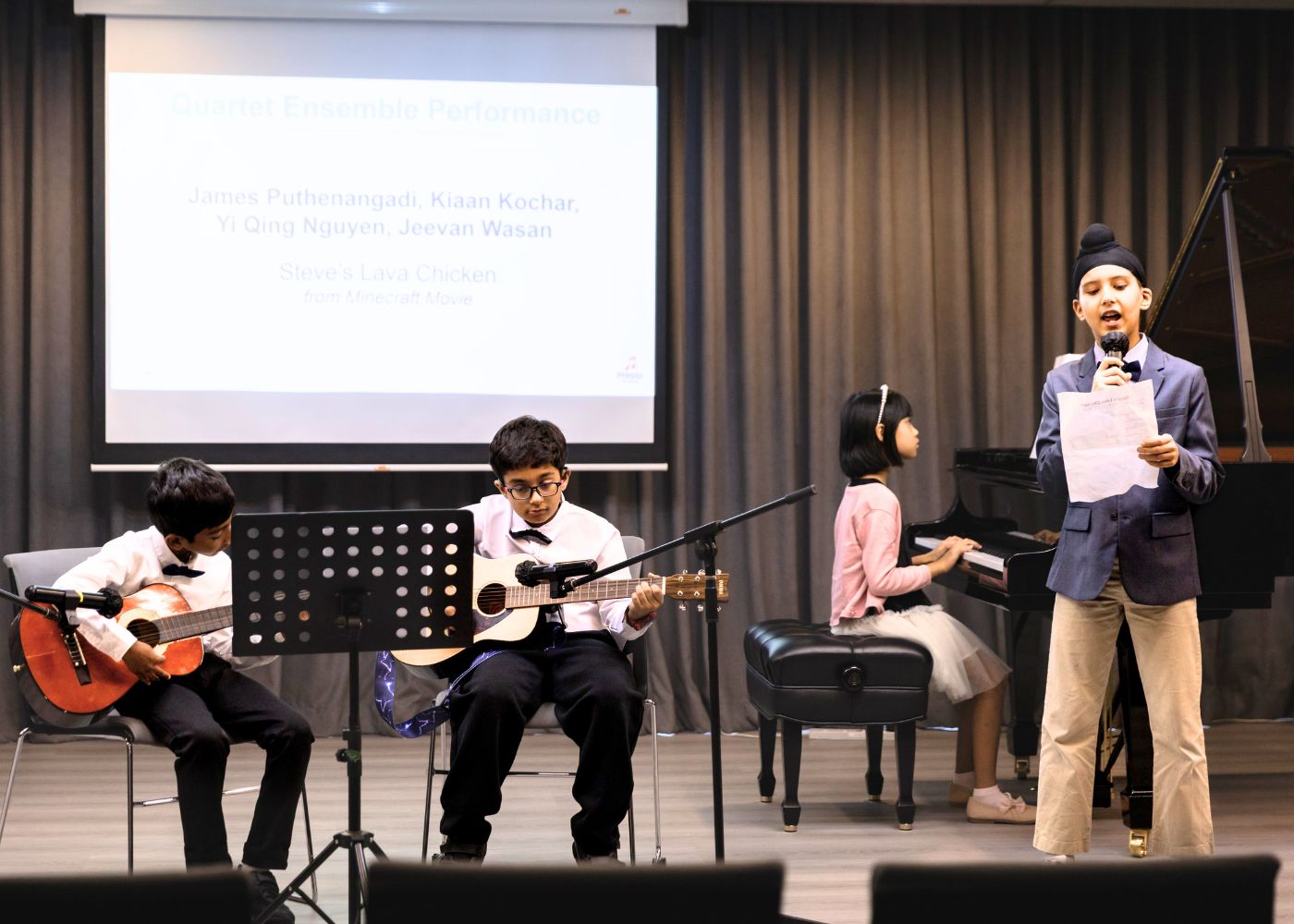
For example, we have coached numerous children from as young as three years old at Presto Studios’ Sing & Play class; and we also have teenage students who are new to music. Both of these groups grow steadily and do very well. In fact, older beginners may even learn faster because they have better focus and understand instructions more clearly. It really boils down to readiness and interest.
So my fellow teachers and I always try to meet each child where they are. We guide younger children gently through engaging and age-appropriate classes; while older children are supported with clear structure and achievable goals to instil confidence in them from the start. We believe music is a journey, not a race.
Let’s say a child tells their parents that they’re interested in music, or in a particular instrument – how do we know that they are emotionally ready for it, and it’s not just a passing interest?
That’s an understandable concern, as music lessons and instruments are long term commitments. I would say that a good first step is to simply let children explore. Many music schools, including Presto Studios, offer trial lessons so parents and children can experience what learning music is actually like. You may begin to see signs of readiness during preliminary classes, such as willingness to practise, curiosity about progress, and generally enjoying the lessons.
You can also have conversations about music lessons at home. For example, you might want to tell your children that learning music can be fun, but it also takes effort. Ask your children if they’re ready to try and see how it feels. Keep conversations gentle, encouraging, and open.
At Presto Studios, we work closely with families during this early exploration stage, and there’s no pressure to commit. We believe commitment comes naturally when a child feels supported and inspired to learn.
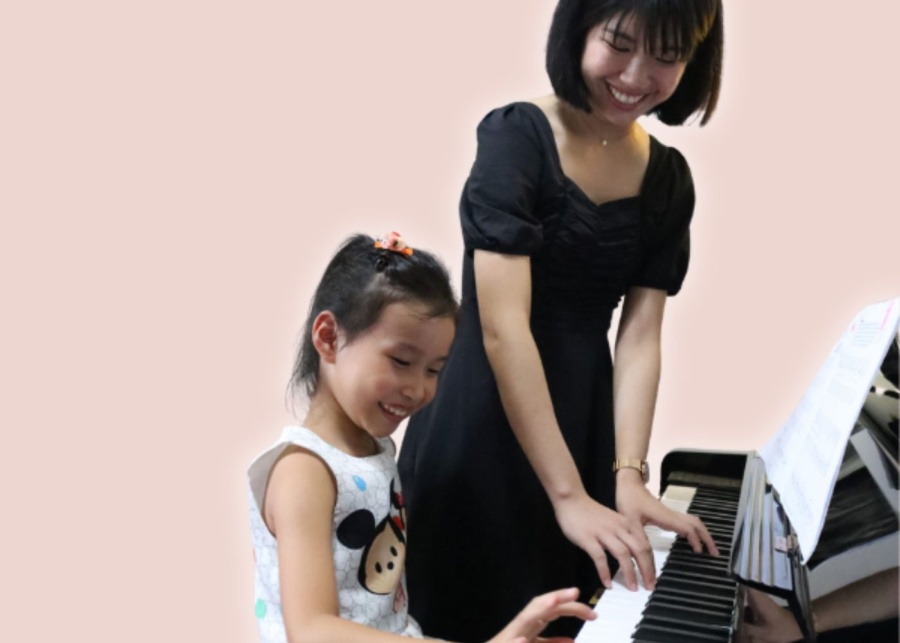
You’ve probably come across instances where some children are more interested in learning how to sing or play contemporary and the latest pop songs, rather than classical pieces. Is it possible for students to only learn modern songs?
That’s very common, children are naturally drawn to music they hear on popular TV shows and social media. These songs are familiar and it makes learning feel more exciting and meaningful too.
But there needs to be a balance. Music students need to learn foundational pieces to build good technique and musical understanding, and these pieces include those from the classical repertoire. We teach both of these at Presto Studios: classical pieces for skill development, and contemporary songs for enjoyment. This keeps learning music more enjoyable while ensuring students achieve recognised musical milestones.
You mentioned earlier that consistent practice is important to improve one’s musical skills. How often do you recommend your students to practise?
To be honest, it just takes 10 to 20 minutes of focused and consistent practice.
Parent involvement can make a huge difference as well. I recommend allocating a fixed time each day for practices to make it a good routine. You can show encouragement by showing interest in listening, and letting your child choose a preferred piece to play. Set small weekly goals and celebrate little wins, even if it’s just a small improvement. The point is to focus on effort rather than perfection.
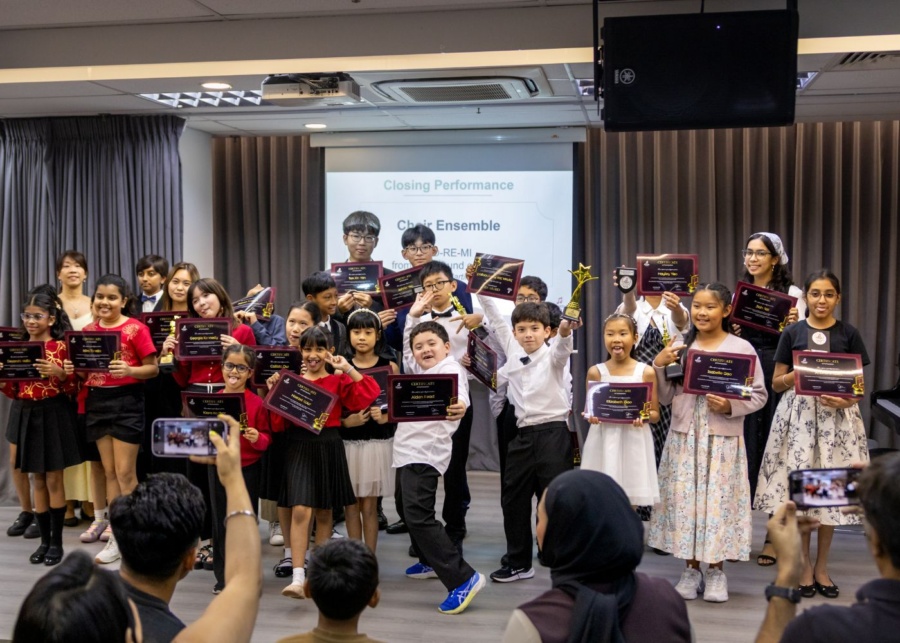
Final question: how do you prepare your students for exams? We know it can be quite intimidating.
We organise internal exams for our students at Presto Studios before their actual ones, so they know what to expect and there are no surprises. We do the same for students who are interested in pursuing competitive pathways, like Direct School Admission through music. These sessions aren’t just about perfecting the exam repertoire, but also on building stage confidence and providing candidates with emotional reassurance.
I encourage my students to view exams as a milestone that adds value to their musical learning journey. It teaches them resilience, boosts confidence, and allows them to experience achievement. Presto Studio was set up not just to teach music, but nurture confidence, joy, and a lifelong love for music learning in children.
Thank you for answering our questions, Teacher Janice!
Keen to start your child on their own musical learning journey? Presto Studios offers lessons in a range of instruments (piano, ukulele, and guitar) as well as singing. There’s also the music and movement-based Sing & Play class for little ones. Whether your child is passionate about an instrument, or still exploring, this music school has a programme just for them. Check out Presto Studios’ website for its full offerings.
This post is in partnership with Presto Studios.