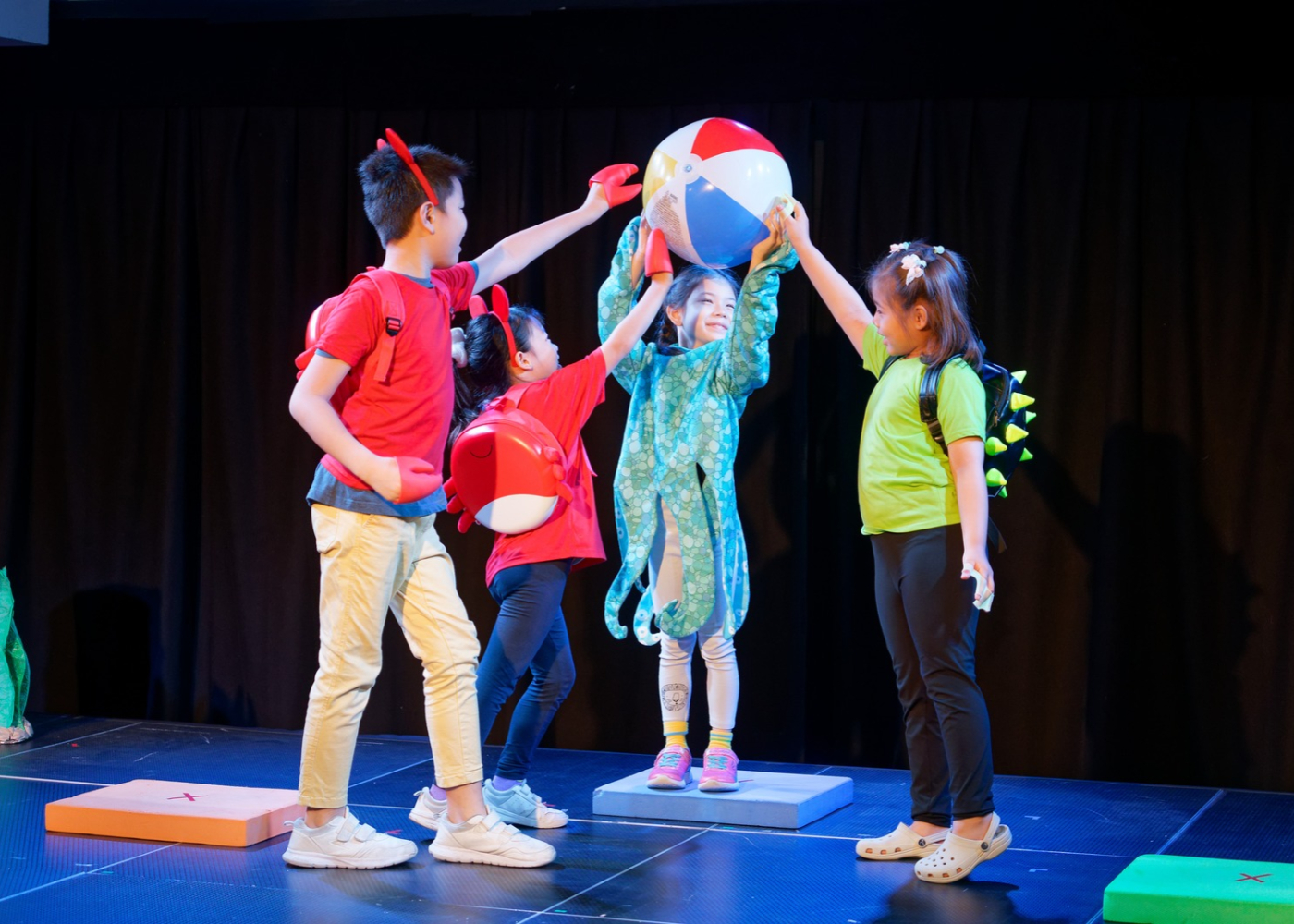
Wanna know what happens in a drama class for kids, especially one run by a theatre company? Thanks to the folks at Wild Rice Academy, we got a glimpse of what a typical day in its performing arts classes is like. Hint: it has games!
You’ve heard lots of great stuff about drama classes for kids, especially about how they help children build confidence and improve their communication skills. So now you’re thinking of signing the kiddos up for one, but you also want to know what actually happens in class. How do drama teachers teach acting skills? Are children given scripts to follow from day one? And what if your child is really shy and takes time to warm up before speaking to a crowd?
The lovely team at Wild Rice Academy, the education arm of one of Singapore’s leading theatre companies, gave us the lowdown on how they conduct performing arts classes and what kids learn from each activity.
First, prep work must be done before classes start.
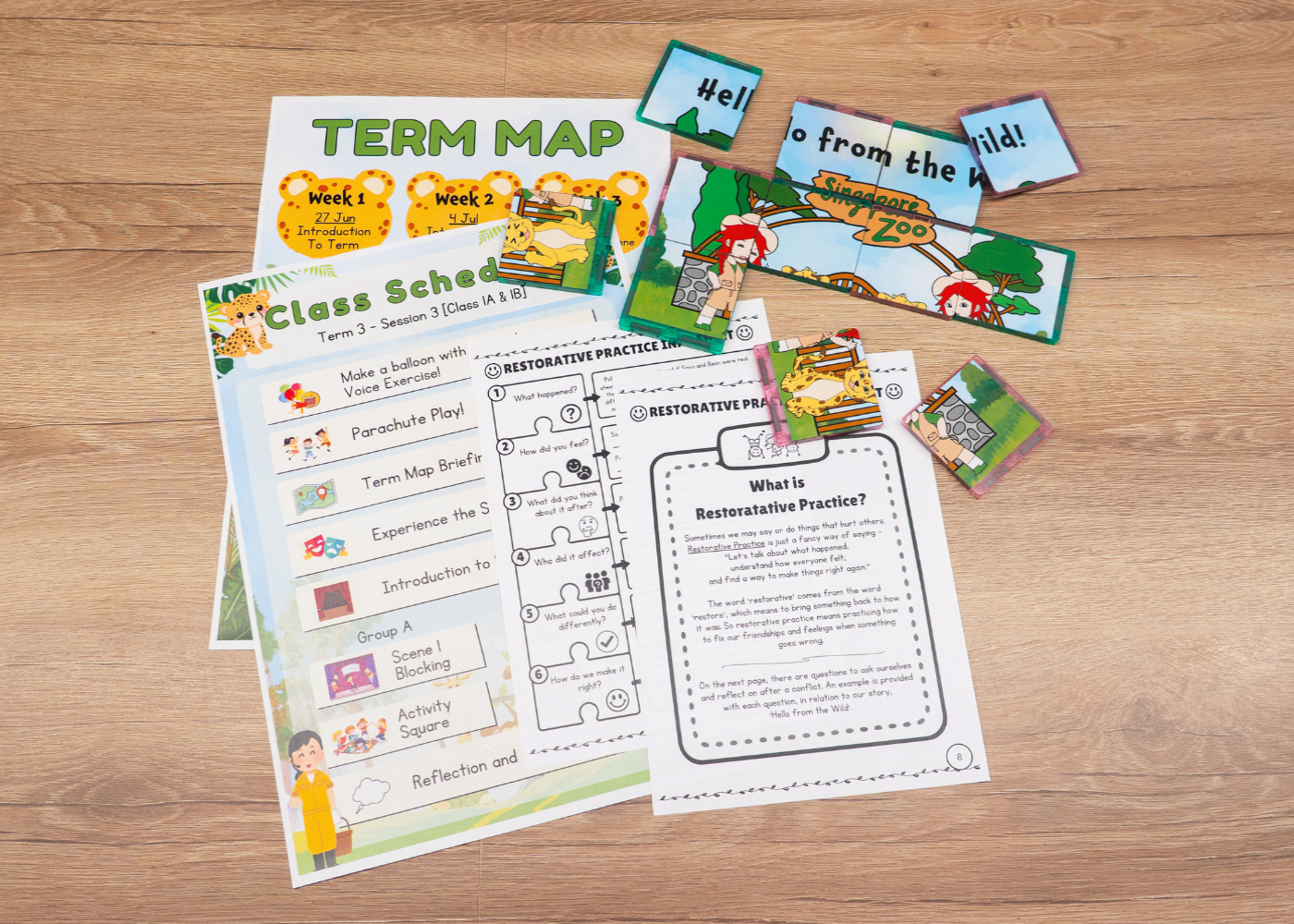
We got to know from Ms Nellie, a teaching artist and co-programme lead of Wild Rice Academy, that the team starts preparing for each term months in advance. Original scripts full of local references are written in-house for the children to perform – a unique feature of these classes!
The Academy also tailors all its classes for two different age groups, adjusting the complexity to ensure it’s age-appropriate, so that every child reaps the most benefits from the programme.
For example, children in the five to eight age group will be focusing on bringing characters like robots and animals to life; while those in the nine to 12 year-old age group will be exploring storytelling genres like fantasy, comedy, and drama. The learning goal for each class is for children to explore different ways to use their voice and imagination, and to find out more about themselves in relation to the world around them through stories and performances.
For each new term, teaching artists prep themselves for classes with briefings on lessons of the day as well as the learning goals they want their little thespians to achieve.
Most importantly, the ‘stage’ must be set for every Academy class. Ms Nellie says the team intentionally creates a theatre troupe-like vibe at the Academy, so children can get a taste of what it’s like to be a part of a theatre company – we like this element of real-world exposure!
Welcome to class, kids! Let’s start with a warm-up.
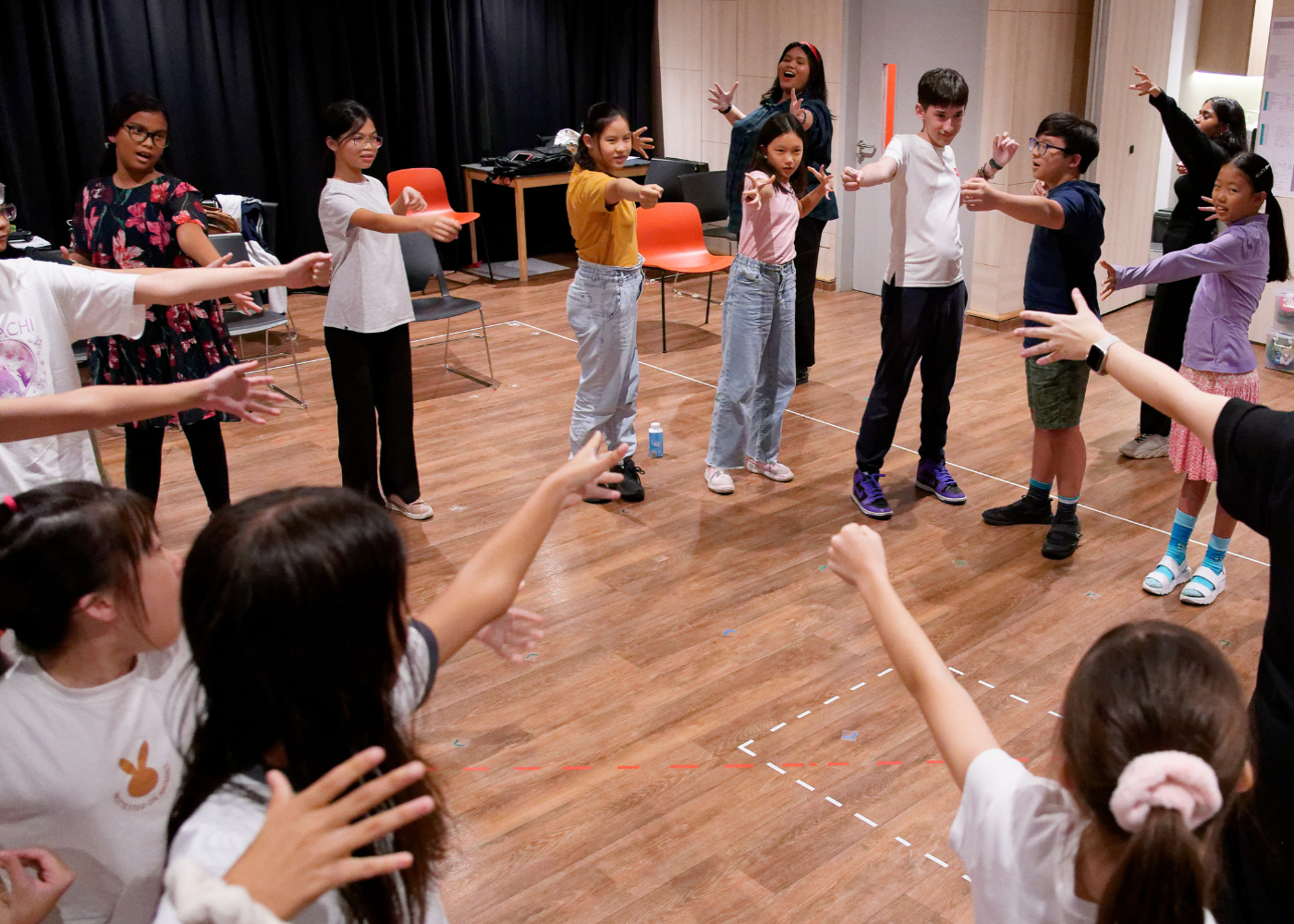
Never underestimate the power of a good warm-up: this helps kiddos get into the right headspace, and when done well, can help even the shyest kid in class feel more at ease. This can be in the form of a simple body shake or some stretching exercises to give their little muscles a gentle wake-up call.
It’s time for some drama games
What are drama games, you ask? Think of them as simple exercises that focus on teaching kids about storytelling. An example of a drama game is ‘Grandmother’s Footsteps’, a game where the whole class works together to sneak up on ‘grandmother’ (or pirate, teacher, depending on the context) without getting caught. It requires children to listen, understand, communicate, and perform – all of which are important communication skills not just for school, but at home with their friends and families in daily life too.
Chon Yi, an Academy student’s parent, agrees, “I feel like the lessons expanded my daughter’s creative mind especially in terms of storytelling. Playtime at home has become more vibrant and interesting with new scenes, narratives, and emotions.”
Next up, role-playing and play-making.
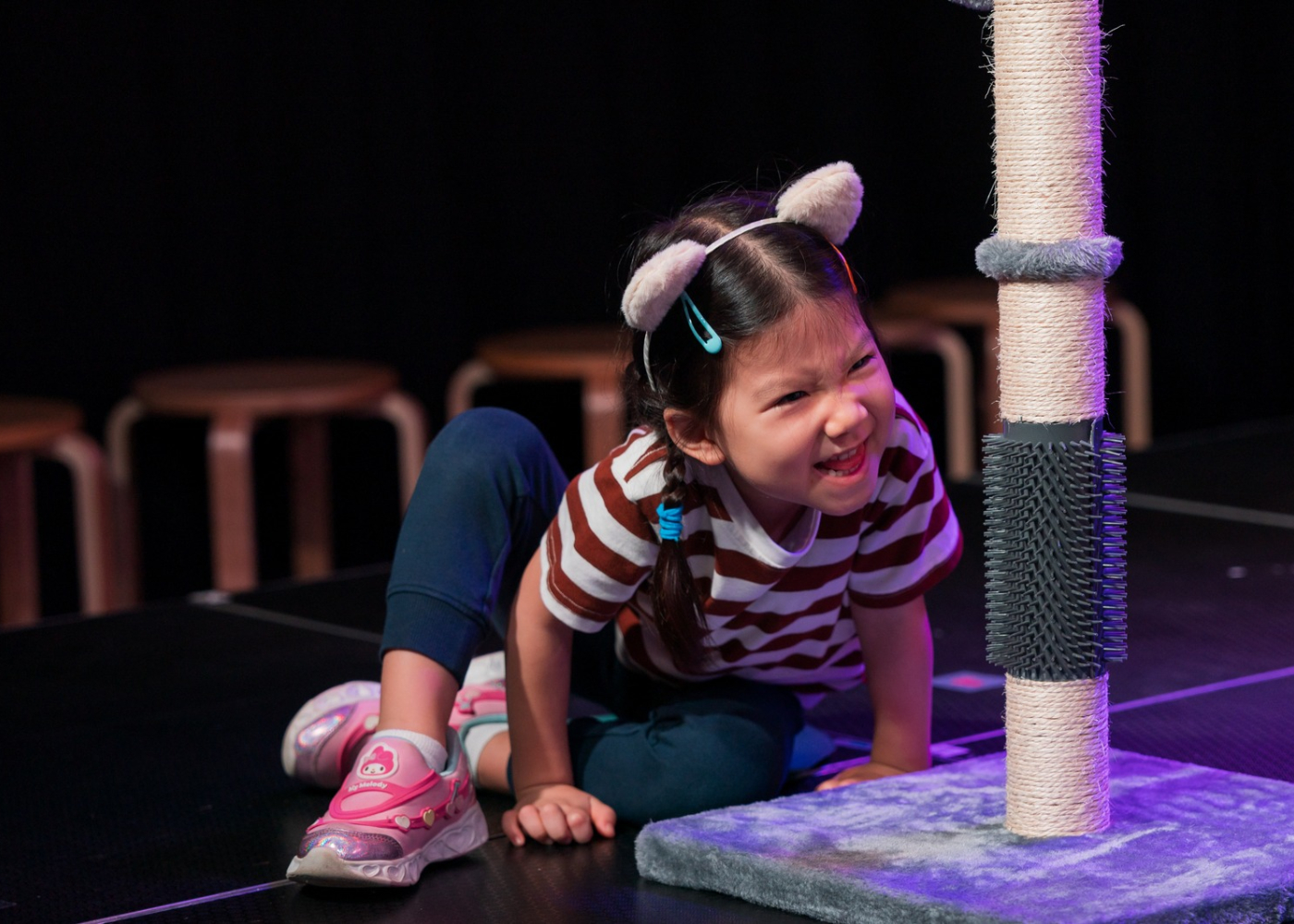
This is probably the drama class component that we’re most familiar with. After all, what’s a drama class if there’s no acting and playing a role, or acting on stage? Kids get to participate in role-playing and play-making in every Academy class. On one hand, it teaches them acting skills: as 10 year-old Emma puts it, she learned that facial expressions can bring out a character. On the other, children learn about the art of performing in front of an audience, as well as how key elements in drama – like setting, conflict, and theme – play out in their own lives.
Beyond that, children will take away important life lessons from these activities, such as empathy, creative thinking, and trusting one’s imagination and instincts. This is because portraying a character requires them to think, read and perform as another person.
Last but not least, the class works towards perfecting their final showcase.
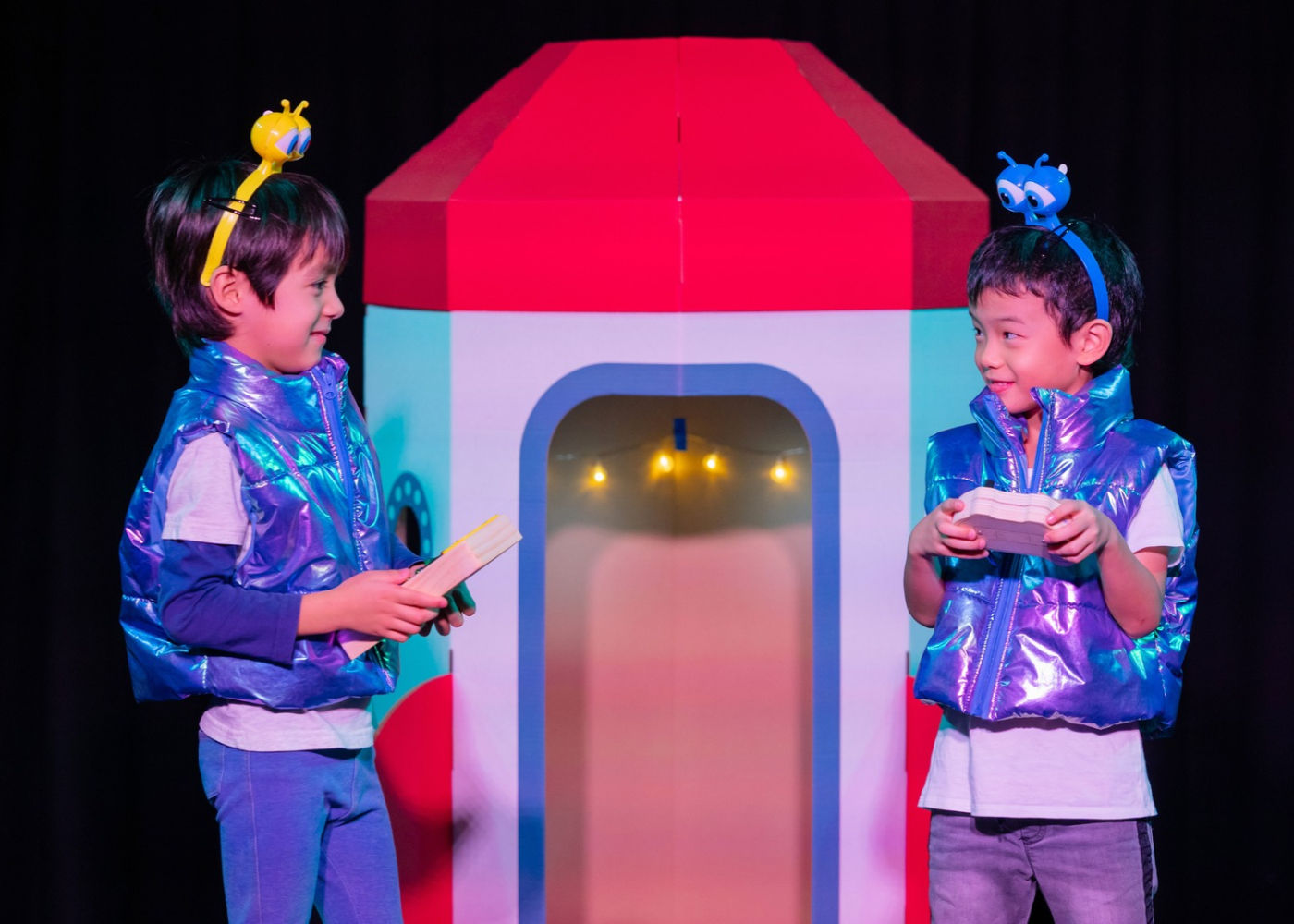
Unlike some drama classes, every term at the Academy culminates in a performance showcase – which parents are invited to watch! This is when the children put everything they’ve learned into practice, while having a taste of what it’s like to perform in front of a live audience. The impressive part? Every child gets a moment to shine, with the oldest age group even given the chance to draft a part of their play!
According to Ms Nellie, the weeks that lead up to the showcase mimics a theatre production, where children will go through a technical rehearsal and a full dress rehearsal, putting everything together before their performance. But all lessons and rehearsals are kept fun, with lots of support and encouragement from friendly teaching artists. As one of the students, Maahika, shared, “The teachers are very super duper kind and caring. I learnt to face the audience and project my voice. The programme was fun and taught us a lot!
Sounds like a drama class your kids will enjoy? Wild Rice Academy has launched registrations for its 2027 intake.
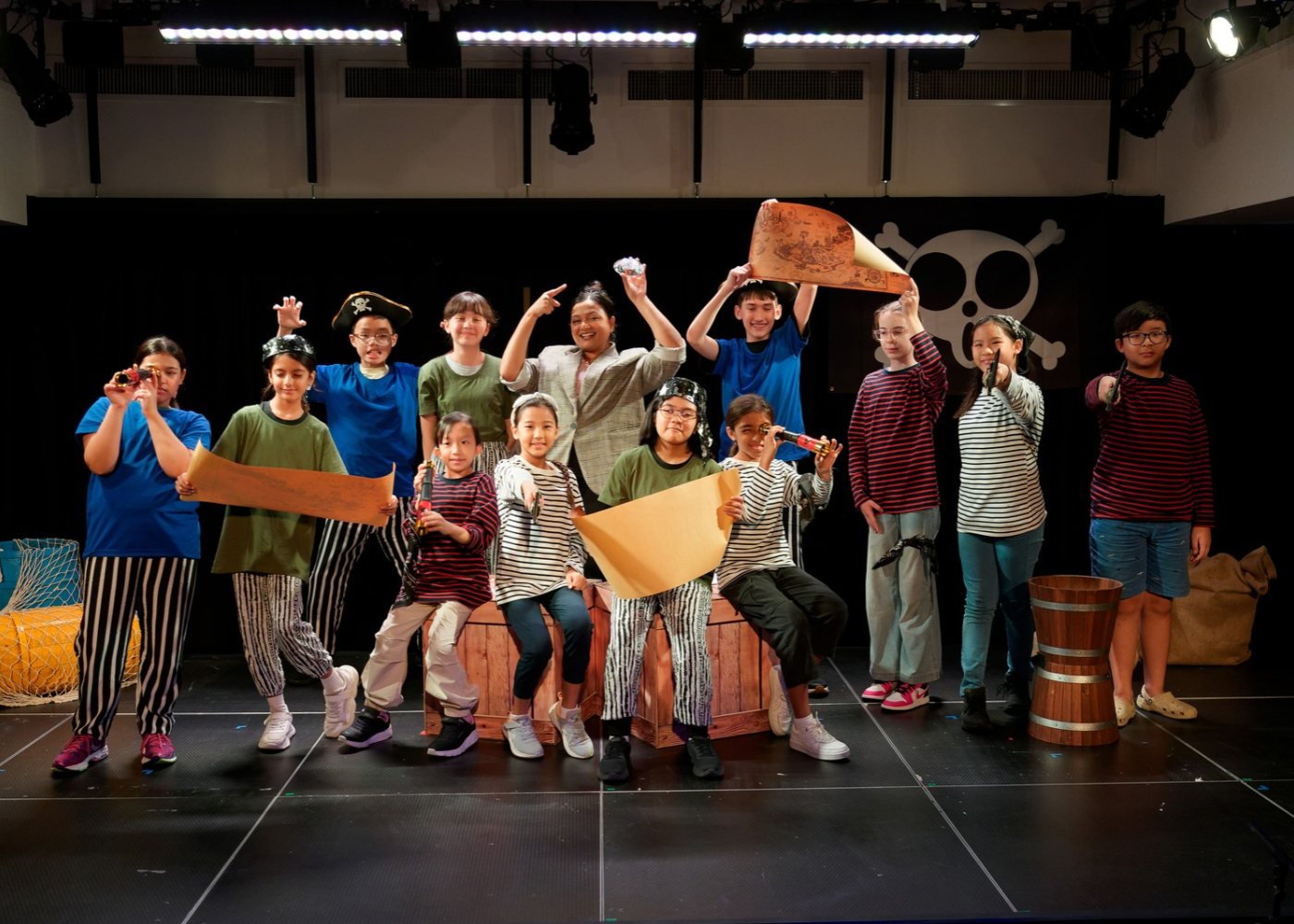
If you’re looking for a performing arts class for your kids, Wild Rice Academy is one worth considering. Children are taught in small groups (up to 12 or 15 students with two to three teachers per class), which means they receive lots of personal care and attention during their learning journey. Each class gives children the chance to hone their acting and communication skills, as well as work with props, costumes, lighting, and sound.
Not only do the Academy’s classes get rave reviews from its students, parents actually see great results from the programme. Shi Yun, the parent of a six year-old Academy student, reports, “Soren’s definitely more confident with being in the limelight and projecting his voice – he was chosen to emcee in school and he was very confident and secure.” Touchingly, another student, Zoe, also said that the Academy’s classes have helped her get over her stage fright and taught her how to open up.
You can learn more about the Academy’s classes, available for children aged five to 12 years old, via Wild Rice’s website.
This post is in partnership with Wild Rice Academy.