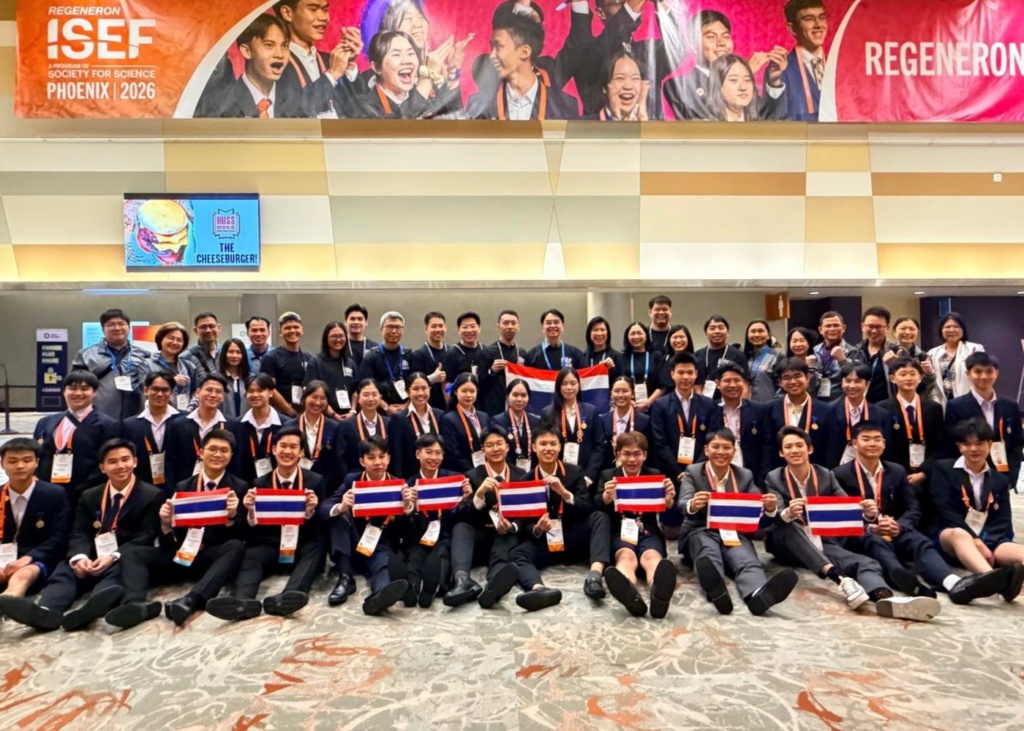
Thai students won 6 major awards at the world’s largest STEM competition.
Thai students have made the country proud after bringing home 6 major awards from the prestigious Regeneron International Science and Engineering Fair 2026 (ISEF 2026), the world’s largest international science competition for high school students.
Leading Thailand’s success this year was The Prince Royal’s College in Chiang Mai, which secured the 1st Place Grand Award and a US$6,000 prize for developing a low-cost AI-powered malaria diagnosis system designed for remote communities.
Held in Phoenix, USA, from 9–15 May, the competition gathered more than 1,700 young scientists from over 60 countries, all presenting innovative projects tackling real-world challenges ranging from healthcare and sustainability to artificial intelligence and engineering.
So, besides being known for beautiful beaches and tourism, the country is also proving that with the right support, Thai students are no less capable than young innovators anywhere else in the world.
The big win for Thailand at ISEF 2026
Competing across 22 scientific disciplines against more than 1,700 students from over 60 countries, Thailand secured 6 major awards at Regeneron International Science and Engineering Fair 2026.
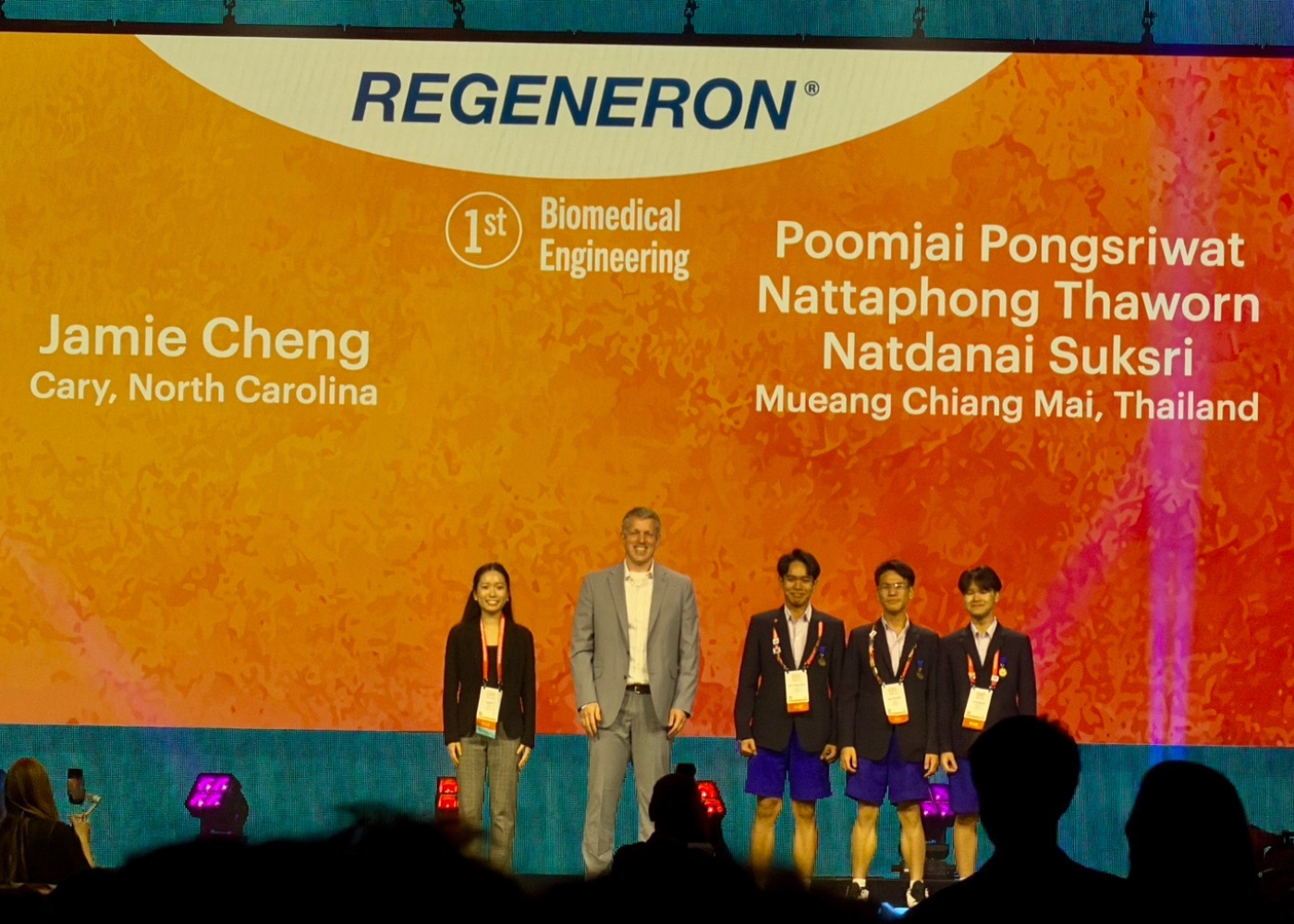
The Grand Champions: 1st Place globally in Biomedical Engineering
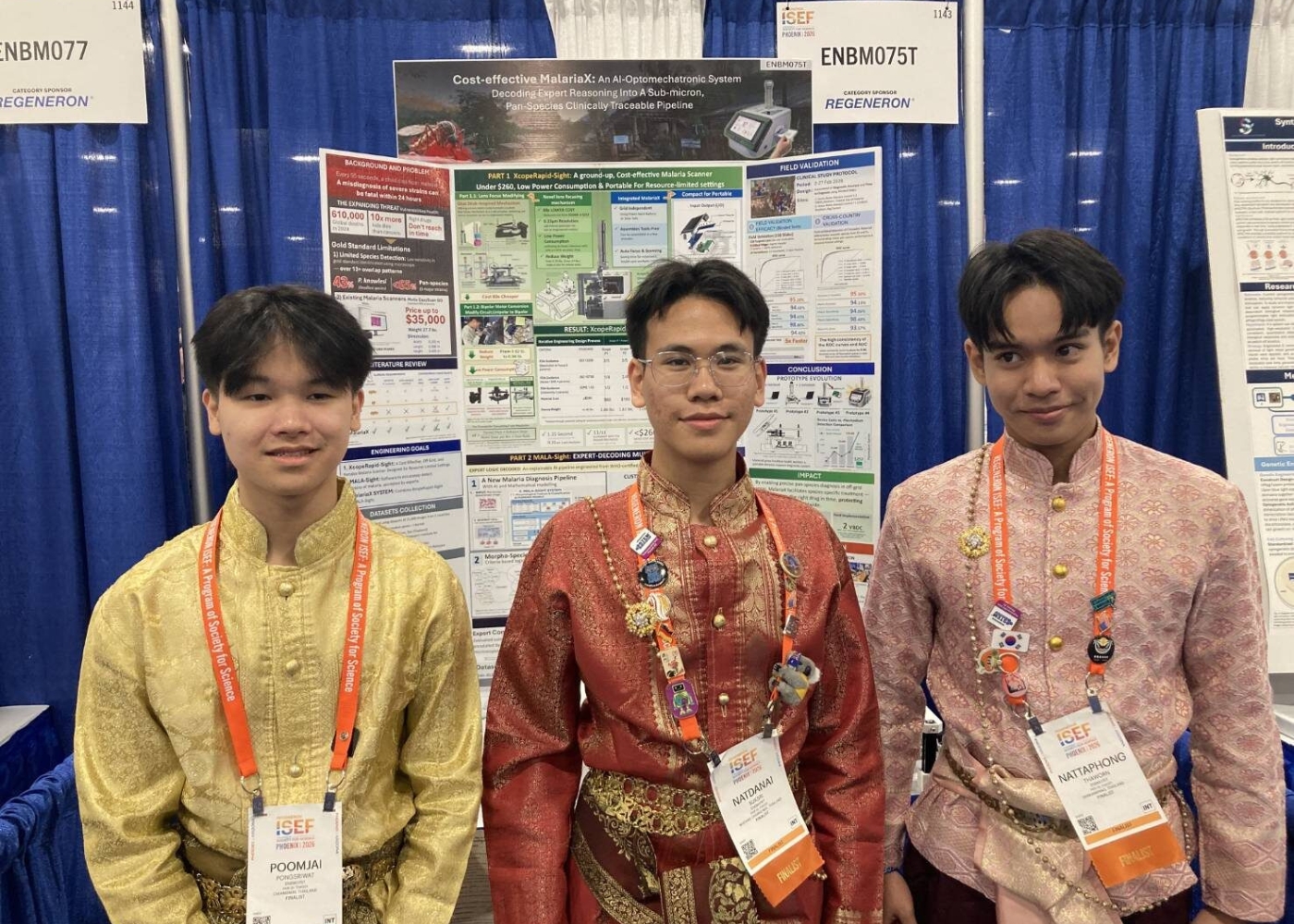
Leading Thailand’s historic success this year was a team from The Prince Royal’s College in Chiang Mai, which earned the 1st Place Grand Award in the Biomedical Engineering category along with a USD $6,000 prize.
Students Natdanai Suksri, Nattaphong Thaworn and Poomjai Pongsriwat impressed judges with their project titled Low-cost Automated Malaria Diagnosis System using Artificial Intelligence and Smart Microscopy for Remote Areas.
The team developed a portable AI-powered diagnostic platform capable of rapidly detecting all 5 major strains of malaria using smart microscopy technology.
Designed specifically for rural and hard-to-access communities, the low-cost innovation significantly reduces diagnosis time while improving accessibility to accurate malaria screening in remote regions.
More award-winning innovations from Thai students
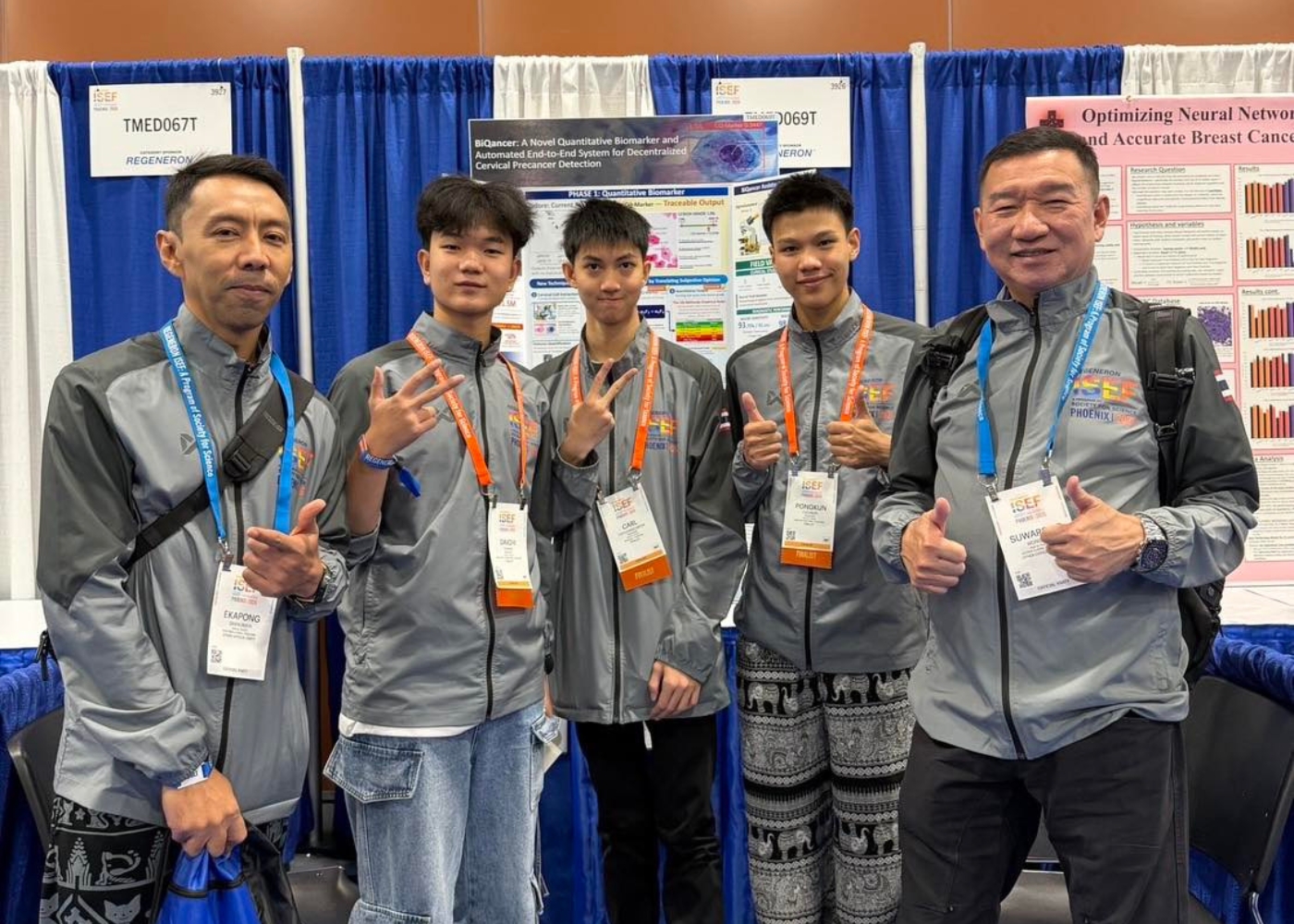
The Prince Royal’s College also secured a 2nd Place Grand Award in the Translational Medical Science category along with a USD $2,400 prize.
Students Daichi Tanaka, Pongkhun Fuchuen and Carl Tidtijumreonpon were recognised for developing an AI-assisted cervical cancer lesion screening system designed to make early diagnosis more accessible, auditable and scalable for wider healthcare use.
Meanwhile, Bangkok Christian College earned a 2nd Place Grand Award in the Animal Sciences category with a USD $2,400 prize.
Students Sanphat Akarajeerawat, Naphoodol Srirattana and Proadpran Janthanrabhathak developed an integrated coral reef restoration innovation combining molecular-level coral repair techniques with satellite-tracked artificial reefs to improve marine ecosystem recovery and long-term monitoring.
What is the Regeneron International Science and Engineering Fair (ISEF)?
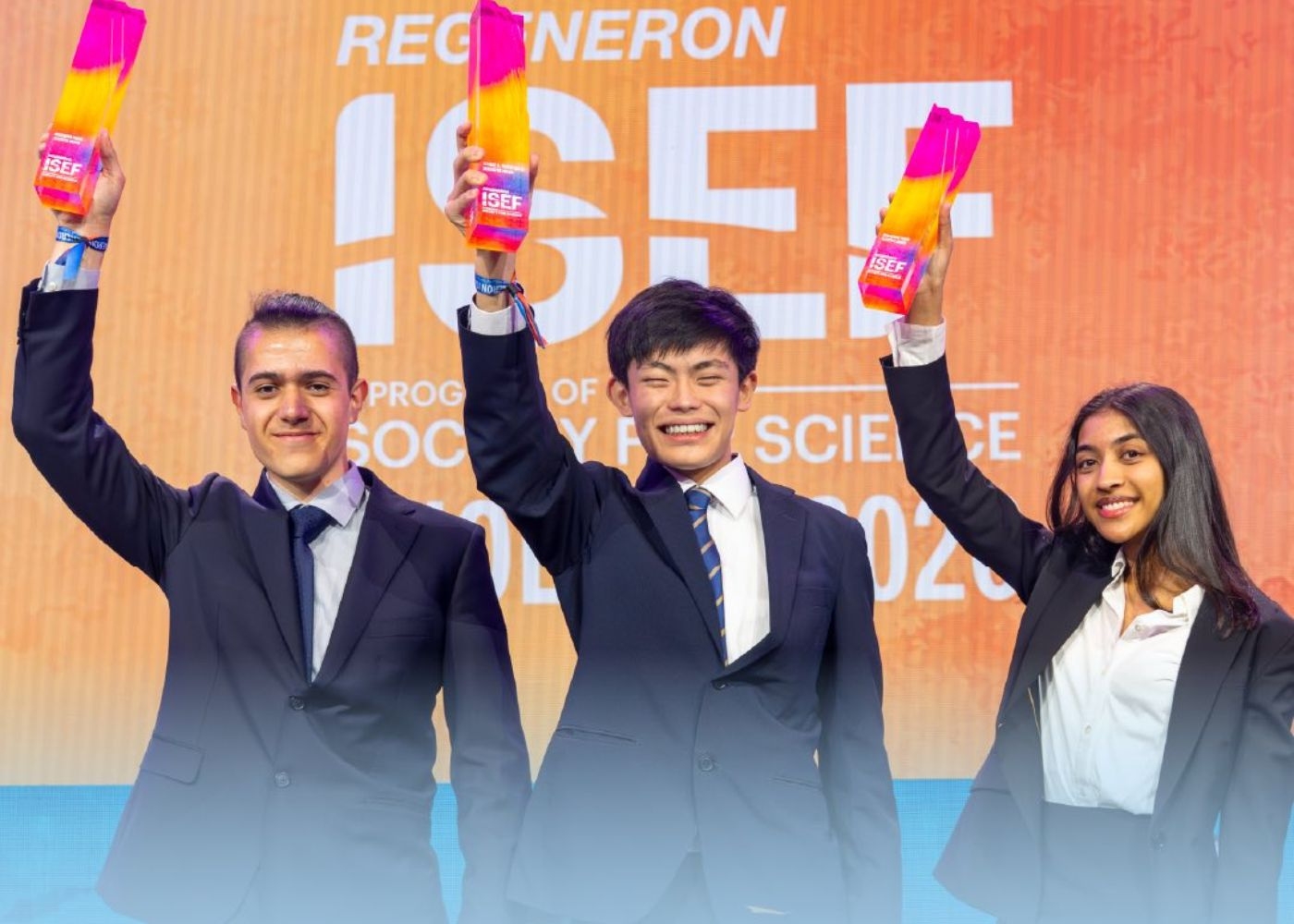
Founded in 1950, the Regeneron International Science and Engineering Fair (ISEF) is widely recognised as the world’s largest and most prestigious pre-college STEM competition.
At the 2026 competition, more than 1,700 young innovators from around the globe competed for over US$7 million in prizes and scholarships.
Finalists showcased ground-breaking research across 22 scientific disciplines, spanning cutting-edge medicine, environmental science, robotics, mathematics, and artificial intelligence.
The 2026 overall top honor, the prestigious George D. Yancopoulos Innovator Award, went to a 17-year-old student from Japan, Hikaru Kuribayashi (pictured in the middle) who was celebrated for developing an advanced simulation program that predicts complex material-folding systems inspired by origami engineering, offering potential breakthroughs for space exploration and medical devices.
Special Awards and international recognition
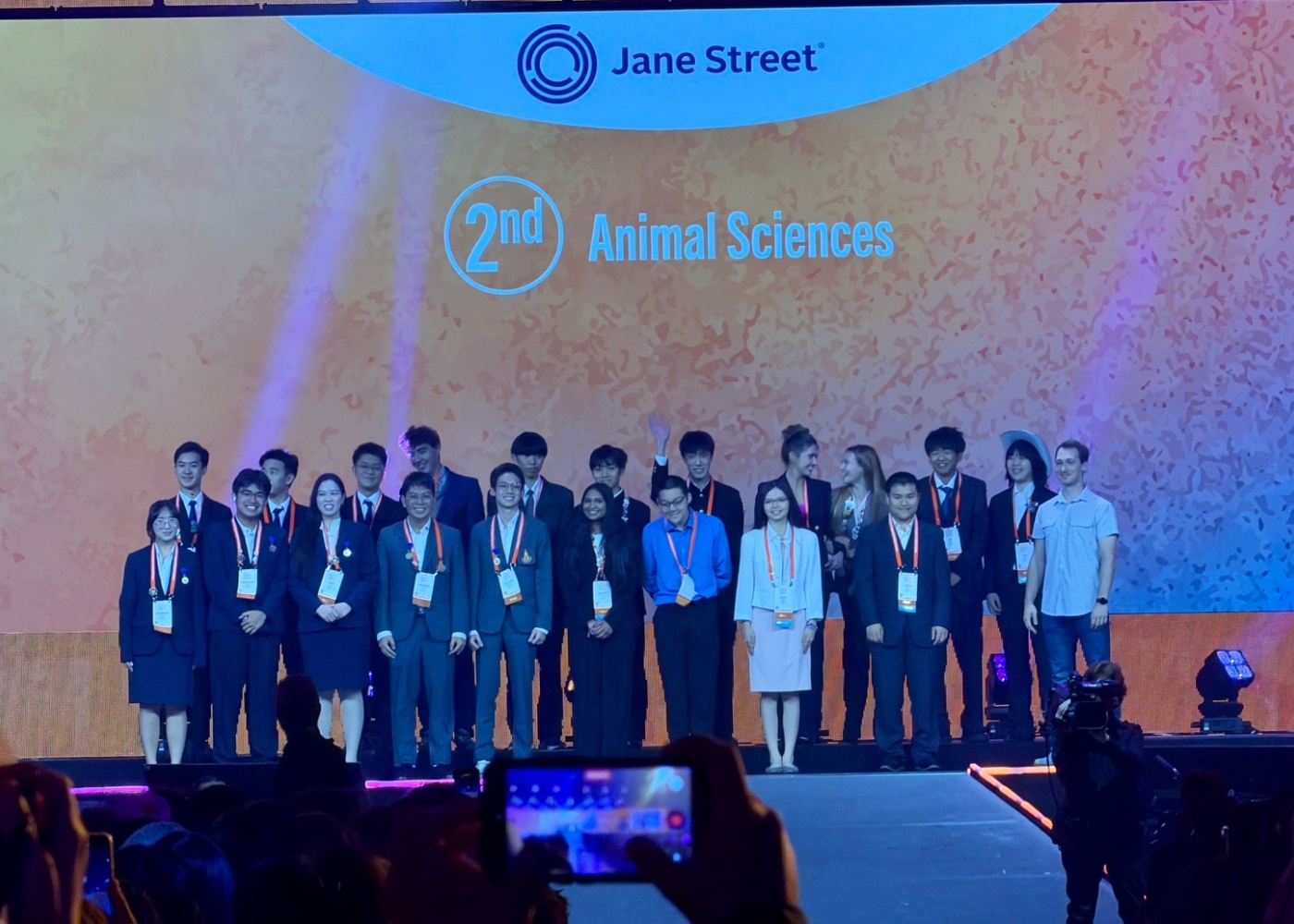
Thai students also secured 3 Special Awards, including scholarships and international recognition.
- The full scholarship award from the King Abdulaziz & his Companions Foundation for Giftedness and Creativity (Mawhiba) in Saudi Arabia went to students Naphudon Sriratana, Sunyapat Akkarajeerawat and Proadpran Janthanrabhathak from Bangkok Christian College for their coral reef restoration innovation combining molecular-level repair with satellite-tracked artificial reefs.
- The 2nd Place Special Award from the Patent and Trademark Office Society was awarded to student Ratchanat Termtheerakit from Bangkok Christian College for developing artificial eggs integrated with an automated cultivation and release system to improve eco-friendly pest control efficiency.
- The Special Award from Türkiye’s Scientific and Technological Research Council (TUBITAK), along with an Honorable Mention from the Association for the Advancement of Artificial Intelligence (AAAI), went to students Phudis Wangthiyong, Pannawat Lertmallikaporn and Chayathita Suphathanaphong from The Prince Royal’s College for creating a multimodal AI system for pre-hospital emergency stroke screening and assessment.

Sweeten up your inbox! Subscribe to HoneyKids Asia Thailand
Why are these results a big moment for Thailand’s education?
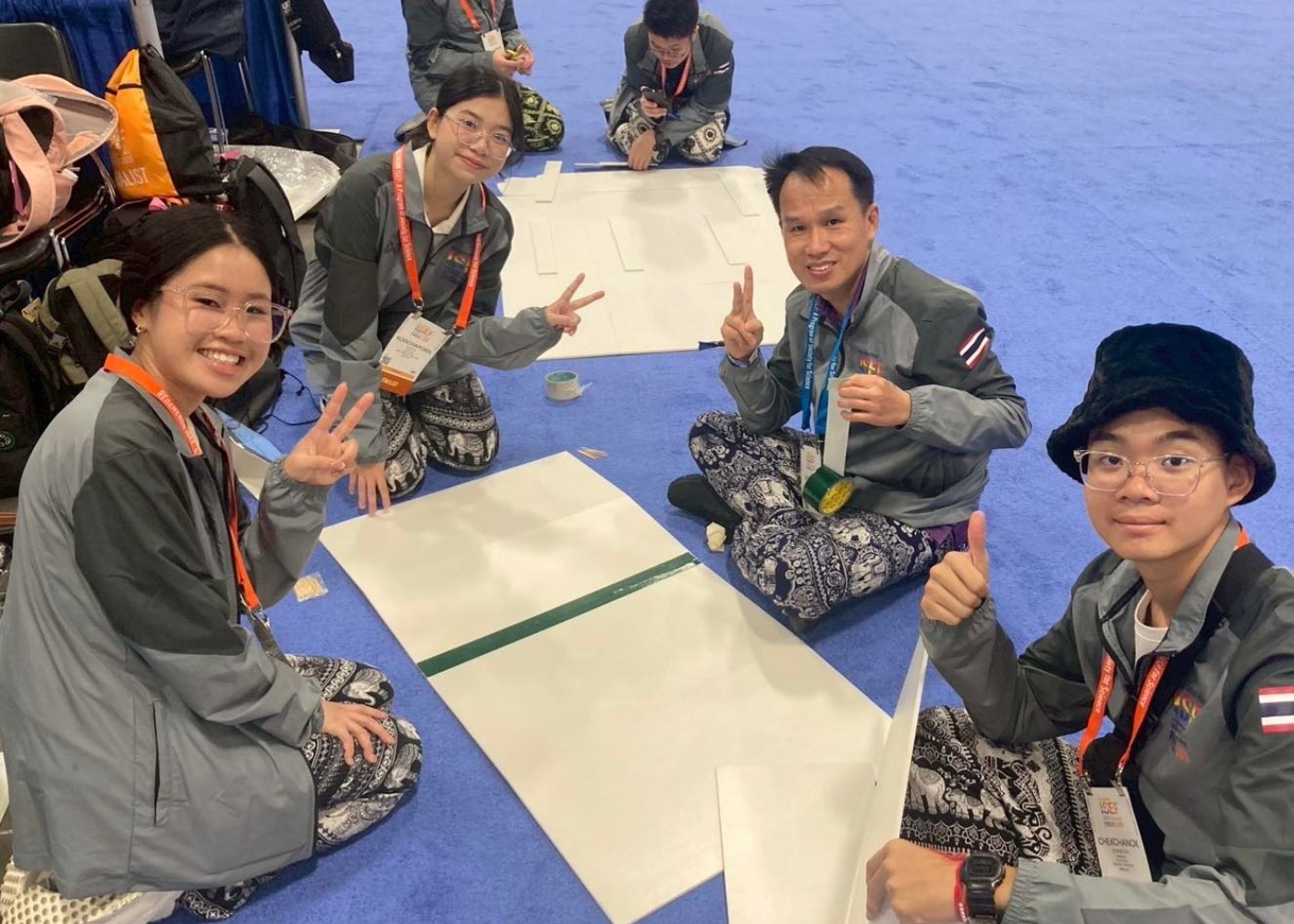
According to organisers from Thailand’s National Science Museum and the Science Society of Thailand Under the Royal Patronage, these results reflect the growing capabilities of Thai youth in science, technology and innovation on the global stage.
The success also highlights how local schools are increasingly encouraging students to tackle pressing, real-world issues through advanced research, environmental sustainability, and AI-driven solutions.
For families with children interested in STEM, global competitions like ISEF prove how everyday classroom learning can evolve into ground-breaking inventions, improving healthcare, environmental conservation, and everyday life worldwide.
Why is this important for Thai students?
It is not often that we see Thai students making global headlines for achievements in science and innovation. That’s why these wins at Regeneron International Science and Engineering Fair 2026 feel especially significant.
The results show that with the right support, resources and opportunities, Thai students are fully capable of competing at international standards alongside some of the brightest young innovators in the world.
The achievement also raises bigger conversations about education and whether the Thai government should invest more in STEM learning, scientific research and student development programmes. Many of these award-winning projects tackled real-world issues such as healthcare accessibility, environmental sustainability and emergency medicine, proving how student innovation can create meaningful impact beyond the classroom.
Most importantly, successes like this can inspire more young people in the country to explore science, technology and engineering, while encouraging schools and families to support creativity, research and problem-solving skills from an early age.