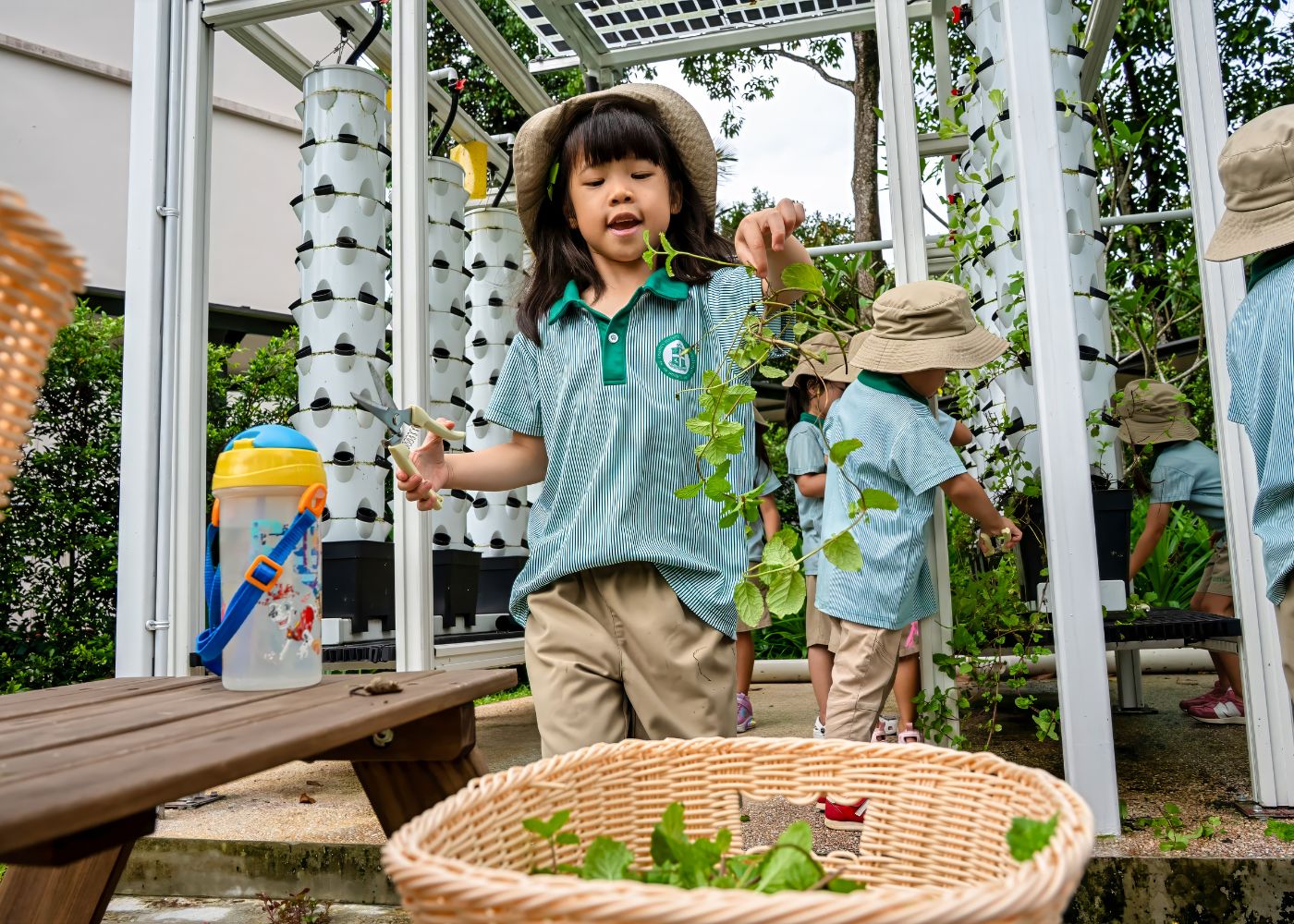
SJI International Preschool is wowing parents and students with its urban farming initiative — here’s what the kids can learn from this fun activity.
Can we just say that we’re loving the initiatives that schools are taking to make learning fun and relevant for our little ones? Believe it or not but, at SJI International Preschool, young kiddos even get to dabble with aquaponics.
It’s no secret that outdoor learning has tons of benefits, and SJI International Preschool takes it to the next level by introducing urban farming into its curriculum. For the uninitiated, aquaponics melds fish farming with plant cultivation, housing it all in a symbiotic system. So, what exactly do the kids stand to learn from this activity?
1. Deep-dive into how ecosystems work
This hands-on activity allows children to interact with nature and the living organisms (fishes in this case), and explore the symbiotic relationship between fish and plants. They can observe how the fish thrive in clean and clear water, which is filtered by the plants. These plants, in turn, are nourished by fish waste. Sounds super fascinating, huh!
2. Experience real-life STEM applications

Aquaponics introduces STEM concepts in a really interesting and engaging way. This starts right from the get-go: when looking at how the aquaponics structure was built, students can learn about the engineering mechanics such as structural design and plumbing systems. Children will be introduced to chemistry when they check the water quality, and learn about biology when they look at the role bacteria plays in converting fish waste into nutrients for plants.
In fact, math concepts also come in when students are tasked to ensure water volumes are adequate, or when they track the trajectory of plant growth. Even better, aquaponics kickstarts the discussion of sustainability, prompting the children to think about various ways about how they can live healthier lives.
3. Walk the talk about sustainability
The discussion about sustainability is backed up by physical proof — did you know that aquaponics systems utilise up to 90% less water than traditional farming? Children can use this to brainstorm other ways they can help to save water and energy in school and at home, and delve into the importance of conserving resources.
4. Taste the fruits of their labour

After taking such great care of the plants for weeks, the children can reap the benefits of their hard work by digging into the vegetables, herbs, and fruits that they’ve been growing. And trust us, nothing will taste sweeter! As children enjoy their meal, they can have conversations with their teachers about what makes up a healthy diet, and what types of foods they should be consuming on a daily basis.
5. Take ownership of the project
Watch the little ones’ faces light up with pride as they watch their plants grow bigger and healthier by the day. They can see how their actions directly impact plant growth, such as trying various plant-fish combinations. They’ll also learn about the butterfly effect, where the smallest action or adjustment might, in turn, have a bigger ripple impact.
We can go and on, but one thing’s for certain — the opportunities outdoor learning offers are endless. Find out more about SJI International Preschool and what it offers at its upcoming Open House. Register to secure your slot!
This post is in partnership with SJI International Preschool.