
Thirty years after I sat in a Singapore classroom and was made to feel less-than because of the colour of my skin, my eight-year-old son is sitting in one too. Nothing has changed. And we need to talk about it.
Let me tell you about a Tuesday.
My son came home, dropped his bag, and told me, matter-of-factly, that someone had called him “hitam” (black) as a slur at school. He wasn’t crying. He wasn’t trembling. He said it the way you’d tell someone you missed the bus. And that – that quiet, practised resignation – broke something in me.
Because it wasn’t the first time. It won’t be the last.
My boy, my eloquent, luminous, eight-year-old boy, has already learned to absorb it.
Here is the part that keeps me up at night
I know this story. I lived it. More than thirty years ago, I was sitting in a Singapore classroom, a brown girl in a sea of faces, and I was made to feel like an outsider in the only country I had ever called home. I grew up, built a life, had a family of my own, contributed to society in more ways than one, and still the story did not change. Not for me. Not for my cousins. Not for the brown children of friends I have watched grow up alongside mine.
This is not a one-school problem, or a one-teacher problem, or a one-generation problem. This is a Singapore problem.
They’re insulting the work of God.
When I sat with my son that Tuesday evening, I asked him how he felt. He looked at me, calm and clear-eyed, and said: “Mama, when someone insults my skin, they’re insulting the work of God. So it doesn’t feel like an insult to me.”
Eight years old. He has arrived, through his own faith and his own wisdom, at a place I spent decades trying to reach. And I am proud of him. I am endlessly, fiercely proud of him. But I also want to be honest: his serenity should not be necessary. No child should need a theological framework to survive Tuesday at school.
I tell him the truth too — the less poetic truth.
I tell him that as a brown person in Singapore, he will have to show up at 170%. That his 170% will be read as 60% by some. That he will have to be twice as prepared, twice as composed, twice as visible in the right ways and invisible in the wrong ones. That he will be the first example of what a brown person looks like to every person who comes through a door after him.
It is an unfair, exhausting, and completely necessary conversation. I hate that I have to have it.
I have it anyway.
It didn’t even come from who you think.
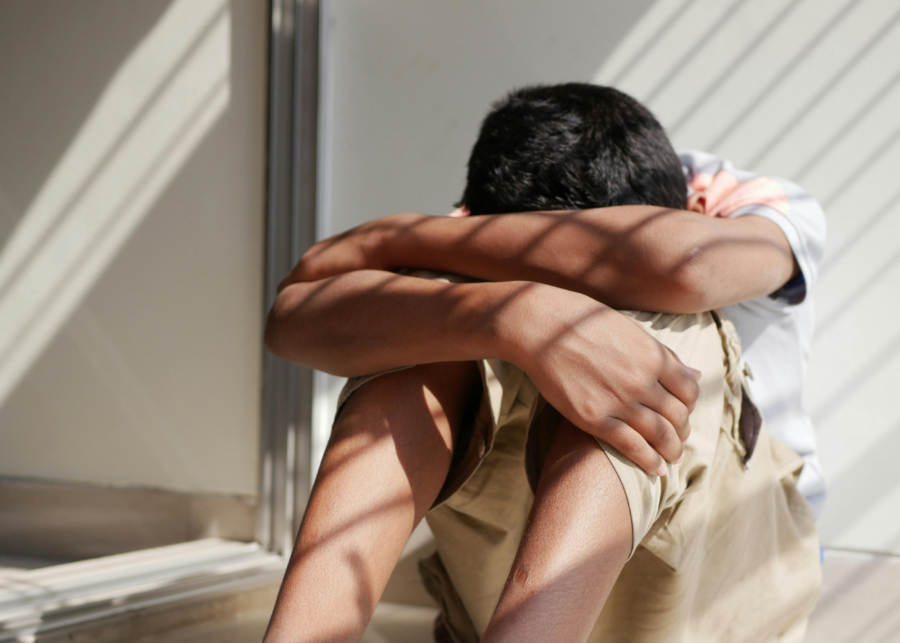
I need you to sit with this for a moment. This most recent incident did not come from a Chinese child. It came from a Malay child. I am not writing this to pit communities against each other. And I’m also not saying this discounting the majority race in Singapore because trust me, until today, I personally have been in rooms where I was the only brown person in a sea of Chinese people where casual racist jokes are ok.
I am writing this because that fact tells us something important: anti-dark skinned racism is not the exclusive property of any one racial group in Singapore. It is absorbed from the internet, from adults in the home who laugh at the wrong moments, from a culture that has not yet reckoned seriously with where racism still lives and breathes here. What does it say about how we are raising our children? It says that racism is not just a majority problem. It is an everyone problem. And until we acknowledge that, we will keep sending our children to schools where the cycle simply continues.
I am lucky. I know I am lucky.
When I walked into my son’s school and spoke to his principal, I was met with something I did not fully expect: I was believed. His educators were, and remain, 100% in my corner. They took it seriously. They followed up. They did the right thing.
I know this is not everyone’s experience.
I know brown and Black parents in Singapore who have walked into schools and been told their child must have misunderstood. Or provoked it. Or been too sensitive. Or “kids will be kids”. I know parents who have been made to feel like the problem is their discomfort, not their child’s pain. That has not been my experience and I am grateful.
But I also refuse to let my luck obscure the reality that the system should not require luck. It should require accountability every single time, in every school, regardless of where you sit in the racial hierarchy of this country.
For brown parents: what I do, for what it’s worth.
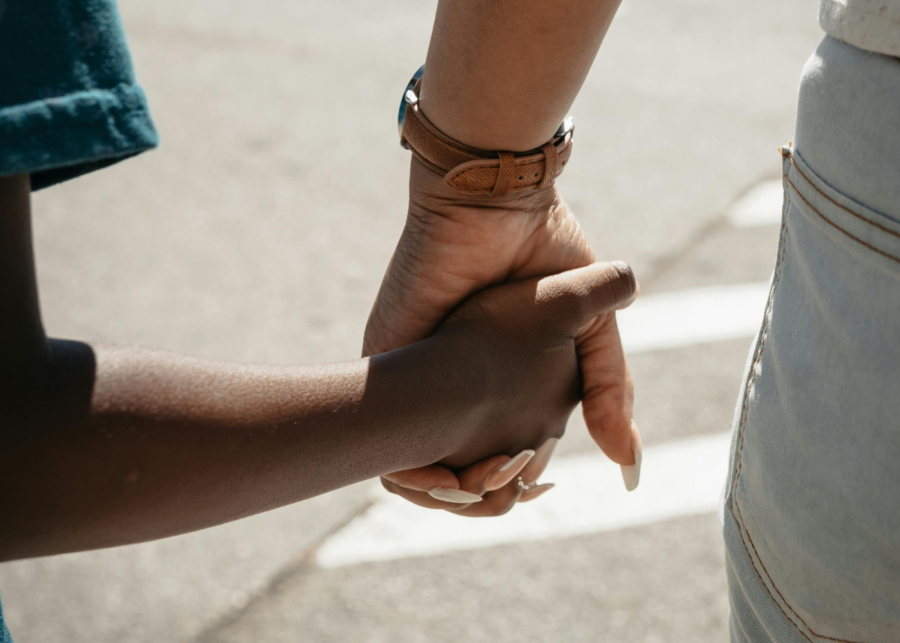
There is no clean answer here. But here is what I have learned, imperfectly, in the years of raising a brown child in Singapore:
Name it clearly
Do not soften the word. Tell your child what it is, where it comes from, and why it is used as a weapon. Children can hold more truth than we give them credit for, and they need the full picture to understand what happened to them.
Validate the anger
Your child is allowed to be furious. Resilience is not the same as suppression. Let them feel it before you move them towards perspective.
Build the identity before the world tries to diminish it
We celebrate our culture, food, language, and history loudly and consistently at home. By the time my son faced that slur, he already knew who he was. That foundation matters more than any single incident.
Go to the school. Every time.
Document it. Request a meeting. Be the parent they have to answer to. Not because it will always work, but because your child needs to see you fight for them.
Find your people
Other brown parents. Other parents of colour. Other majority-race parents who will stand in your corner. The exhaustion of this is collective. You should not carry it alone.
For majority-race parents: this is also your work.
If your child is not brown — if your child is not the one coming home with that story on a Tuesday — you might feel tempted to think this column is not addressed to you. It is.
Talk about race at home
Explicitly. The silence of well-meaning parents is where bias takes root. If you do not name it, your children will learn about race from the internet, from peers, and from the cultural water we are all swimming in — and they will not learn the right things.
Teach your children to speak up
When your child witnesses a racial incident and says nothing, that is a lesson too. Practise with them what to say.
“That word is not okay.”
It is four words. Children can manage four words.
Examine your own assumptions
Do you laugh at jokes you should not? Do you say things like “they’re so sensitive” when race comes up?
Your children are listening to everything.
Speak up when other parents are dismissive. The problem is not only in the classroom. It is in the parent WhatsApp group, at the school gate, and at the dinner table in homes where these conversations never happen.
Believe brown parents
You do not need to have lived this experience to take it seriously.
Build a more diverse world at home
Build your child a library that does not consist only of white and beige children. Raising race-conscious children requires intention. Make it a personal goal.
The story does not have to stay the same.
Thirty years. The same story. That is not inevitability.
That is a choice: a collective, societal, daily choice to not do the work. My son will be fine. He has his faith, his formidable mind, his family, and a mother who will walk into every school office every single time it is necessary. She may even threaten a parent or two and they might pee their pants, and she might get into trouble but she will continue to do so because she always be his loudest cheerleader and walk through fire for him.
He will carry himself with a dignity this country has not yet fully learned to deserve. But I am not writing this for him. I am writing this for the brown child in the school where no one shows up for them. For the parent who was told their child was being too sensitive. For the teacher reading this who has been unsure whether to intervene. For the majority-race parent who thinks this is someone else’s problem.
It is not someone else’s problem. It is ours. And the only way the story changes is if we decide, right now, that we are done letting it stay the same.