Growing a human being inside our bodies for nine months is no walk in the park. Dad, here's how you can help...
Let’s be honest: pregnancy is not a level playing field. Your partner is growing an entire human being; dealing with nausea, exhaustion, back pain, swollen ankles and approximately 4,000 unsolicited opinions about her birth plan, while you watch from the sidelines wondering what to do with your hands. The good news is there’s actually a lot you can do. And in 2026, between expanded paternity leave, better access to birth prep resources and a genuine cultural shift around involved fatherhood in Singapore, there’s never been a better time to step up. Here’s where to start.
Why trust this guide?
HoneyKids Asia has been covering pregnancy, parenting and family life in Singapore for over a decade — written by parents who are living it, not just researching it. This guide has been updated for 2026 to reflect the latest Singapore paternity leave entitlements (including the expanded Shared Parental Leave scheme from April 2026), verified local resources, and real advice that goes beyond the generic. We update our guides regularly so the information you’re reading is current, accurate and actually useful for families in Singapore right now.
First things first: know your paternity leave entitlements in Singapore
Before the baby arrives, get across your leave entitlements — because Singapore’s parental leave landscape has changed significantly and many dads are still operating on outdated information.
As of 2026, eligible working fathers in Singapore are entitled to: 4 weeks of Government-Paid Paternity Leave (GPPL), which became fully mandatory from 1 April 2025 (doubled from the previous 2 weeks).
Up to 10 weeks of Shared Parental Leave (SPL) from 1 April 2026, shared between both parents on top of individual entitlements — each parent is allocated 5 weeks by default, which can be reallocated between you with employer agreement.
Leave must be taken within 12 months of your child’s birth, and you’ll need to give at least 4 weeks’ notice to your employer. Check the MOM website or the LifeSG app for the latest details, as entitlements are still being phased in.
The point: you have more time than you think. Use it.
Plan a babymoon (and actually do the research yourself)
The babymoon is likely one of your last proper trips as a couple before the baby arrives and the key word here is “plan it yourself.” Don’t ask her to do the research while she’s also tracking her iron levels and finding a position to sleep in. Pick a handful of options across different price points, present them to her, and let her choose. Bonus points for finding a resort with prenatal spa treatments: KL, Bintan and Bali all have excellent options within easy reach of Singapore. Book travel insurance that covers pregnancy, and check that the airline is happy for her to fly at whatever trimester she’ll be in.
Surprise her with a pregnancy care package

There’s nothing a mum-to-be appreciates more than a gift that was actually chosen with her in mind not the baby. Singapore-based Arlou & Rose specialises in exactly this: beautifully curated gift boxes designed for each trimester, with products that are genuinely useful rather than decorative. First trimester boxes cover nausea relief and early pregnancy comfort; second trimester boxes focus on skin and supplements for the glow-up phase; and third trimester boxes support that final exhausting stretch. Check their current range at arlouandrose.com — it’s also an excellent option for baby shower gifts if you want family and friends to give something your partner will actually use.

Know what she’s craving (and have it ready)
Pregnancy cravings are real, they’re specific, and they do not wait for a convenient time. Whether she’s after wanton mee at 11pm, a very specific type of sour plum, or something she can only describe as “the texture of that one thing from that one place,” your job is to know the list and be ready. Stock the fridge, save the delivery apps, and do not… under any circumstances… come home with the wrong thing.
Actually educate yourself about pregnancy
Your partner has probably read every article on every symptom she’s had since week four. The least you can do is get up to speed on what’s actually happening. Download a pregnancy tracking app (What to Expect, Ovia Pregnancy and the Baby+ app all have dedicated sections for partners), read the book she’s referencing, or better still, sign up for an antenatal class together. In Singapore, options include Thomson Medical Centre’s birth preparation classes, KK Women’s and Children’s Hospital’s parent craft programmes, and private hypnobirthing courses if she’s interested in that route. Showing up informed is one of the most useful things you can do — and it’ll make every doctor’s appointment more meaningful.

Show up to the doctors’ appointments
Clear the diary. Move the meeting. Showing up to antenatal appointments — especially the detailed scans at 12 and 20 weeks — matters more than you might realise. It tells her she’s not doing this alone, and it gives you a chance to actually hear your baby’s heartbeat, see the scans and ask the questions you’ve been quietly Googling. If you genuinely can’t make every single one, be honest about which you’ll prioritise — and make sure those are the ones she’d want you there for most.
Take things off her plate without being asked
This is not the time to wait to be told. If the laundry needs doing, do it. If she’s 32 weeks and bending down to tie her shoes looks like a structural engineering challenge, tie them for her or get her some slip-ons. Pregnancy is exhausting in ways that aren’t always visible, and the mental load of managing a household on top of it is real. Grocery runs, cooking, cleaning, managing deliveries, sorting the hospital bag — none of it should default to her just because it always has. And if you’re not sure what she needs, ask. Not “what can I do?” (too open-ended and she’s too tired to project-manage you). Ask specifically: “Do you want me to sort dinner tonight or sort the laundry?”

Massage. Consistently. With oil.
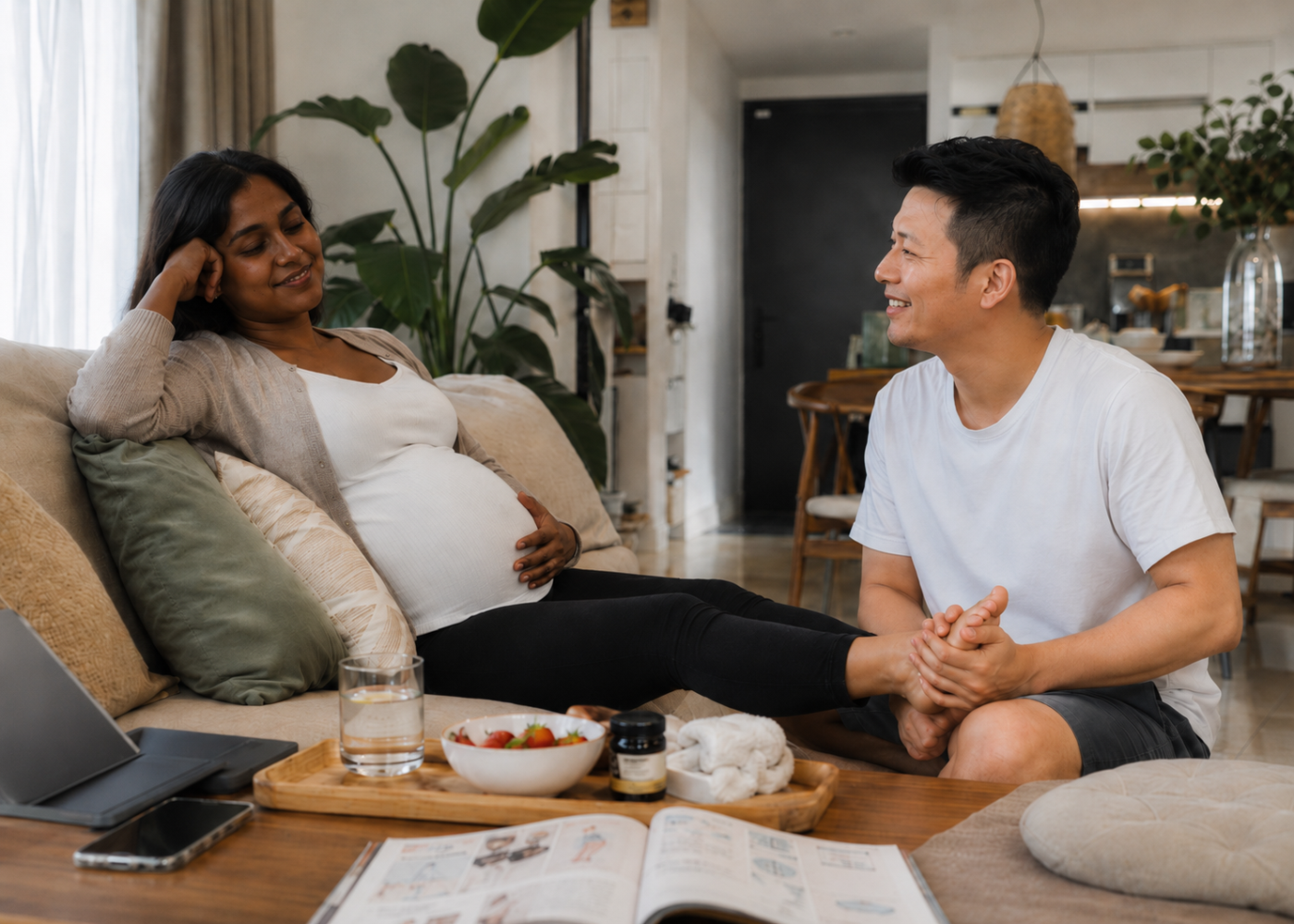
A good lower back or foot massage at the end of a long day is worth more than most gifts you could buy. You don’t need to be a professional — YouTube has you covered. Use proper massage oil (coconut, almond or a pregnancy-safe blend), take your time, and do it without being asked. If you want to splash out, several spas in Singapore offer prenatal massage packages specifically designed for pregnancy — worth booking for a special occasion or just because it’s been a hard week.
Patience isn’t optional
Hormones, physical discomfort, sleep disruption and the emotional weight of becoming a parent are all happening at once. Some days she’ll be excited and glowing. Some days she’ll cry at an ad for milo. Some days she’ll be furious at you for reasons that are not entirely clear. All of this is normal. Be present, be patient, and resist the urge to try to fix things that don’t need fixing. Sometimes she doesn’t need a solution — she needs you to sit with her and acknowledge that this is a lot.
Things not to say to your pregnant partner (a short but important list)
- “Are you sure you should be eating that?” No. Never say this.
- “You look tired.” She knows.
- “My mum said she never had morning sickness.” Irrelevant and unwelcome.
- “How long is labour actually going to take?” Nobody knows. Stop asking.
- “I don’t know how you do it.” This is meant kindly but lands as unhelpful. Try: “You’re doing incredibly well.”
- When in doubt: listen first, speak second, and never compare her pregnancy to anyone else’s.
Take care of yourself too
This isn’t talked about enough, but expectant fathers in Singapore experience real anxiety, sleep disruption and emotional adjustment too — sometimes including physical symptoms that mirror pregnancy (it’s called couvade syndrome, and it’s more common than you’d think). You’re allowed to find this overwhelming. Talk to someone if you need to — a close friend, your GP, or a counsellor. Showing up for your partner starts with not running yourself into the ground before the baby even arrives. The IMH and various private practices in Singapore offer support for perinatal mental health in fathers if you need it.
Pregnancy is a team sport, even when it doesn’t feel like one. The dads who show up — not just at the birth, but in the months before it — tend to find the transition to parenthood a lot less of a shock. Now go read more about what’s coming next: our guide to surviving the newborn stage as a new dad in Singapore.