Call me high-maintenance, but after spending 365 days a year being everyone else's unpaid personal assistant, I refuse to spend my holidays doing the same job with a nicer view. Luxury isn't about being spoilt: it's about finally being the one who's looked after.
Can I let you in on a secret daydream of mine? I’ve always fantasised about being an incompetent adult. Not catastrophically incompetent, because my brain couldn’t let me physically be that, but just incompetent enough that nobody expects very much of you. Imagine the freedom of being able to announce that you’re “not very good at these things” and having an entire category of basic responsibilities quietly reassigned to someone else?!
I, unfortunately, have made the tactical error of demonstrating competence early in life, and now I appear to be serving a life sentence for it. I run my household, my child’s schedule (which, I daresay is much busier than mine), my own career and a frankly unreasonable number of other people’s affairs, all while being regularly advised to relax by the very people whose ability to relax is largely made possible by me.
I am unabashedly extremely Type A. And if I’m being honest, I’m not entirely sure what the alternative is supposed to look like. My Plan Bs have Plan Bs, I consider potential inconveniences, and I have spent a disproportionate amount of my adult life wondering why other people seem quite content to discover problems at the exact moment they become emergencies.
Occasionally, I wonder what it must be like to simply leave the house without mentally running through a checklist of everything that could possibly go wrong. To be the person who announces, with astonishing confidence, that “we’ll figure it out when we get there”, knowing that the actual figuring out will almost certainly be done by somebody else.
I suspect it’s marvellous.
Unfortunately, every time I’ve attempted to relinquish control and allow the universe to take its course, the universe has made a rather compelling case for why I shouldn’t. And yes, these are conversations I regularly have with my therapist, and yes, I can tell you that we have made some progress on my crazy this year, but as the school holidays loom scarily ahead of us, I know a lot of mothers are also carrying the same weight on their shoulders.
The unbearable lightness of being unsupervised
On one of the very few occasions I travelled alone for work, I left my son in the perfectly capable hands of my husband. Two intelligent human beings, both familiar with the concept of school, one of whom is actually an educator, and both having participated in the morning routine on numerous occasions. I had every reason to believe that things would continue operating as usual in my absence.
My son went to school without socks.
Two days in a row, like a pauper.
Now, my son is nine. He can operate an iPad with the confidence of a Silicon Valley executive, explain the intricacies of fencing to anyone unfortunate enough to make eye contact, and remember obscure facts about roller coasters that nobody has ever asked him to retain. And yet, the concept of putting socks on before leaving for school requires the presence of his mother.
I don’t know what happened in that house while I was away, and at this point, I think it’s better for my blood pressure that I remain blissfully ignorant. What fascinates me is that there were two people involved in getting one child ready for school, and between them, neither managed to identify the absence of socks. Not once, but twice. I realise this isn’t a humanitarian crisis. The child survived, his education continued uninterrupted, and as far as I’m aware, no formal investigation was launched into the state of his ankles.
But this is what I mean when I say that the mental load of motherhood isn’t always about doing everything yourself. Sometimes it’s about being the person who notices the things that everyone else somehow manages not to notice. The result was two consecutive days of looking like he belongs in Oliver Twist. It’s difficult to make a compelling case for relinquishing control when the supporting evidence keeps turning up at school with bare ankles.
A family holiday is just motherhood with better scenery
I, like most Singaporeans, love the art of getting the heck out of our island once in a while. I love beautiful hotels, good food, discovering new places and watching my son experience things that I hope he’ll remember long after he’s forgotten where he left his school shoes.
What I don’t particularly love is the extraordinary amount of work involved in getting everyone to those beautiful places, because a family holiday (and I’m sure I’ll get a choruses of yeses for this) for the person who runs the family, is very often just the same job in a different country, except you’re operating without your usual resources and everyone expects you to be in an excellent mood because there’s a swimming pool.
Before we’ve even left Singapore, I’ve checked passport expiry dates, considered everyone’s dietary requirements, sorted the accommodation, researched transport options, packed medication for ailments nobody currently has, checked the weather and worked out what happens if something goes wrong.
Then, when we arrive, and while everyone else is enjoying the novelty of being somewhere different, I am still the person working out what we’re eating, where we’re going, what time we need to leave and whether the child has applied sunscreen. And inevitably, at some point, somebody will ask, “So what’s the plan for tomorrow?” I don’t know, darling. Perhaps we could all sit down and collectively experience the thrill of figuring something out without my involvement.
I’m joking, obviously. I already know what we’re doing tomorrow.
The irony is that I genuinely enjoy planning these holidays. I love researching destinations, finding interesting things to do and putting together experiences I know my family will love. Some of my happiest memories involve watching my son and my husband discover something new, and I wouldn’t trade those moments for anything. But the fact that I enjoy making things happen doesn’t mean I want to be the only person responsible for making them happen.
Sometimes I want to be surprised. Sometimes I want someone else to have thought about dinner. Sometimes I’d like to sit down without immediately being presented with a question that requires me to make a decision on behalf of three other people.
Just sometimes I’d like to be a guest on the holiday I organised.
Why I will always choose luxury, thank you very much
Which brings me to my rather unapologetic fondness for luxury holidays. I have never understood why women are expected to feel slightly embarrassed about enjoying beautiful things, particularly when so much of our everyday lives revolves around making sure everyone else is comfortable. We’re supposed to be practical, sensible and endlessly grateful, and somehow wanting a beautiful room, lovely surroundings and a few days of being looked after is treated as evidence that we’ve become terribly demanding.
Well, slap a name tag on me and call me demanding, then.
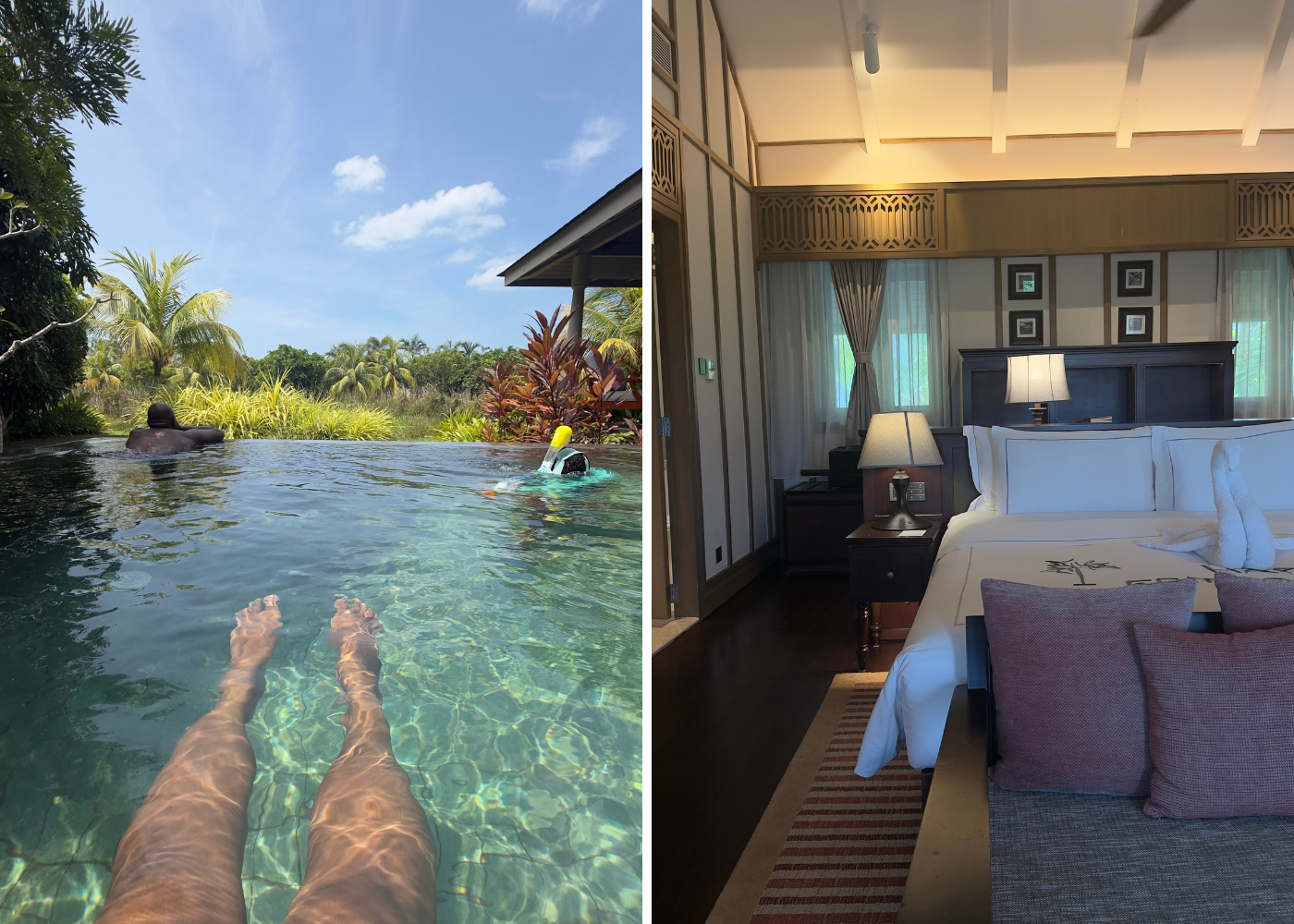
Recently, we stayed at Anantara Desaru Coast Resort & Villas, a sprawling tropical oasis tucked along the shores of Desaru, where lush greenery gives way to the kind of pristine beach that makes you question why you ever agreed to live somewhere with deadlines, school WhatsApp groups and an inbox.
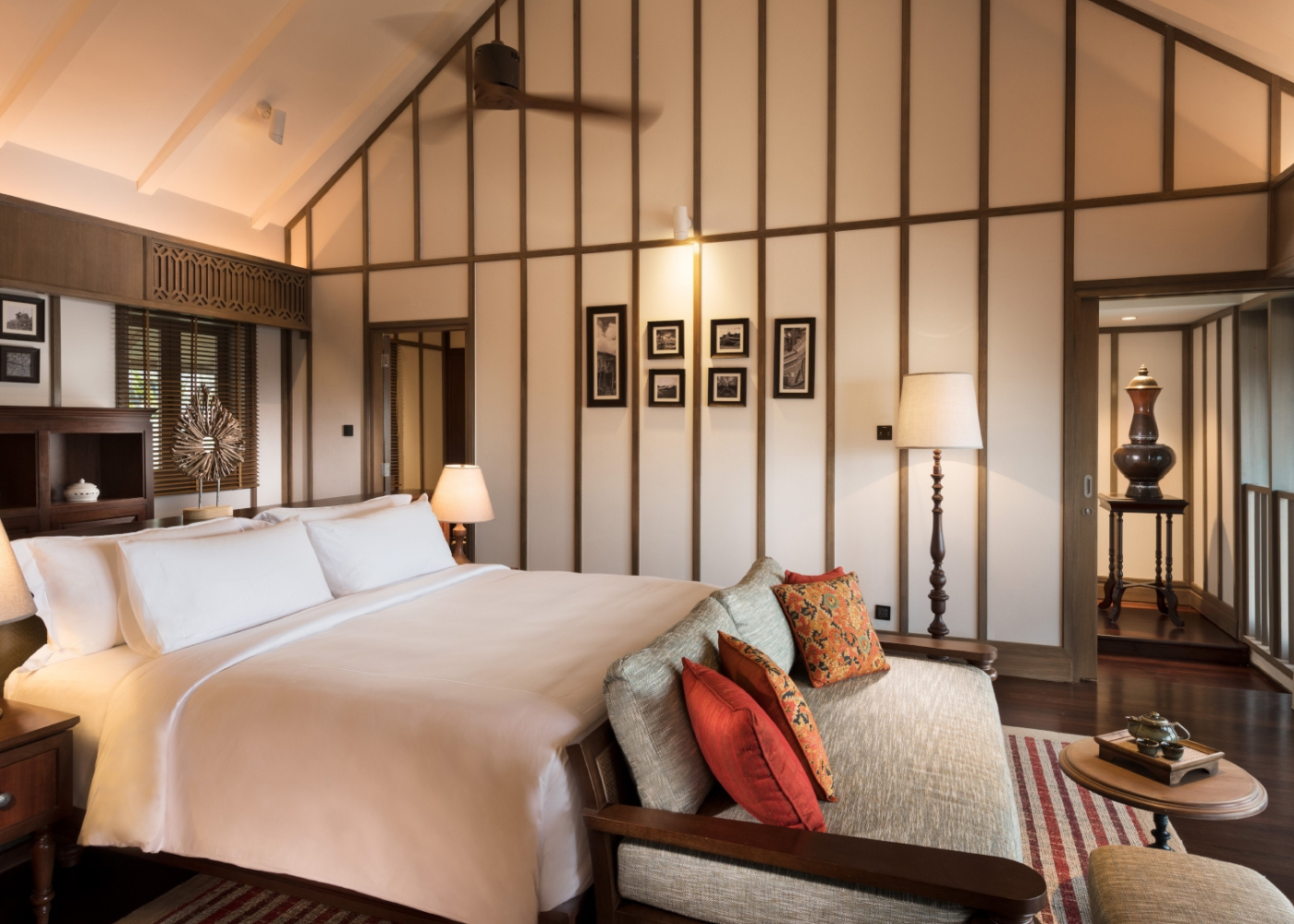
We were generously upgraded to a villa, a glorious sanctuary of space and privacy, complete with its own swimming pool, where the most pressing decision of the morning was whether to have another coffee or go for a dip. There is something almost indecently pleasurable about having a pool entirely to yourself, particularly when your everyday life involves negotiating access to the bathroom with a nine-year-old. Don’t get me wrong, we’ve stayed in villas before, and my friends have raved about Anantara before, but the way my trapezius muscles instantly relaxed the moment we checked in was something completely unexpected, especially somewhere so close to home.
The resort’s grounds are expansive and beautifully maintained, with golf carts ferrying you around the property, including to breakfast, because apparently even the mundane business of getting oneself fed can be made into an occasion. I cannot adequately express how much I enjoyed being driven to breakfast like a minor member of royalty, without having to navigate, organise transport or remind anyone to put their shoes on.
And then there’s the beach. An impossibly lovely stretch of sand, fringed by greenery and opening out to the South China Sea, so pristine and unhurried that the thought of leaving it to participate in any sort of scheduled activity felt faintly offensive. I have travelled enough to appreciate a beautiful coastline, but there was something about having all that space and nothing in particular demanding my attention that made me want to stay exactly where I was.
The villa was beautiful, the surroundings were exquisite, and the entire experience seemed designed to encourage the sort of languid, unapologetic idleness I usually associate with people who have inherited substantial wealth and never had to pack a school bag.
I could get used to this.
And while I appreciate that a private villa with its own pool is hardly a prerequisite for a successful family holiday, I have come to realise that what I’m paying for when I choose luxury isn’t simply beautiful accommodation. It’s the pleasure of having the details considered, the logistics made easier and some of the responsibility for everyone’s enjoyment lifted from my shoulders.
For once, I didn’t feel compelled to manufacture a memorable family experience every hour. We could swim, wander down to the beach, enjoy a leisurely breakfast or do absolutely nothing, which is an activity I have historically found rather difficult to schedule.
There is also something deeply satisfying about encountering an environment where people have anticipated what you might need before you’ve had to ask. As someone who spends most of her waking hours performing precisely that function for everyone else, I found the experience almost embarrassingly seductive.
Of course, I recognise the privilege of being able to enjoy this sort of escape, and I am not suggesting that expensive holidays are the cure for the unequal distribution of domestic labour. It would be a rather bleak indictment of modern family life if the only way mothers could experience competent support was to check into a five-star resort.
But I will say this: after spending most of the year being the person who thinks of everything, I feel absolutely no guilt about choosing somewhere that allows me to think about considerably less.
Call me high-maintenance, if you must. The maintenance, after all, is largely performed by me.
Perhaps the problem isn’t that I need to let go
I know that one of the more popular pieces of advice offered to women like me is that we need to learn to relinquish control. We should stop micromanaging, stop fussing, stop insisting that everything be done our way and give other people the opportunity to step up.
And there is some truth in that. I can be particular, I can be impatient, and I recognise that my instinct to take charge isn’t always especially conducive to encouraging other people to do things independently. But I do wonder why the conversation so often centres on what women need to stop doing rather than what everybody else needs to start doing.
Why is it my responsibility to create the conditions under which another adult might eventually become competent? Why should I have to pretend not to notice something that needs doing just to give someone else the opportunity to notice it? And why, when a man successfully performs a perfectly ordinary parenting task, do we sometimes behave as though he has accomplished something extraordinary?
I just need the people around me to understand that being good at something doesn’t mean I should be expected to do it indefinitely, without assistance, acknowledgement or the occasional opportunity to sit down. My therapist left me with a line a few months ago that I should print and paste above my bathroom mirror: “Maybe you don’t have to be everything for everyone. Maybe it’s ok for balls to be dropped, for people to be disappointed, for you to put yourself first.” Ok, queen.
While I don’t want to become less capable in order for other people to become more responsible, I also don’t particularly want to spend the rest of my life resenting the qualities that have helped me build a life I’m proud of. I like being organised. I like having high standards. I like being the person who knows what to do when things go wrong.
I just don’t want to be that person every single minute of every single day.
Maybe that’s why I loved our time in Anantara so much. It reminded me that there is a difference between being capable of managing everything and actually having to, and that occasionally allowing yourself to enjoy a little comfort doesn’t make you frivolous, spoilt or any less hardworking.
It just makes you someone who would quite like a break. I’m sure I’ll continue to plan our family holidays with an entirely unnecessary level of detail, research potential inconveniences that may never occur and pack supplies for situations that would cause a lesser person to question whether we were going on holiday or preparing for an evacuation.
That is unlikely to change.
But I’m also going to continue choosing beautiful places to stay whenever I reasonably can, enjoying the pleasure of not having to do quite so much and refusing to feel guilty about wanting a little luxury in my life.
Because while I’ve become very good at looking after everyone else, I’ve decided that being looked after myself is something I could get rather used to.
And if anyone needs me, I’ll be by the pool.
Unless, of course, you’ve forgotten your socks.