Research says minutes barely matter for kids' wellbeing. We spoke to Apple's Senior Director of Worldwide Product Marketing for Education on screen time, AI in classrooms and the question parents should ask instead.
There is a negotiation happening just before the telur mata lembu and asam pedas (or some variation of that) gets laid out on tables across Singapore tonight, and it is always about the same unit: minutes. Twenty more minutes, ten minutes after homework. No minutes on school nights. In the same way we have decided that 10,000 steps should be the minimum we should be moving everyday, we also have collectively decided that the minute is how you measure a childhood with technology in it, and we police it with the vigilance of a customs officer.
Here is the uncomfortable part that we’re going to break to you: the research community largely stopped counting minutes years ago.
In 2019, Oxford researchers Amy Orben and Andrew Przybylski published an analysis in Nature Human Behaviour examining data from over 350,000 adolescents. Their finding: screen time explained so little of the variation in teenage wellbeing that its statistical footprint sat alongside eating potatoes and wearing glasses. Two years earlier, Przybylski and Netta Weinstein had tested what they called the Goldilocks hypothesis in Psychological Science. What they found was that moderate use was not associated with harm and, at certain levels, tracked with slightly better wellbeing than none at all. Even the American Academy of Pediatrics quietly walked away from blanket hour limits back in 2016, replacing them with family media plans that ask what a child is doing on a screen rather than for how long.
None of this means the panic is baseless: Jonathan Haidt’s The Anxious Generation has been passed around school WhatsApp groups like contraband, and his argument that smartphones rewired childhood deserves a hearing. But it is worth knowing that when Nature reviewed the book, psychologist Candice Odgers concluded that the causal evidence simply is not there yet, and that the panic risks distracting us from the things actually driving adolescent distress. That gives us two very serious camps, one unresolved debate. What both sides agree on is that the crude minute count tells you almost nothing.
So if the minute is the wrong unit, what is the right one?
Consumption is the problem wearing a screen costume
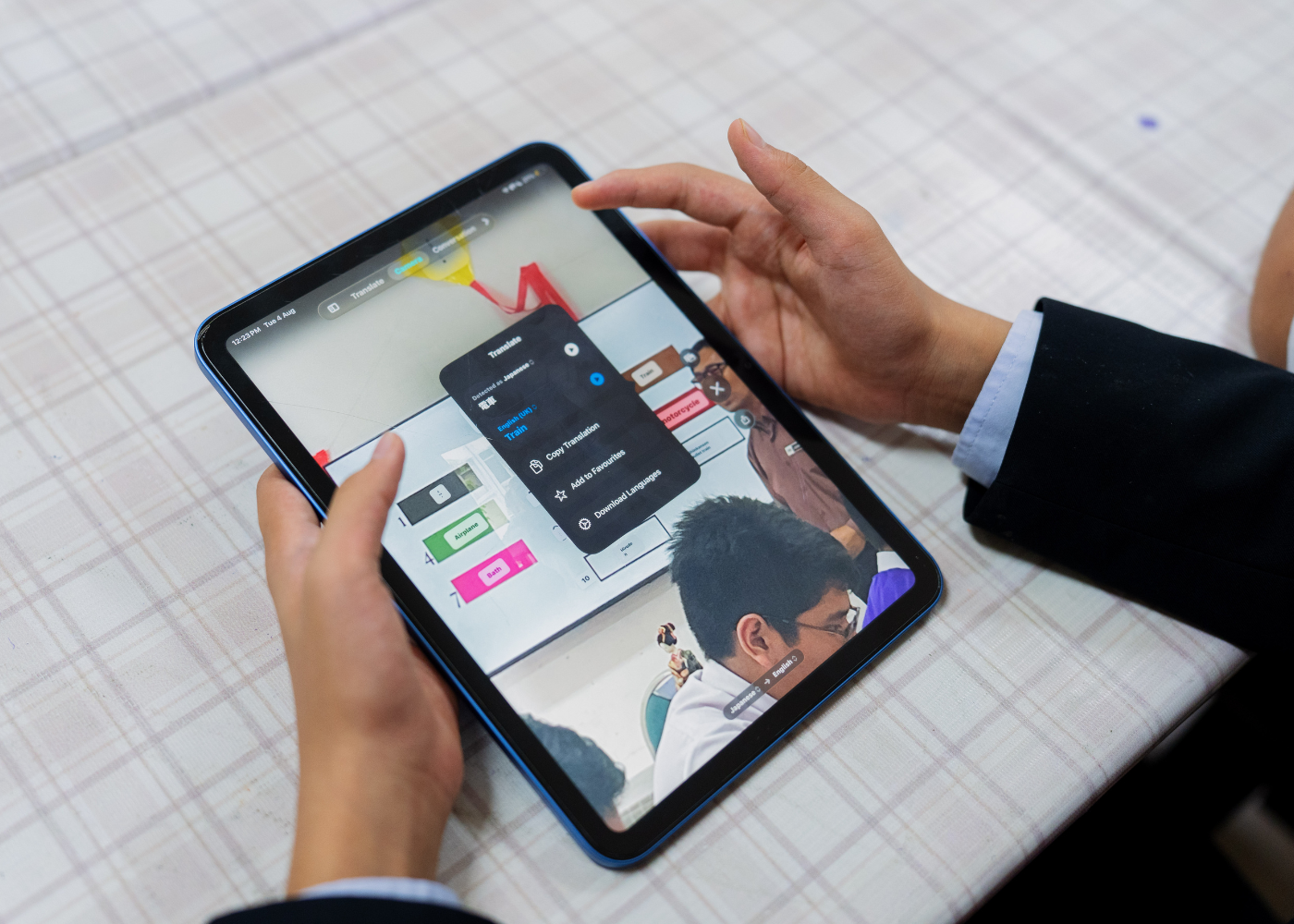
Pedagogy has a version of this distinction already. Educators talk about consumption versus creation: whether a child is passively receiving content or actively making something with it. An hour of doomscrolling on Youtube is not the same hour as one hour coding a game, editing a film about mangrove conservation, or in my household, my my eight-year-old creating a presentation on why he thinks a pet frog is a useful addition to our family. Same device, same sixty minutes, but entirely different cognitive event.
Dominic Liechti, Apple’s Senior Director of Worldwide Product Marketing for Education, framed it through the World Economic Forum’s future of jobs research. It puts AI and technology literacy at the top of the skills employers want, sitting right beside curiosity, creativity and critical thinking. “It’s a combination of both,” he told me during an interview in Kuala Lumpur as part of the Designed for Every Kind of Learner conference. “The focus is on these future skills, and the technology can then help to amplify developing them. We see technology infused with humanity.”
That phrase could be dismissed as marketing, and Liechti is after all a marketer. But the sequencing he described when I asked how AI supports learning without replacing thinking was more concrete than the slogan. “It’s actually the student who needs to draft first,” he said. “Then maybe using AI to challenge the assumptions, to challenge the draft, as a thought partner. That’s where critical thinking starts.”
He went further, and this is the bit I want to have printed and pasted on every Singaporean household’s fridge: “Students don’t know what they don’t know. The system gives them way more, but they don’t know if that’s right or wrong. So with the teacher, they can check the assumptions of the AI. Is this validated? Maybe use other resources, maybe books, to check whether what the AI gives me is right.”
In other words, the AI’s confident wrongness becomes the lesson. Fact-checking the machine is the critical thinking exercise; AI doesn’t become an easy way out. With devices, screen time and AI, and most importantly, educators that are capable enough to journey alongside students, we create critical thinkers the future actually needs.
The homework test
Somewhere in my conversation with Liechti, I confessed that I had recently annoyed a room of teachers at my own child’s school by suggesting that if a piece of homework can be answered by AI, it was not a good piece of homework. Liechti did not flinch, he drew the line educators call low order versus high order thinking. The low order tasks, the recall and the routine, are “easily replaceable,” though children still need those foundations the way they need arithmetic before algebra. The high order work is different. “Critical thinking, complex problem solving, creating something nobody else has, presenting. These are skills that AI can never replace.”
This maps onto a problem education researchers have been chewing on since 1984, when Benjamin Bloom published what he called the two sigma problem: students tutored one-to-one perform two standard deviations better than students in conventional classrooms, and no country on earth can afford a tutor per child. Personalised, self-paced technology is the first semi-plausible answer to that forty-year-old maths. Whether AI actually delivers it is an open question… but it reframes the AI conversation from “will my child cheat” to “could my child finally learn at their own pace,” which is a considerably more interesting place to worry from.
No diagnosis required
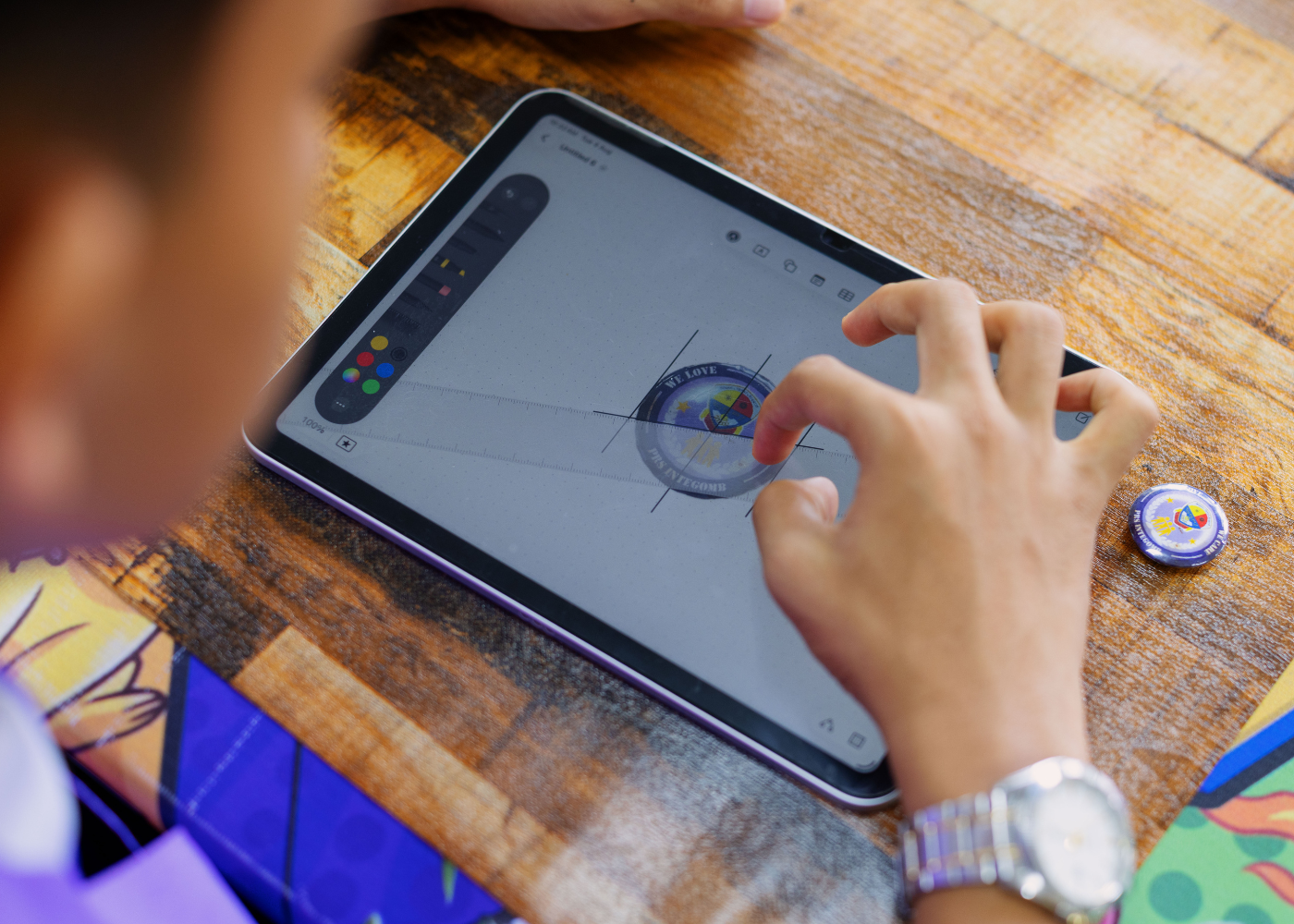
I have to admit that I’m quite the Apple nerd. I know for a fact that the brand builds its accessibility features into every device by default, which means a child can use a reading tool, dictation or text-to-speech without a formal diagnosis, a label, or a letter from anyone. In Singapore, where a diagnosis still carries stigma and a label can follow a child through the system, that design decision does quiet, significant work.
“We want to make sure that a second language learner, or somebody with a disability, has the features to be enabled, to have access to what everyone else has,” Liechti said. “Everyone has the same device. Somebody may have a hearing aid connecting via Bluetooth to the iPad, but it’s still the same device. It levels the playing field right away.”
Pedagogy has a name for this too: Universal Design for Learning, a framework developed by CAST in the 1990s on the premise that if you design for the margins, everyone benefits. The event’s title, Designed for Every Kind of Learner, is essentially UDL with better industrial design. The struggling reader, the anxious presenter, the child thinking in a second language: the tools bend to them, quietly, without anyone being pulled out of class.
The honest caveats
Now the ballast: The OECD’s own analysis of PISA data found that countries that invested most heavily in classroom technology saw no noticeable improvement in results. Technology amplifies pedagogy; it does not supply it. A beautiful device running a passive worksheet is still a passive worksheet.
And Liechti himself was surprisingly quick to hand responsibility back to schools, repeatedly. When to go analogue, which features to enable, how to design homework AI cannot do for you: “that really comes down to the school.” The bottleneck he named was not devices or software but teacher readiness, everywhere from Japan’s forty-child classrooms to ours, which is why Apple’s certified learning coaches (over 7,000 of them, each coaching another 20 to 25 teachers) may matter more than anything announced on a keynote stage.
Which brings us back to the dinner table: an educator friend shared a line with me the morning of the interview that I have not been able to put down. The value is no longer in answering questions, it is in the ability to question the answers. That is the skill the next decade will pay for, and it is not measured in minutes.
So maybe it’s time to retire the customs officer question, and instead, try the better one. Not “how long have you been on that thing,” but “what is that thing asking of you.” If the answer is nothing, that is the problem, and it would still be the problem with the screen switched off.