Singapore assigns every child a mother tongue by race. Mine picked a language I've never spoken. A dispatch on race, language, and where belonging actually lives.
Here is the arithmetic of me. I am Indian. I look Indian, unmistakably, and I would not have it any other way. I look the kind of Indian that gives people the confidence to know which language to greet me in, or which language to make snide remarks about me in, assuming I won’t understand. And yet, unfortunately, I do not speak a single word of any Indian language. I have native proficiency in both English and Malay. In fact, my grasp of Malay is so good that I will unabashedly announce it may be better than that of someone ethnically Malay. I used to translate corporate speeches into Malay for a job I had when I was younger.
I am also Muslim. If you are keeping score, that is a minority, inside a minority, origami-ed into another minority, and I have spent a good part of my life being a small administrative surprise to people who thought they had me placed.
For context: my father was born in Malaysia and moved to Singapore, my mother is an OG Singaporean, and both of them ended up in a Malay kampung in Geylang, where they absorbed not just the language but Malay cultural practices along with it. Don’t get me wrong, my parents are fluent in Tamil and know their way around the full diversity of Indian food. But growing up, I found myself straddling these worlds: looking Indian, knowing I was Indian, and yet expertly conversing in a mother tongue that wasn’t the one the country had assigned me, one I could never quite be proud of, that never quite belonged to me.
For years I treated this as a private glitch, a personal failure to be properly anything. And then I learned that my not-fitting is, quite literally, written into national policy.
Singapore assigns every schoolchild a “mother tongue” based on the race registered on their birth certificate. Chinese children are given Mandarin, Malay children Malay, and Indian children Tamil, regardless of what is actually spoken at the family dinner table. The logic is heritage, connection, the preservation of roots. The effect, for a child like the one I was, is a language lesson in a tongue nobody in my house spoke, except when my parents were talking about my brother and me to each other. That, they did in Tamil, precisely so we wouldn’t understand.
I used to think I was the only one rattling around outside the categories. Only when I got older did I realise plenty of my friends were too. Researchers who surveyed Singaporeans of mixed and minority heritage found that many don’t identify strongly with the mother tongue they were assigned either. It turns out there is a whole quiet population of us, dutifully learning a heritage that was allocated rather than lived.
When I was 13, I sat in a Malay class, the only Indian girl in the room, when the teacher called me out and asked what my race was, and what it said specifically on my birth certificate. I was already uncomfortable being singled out. When I told him my race was Indian, he pressed on. “You’re Tamil. What are you doing in my class?”
So let me ask the question the whole country is quietly organised around and nobody says out loud: does anyone actually belong here, or have we all just been sorted?
The research on belonging offers a way out of the box, and it is almost embarrassingly simple. In their foundational work, the psychologists Roy Baumeister and Mark Leary argued that the need to belong is one of the most fundamental human motivations we have. But what satisfies it, in their account, is not a category. It is not a race, a language, or a line on a form. It is frequent, warm interaction inside stable, ongoing relationships. Belonging, in other words, was never in the box. It was always in the people.
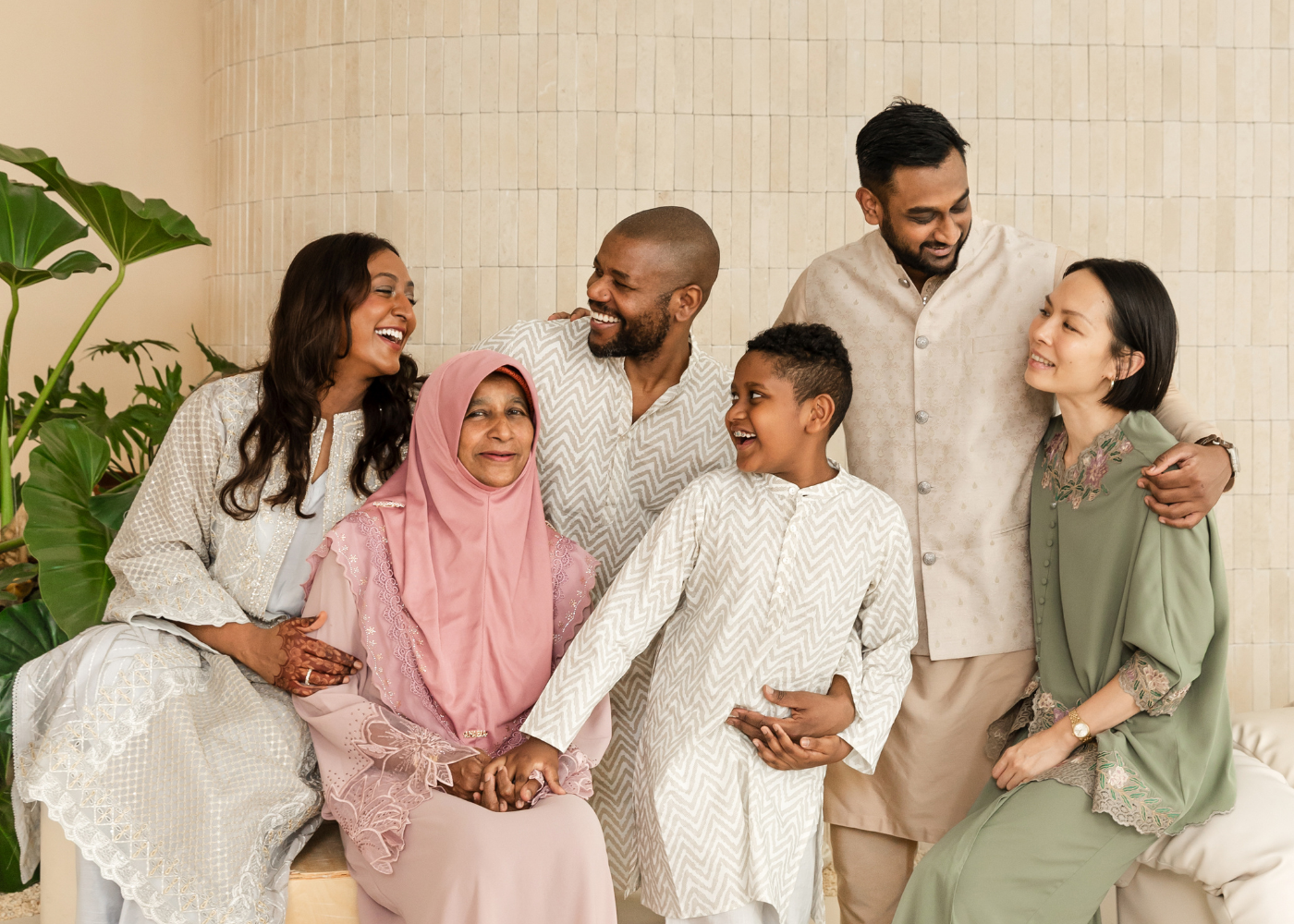
Which unmistakably demolishes the premise I spent years worrying inside. I kept asking whether I belonged as an Indian, measuring myself against a heritage I could not speak, and the whole time I was fluent in the actual thing belonging is made of: A home, a seat at table, which these days, I’ve learned to construct the own damn table myself. A mother I can argue with in our shared language, a group of friends who understand the collective human experience of living, breathing in Singapore as a millennial parent trying to do our best.
For a handful of people, whom I am not a category error but simply, unremarkably, one of their own.
It’s a funny thing about being a millennial Singaporean. There are so many moments when you look at your life, at the HDB you live in, at your general state of being, and ask: how did I get here? We were raised on National Day songs promising a home “where my dreams wait for me,” and grew into a country where million-dollar public housing is unremarkable, and Mixue’s lurid red sign squats in the middle of the Arab Street enclave because only Chinese chains can afford the rent on a heritage shophouse now.
And yet. There is a weird, uncomplicated sense of belonging I get when I rock up to the fresh soya bean milk stall I’ve been going to since I was 13. The twang in my speech shifts to match the auntie’s, I know the lore of every stall owner in that hawker centre because of her. She knows my order without fail, she asks about my son, I ask about her knees. I know that on the walk home I’ll bump into a Chinese uncle in his eighties who will, without fail, hand me his phone so I can sort out his polyclinic appointment, and then fish a piece of fruit out of his stash and tell me to give it to my boy. There’s the security guard at my son’s school, who I talk to in Malay about football, his next Cameron Highlands trip, his weekend escapes to JB. There’s a bubbling sense of belonging in there, even in the 2km radius of my home:
I am one of them.
I think about all this most now as a parent, because my son will be handed the same box I was.
Only a few weeks ago, my almost nine-year-old said, “Mama, actually we don’t have a mother tongue, right?” And there it was, the whole tangle, handed to me by a child who hasn’t even sat the exam yet.
I struggle with it, honestly. Malay is the accessible language for me, the one I could actually help him in, and I can’t fathom him taking on Tamil at this stage. But so much of mother-tongue literacy here isn’t really about language. It’s braided through with culture, and often with religion. I’m a millennial who still, at this age, gets asked how I can be Indian and not Hindu.
So what do I tell him, when he says we don’t have a mother tongue? His mother has a sharper tongue than most, that he knows.
But I tell him he does have one, it just doesn’t come with an exam attached. It’s the Malay he hears me speak to his school security guard about football, it’s the one he speaks to his Nani with. It’s the mangled, loving mix of English and Malay this whole family runs on. One day it’ll be whatever language the soya bean auntie uses to ask him how his mother is doing. His mother tongue is the sound of the people who already know him, and no form has a field for that, and none ever needed one.
I opened by asking whether any of us really belong here. Here is where I’ve landed, and I’ll warn you it doesn’t resolve as tidily as a policy would like.
The older I get, the more I notice that the people who seem most at home in their lives are not the ones who fit their box most neatly. They are the ones who stopped waiting for the box to fit and went and built the thing themselves, out of people, out of habit, out of the specific warmth of being known rather than being categorised. For a long time I assumed that constructed belonging was the consolation prize, the thing you settle for when you don’t come with the right heritage pre-installed.
I’ve since retired that idea. I think the people born neatly inside their box, the ones whose face and language and religion all politely agree with their birth certificate, simply never had to notice they were building their belonging too; they got to mistake the box for the thing itself. The rest of us just had to do our construction with the lights on and half the IKEA instructions missing trying not to tear our hair out.
So does anyone actually belong here? I’ve decided the question is slightly rigged. Nobody is handed belonging at the door. Some of us are just issued a more convincing costume and told to stop asking. That Malay teacher never did get his answer for what I was doing in his class. But if he asked me now, I think I’d tell him the truth: the same thing as everyone else in this country, sir. Making it up as I go, and putting seats at a damn good table where I make sure everybody who never got a seat feels like they belong, too.