We moved our son from an international school in Singapore to boarding school in Malaysia. Here's our honest story, a comparison of costs, and why it's the right choice for our family.
On paper, moving our son from an international school in Singapore to a boarding school in Malaysia didn’t seem to make much sense. We lived in Singapore. He attended one of the country’s most respected international schools. His friends were here. Our lives were here. Why would we send him across the Causeway to Malaysia? The answer is complicated, and not easy. Sometimes the best parenting decisions are also the hardest ones.
The guilt no one prepares you for
I’ll be honest: I felt like I was failing.
Good parents are supposed to keep their children close, aren’t they? They should be there for breakfast conversations, football practice, homework questions and those random chats that happen while your kids are raiding the fridge after school.
Instead, I was packing a suitcase. The first time we drove away from the campus, leaving him waving with a smile that was much braver than mine, I cried almost the entire journey home. The house was painfully quiet. His bedroom stayed exactly as he’d left it, a messy cave, because I couldn’t bear to tidy it when he wasn’t home.
There is a particular kind of guilt that comes with not seeing your child every day. There’s someone missing from the sofa when you sit down to watch a show. Weeknight dinners feel incomplete. What if they feel sick, or something happens at school and you aren’t there to fix it? You wonder whether you’re missing precious moments that you’ll never get back.
I think it’s something every boarding parent wrestles with.
Why we started looking to move from international school to boarding school
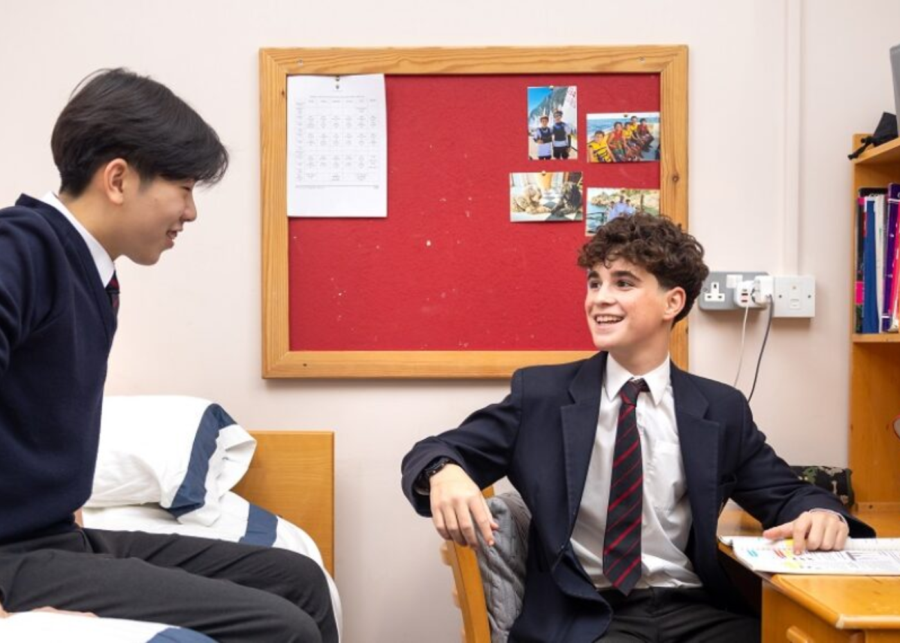
Our son had been attending a prestigious international school in Singapore, where he had received a good education. But as he moved into his teenage years, we realised he needed something different. Like many teenagers, distractions had become part of everyday life. Homework stretched into late evenings. Revision competed with gaming, phones, social media and everything else that comes with adolescence. His peer group was dividing into those who were experimenting, and those who were yet to catch up, and we felt like we were struggling.
We also wanted our son to develop greater independence before university, while still having a strong support network around him. Singapore can feel claustrophobic for teens who can’t get a part time job without permanent residency, living in small apartments with their parents down the hall.
Boarding school offered something we couldn’t easily recreate at home. Structured study with tutors on-call (heaven knows I can no longer answer his maths or science homework questions), built-in routines, independence with guidance, and adults whose jobs extended well beyond the classroom.
Is boarding school in Malaysia more expensive than international school in Singapore?

The surprising answer? Not necessarily.
For a Year 10 student, annual tuition at his international school in Singapore was over $50,000 per year, before factoring in extras such as uniforms, transport, overseas trips, examination fees and other school-related costs.
At his boarding school in Malaysia, annual tuition and boarding for a Year 10 equivalent student typically comes to around RM145,000 – RM165,000 per year for a full boarding place. Once we looked at the complete picture, including tuition, boarding, enrichment and the costs associated with staying at a top-tier international school in Singapore (as well as feeding a growing teenage boy who can polish off two steaks in one sitting), the two options were fairly comparable.
The financial difference wasn’t really a factor in our decision making, but it certainly made it easier to justify!
What surprised us most about moving our son to boarding school

I expected homesickness and lots of FaceTime calls. I expected him to ask to come home every weekend. Instead, something remarkable happened. The boy who once needed constant reminders suddenly started taking ownership. Without the distractions of everyday life at home, he developed routines almost overnight. Prep time became actual study time instead of negotiating homework around everything else. Teachers were available outside lessons. His House master and Dame check in regularly. There was always someone keeping an eye on academic progress, friendships and wellbeing.
The pastoral care became one of the biggest surprises. At his boarding school, every child is known by multiple adults, not just subject teachers. There’s tutors, house masters, dames and boarding staff who notice when someone seems quieter than usual or has had a difficult week. And they are living together with their friends, so the bonds develop faster and are less easily broken by trivial fights. The boys in the house are genuinely there for each other, even if their personalities are wildly different. The sense of belonging and house pride are very real factors for teenage boys. As we know, teenagers don’t always volunteer information to their parents, and sometimes they’ll open up to another trusted adult or an older student they look up to. That safety net became invaluable.
The hardest part isn’t the goodbye, it’s the logistics.
People assume the emotional goodbye is the most difficult part. It is emotionally draining, but you do get used to it. The toughest thing is actually the logistics. If your child boards in Malaysia, you’re suddenly living according to immigration queues, Causeway traffic, public holiday congestion and border delays. A simple Friday car journey home can turn into a three-hour slog. A Sunday evening drop-off sometimes means sitting in traffic wondering whether you’ll even make evening registration.
You become oddly knowledgeable about checkpoint peak periods. The app ‘beat the jam’ has become one of my most studied. Your calendar revolves around exeats, term breaks and differing public holidays. It’s not glamorous, and it’s certainly not effortless. And yes, there are moments when you’re stuck at the border asking yourself why you didn’t choose the easier option.
Learning to let go

Perhaps the biggest lesson wasn’t for our son. It was for me. Parenting teenagers isn’t about holding on tighter. It’s about gradually loosening your grip while making sure there’s still a safety net underneath. Boarding school accelerated that process. He learned to organise his own laundry (with varying success – I still don’t know how he’s lost so many socks). He manages his own timetable, resolves disagreements with friends, is slowly starting to advocate for himself, and is becoming responsible for his own learning.
Meanwhile, I had to learn that being a good parent doesn’t always mean being physically present every single day. Sometimes it means creating an environment where your child can become the person they’re meant to be. And I’m only a drive away – he knows I’ll be there if he needs me.
Would I recommend it?
Only if it’s the right fit for you. Boarding school isn’t a magic solution, and it certainly isn’t for every child or every family. Some children would hate it. Some parents would hate it even more (I am still getting used to it to be honest). It requires trust, resilience, planning and a willingness to redefine what family life looks like.
But for us, it’s worked. We still miss him every day, and the house is still quieter than we’d like. I still count down the days until Friday, and really look forward to exeat weekends. But every time he comes home a little more confident, a little more independent and genuinely excited about what he’s learning, we’re reminded why we made this choice. Sometimes loving your child means keeping them close, and sometimes it means giving them the space to grow. For our family, crossing the Causeway turned out to be less about creating distance, and more about helping our son find his feet.
And, despite all the tears, the traffic jams and the parental guilt, I wouldn’t change that decision.
Thinking of sending your child to boarding school? DM our team if you want to chat!