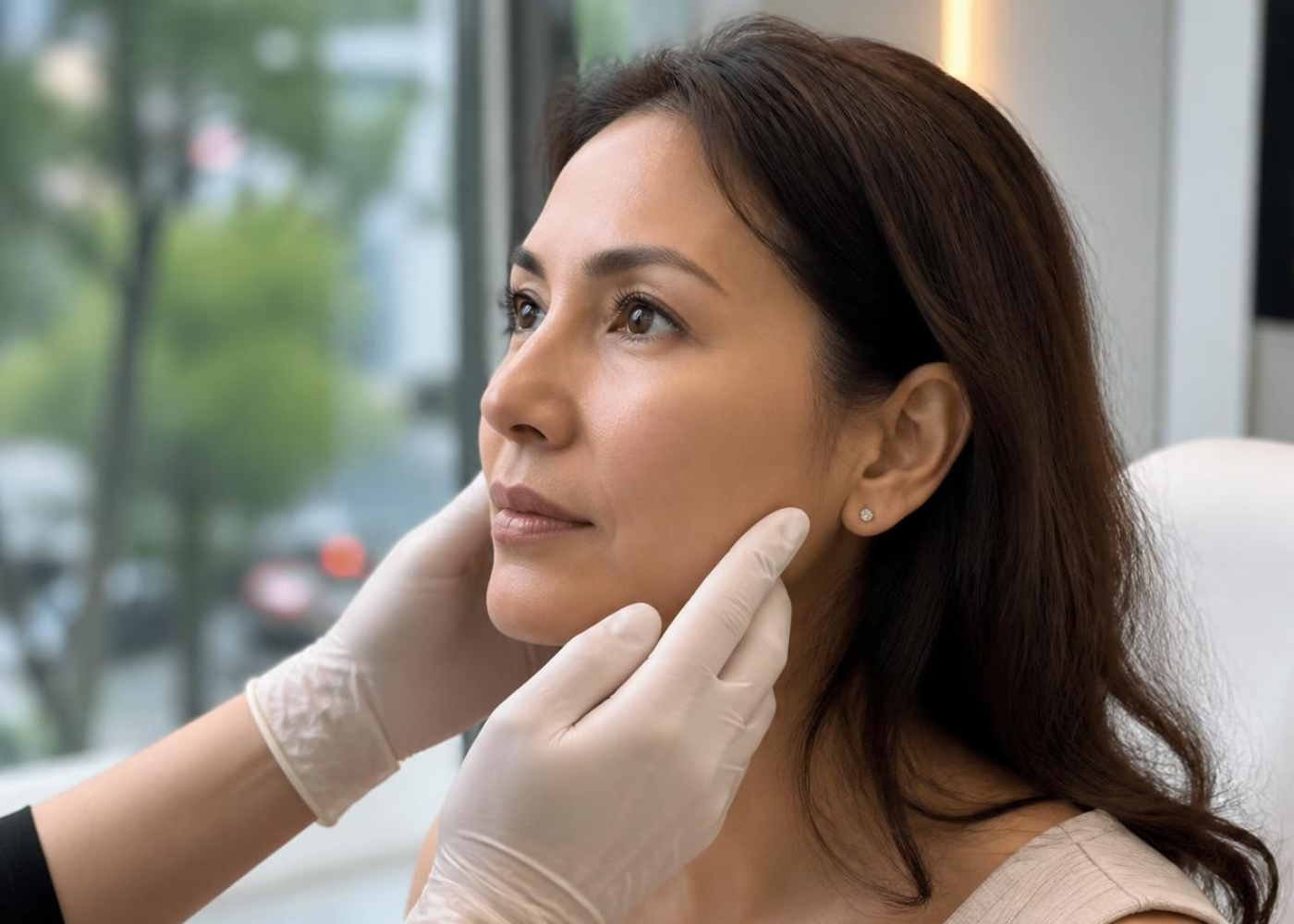
What are skin boosters and are they worth it? Dr Rachel Ho and Dr Chester Lan break down every type available in Singapore, from Profhilo to ECM boosters, including costs, risks and the red flags to watch.
Somewhere between your first baby and your last full night of sleep, you kinda stop recognising the woman staring back at you in the mirror. Not dramatically, although sometimes existentially. You don’t have to look far for an example. I never had problems with my skin, and up to my early twenties I didn’t even get pimples. Then, in short order, I had a child and lost a parent. Life, it turns out, is stepping on Lego in the dark: always a shock to the system, however it finds you. The weight of it all translated to my face, and I arrived at just the right lack of self-recognition that every photo now requires a filter and a small internal negotiation about the impending midlife crisis.
It’s not all doom and gloom from here, though, which I discovered when I stumbled into the wonderful world of Profhilo a few years ago. Fast forward to now, and skin boosters well beyond Rejuran and Profhilo have become one of the buzziest categories in the injectable realm, only have had Singapore’s aesthetic clinics buzzing, along with everyone else’s. And no, I promise it’s not Botox with better PR.
To separate the science from the social media noise, I spoke to two aesthetic doctors: Dr Rachel Ho of The Skin Longevity Clinic, who has more than 16 years of clinical experience, she is known for her evidence-based, personalised approach to skin longevity, facial harmony and natural-looking rejuvenation, and Dr Chester Lan of Freia Medical, who works with the newest booster categories to arrive in Singapore. Here’s everything they want you to know before you book.
What are skin boosters, exactly?
Skin boosters are injectable treatments that improve your skin’s actual quality: hydration, texture, elasticity and that elusive glow you last saw in 2019. “Skin boosters are injectable treatments that improve skin quality, like hydration and texture, without changing facial volumes or contours like fillers, or movement like Botox,” explains Dr Ho.
In other words, fillers change your face. Botox freezes bits of it. Skin boosters just make your skin better at being skin.
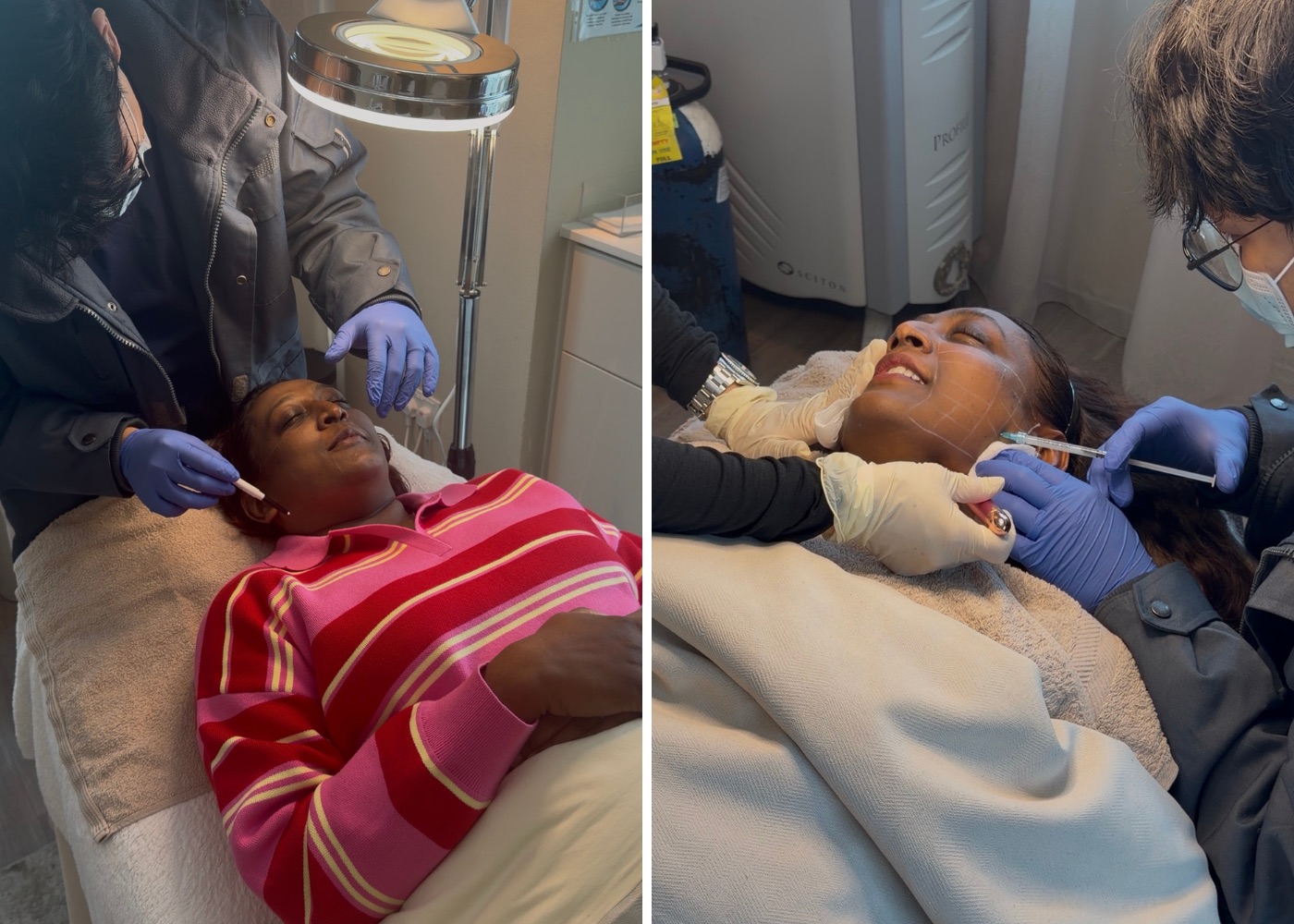
They’re delivered as many tiny, superficial injections across the treatment area rather than one strategic dollop, which is also why they behave so differently from fillers. And yes, if you’ve been trawling social media and seeing videos of people coming out of Korean aesthetic clinics looking like they’ve had 1,200 little mosquito bites all over their face, yes that’s exactly what it looks like, but don’t let it scare you, now.
Why is everyone suddenly over fillers?
 Blame the overfilled faces of the 2010s. “Volumising treatments like fillers have gotten a bad rep due to overfilled faces and complications such as filler migration, and that’s made a lot of patients apprehensive,” says Dr Ho. “At the same time, more patients are becoming aware of the concept of longevity or healthy ageing, and that’s extended towards the skin.”
Dr Lan agrees the shift is largely patient-led. “Patients today are much more informed than they were a decade ago. They’ve seen the consequences of overdone aesthetics, whether it’s an overfilled face or a frozen expression, and increasingly they’re looking for results that are subtle and natural.”
Translation: we all watched the pillow-face era unfold on Instagram and collectively decided, no thank you. Neither doctor is writing off the classics, mind you. “Botulinum toxin and fillers remain extremely valuable treatments,” says Dr Lan. “The key is using them judiciously.” The reality is, as Singapore patients become more informed about treatments and tweakments skin quality is now a treatment goal in its own right, not an afterthought.
The types of skin boosters available in Singapore
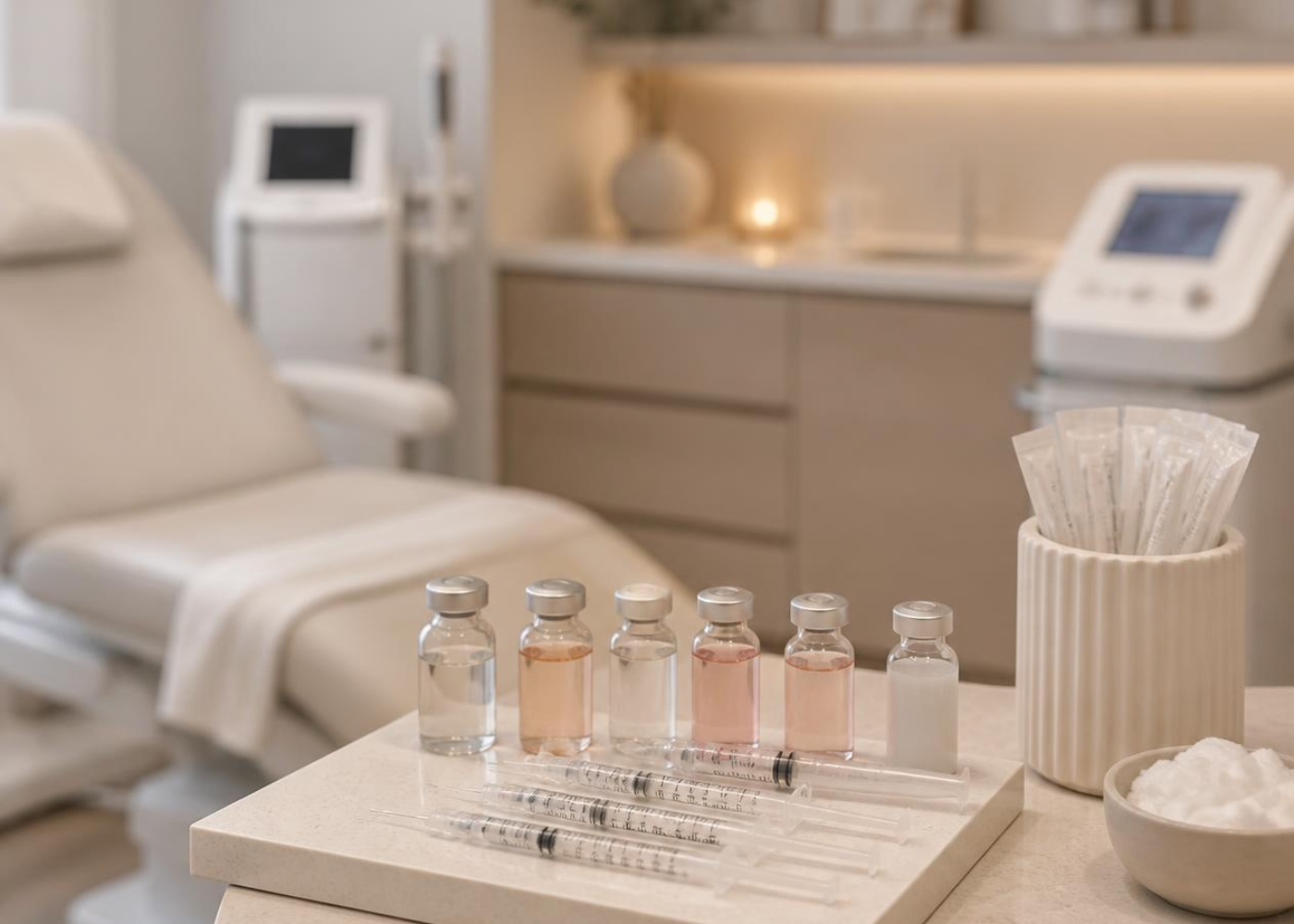
Here’s the misconception both doctors flagged most: that all skin boosters are the same. “The performance and expected outcomes of skin boosters really depend on their main ingredients and their mode of delivery,” says Dr Ho. Consider this your cheat sheet.
Hyaluronic acid (HA) boosters
The originals, and still the biggest category. Think Restylane Skinboosters, Juvederm Volite and Juvederm Skinvive, the lightly cross-linked microdroplet treatment behind half the “glass skin” content on your feed. Profhilo sits here too, though it’s technically a hybrid cooperative complex that spreads through the skin to firm as well as hydrate.
HA boosters restore hydration deep in the dermis, which improves texture and firmness, plumps fine creases and brightens dull skin. If your face currently has the texture of a school newsletter, start here.
PDRN and polynucleotide boosters
Rejuran is the household name, with Plinest and Nucleofill also available in Singapore. These use polynucleotides derived from salmon DNA to support skin recovery and repair. There are targeted versions too: Rejuran I for the under-eye area and Rejuran S for acne scars. Good for sensitive, post-acne or generally fed-up skin.
PDLLA collagen biostimulators
PDLLA boosters such as Juvelook are biodegradable collagen stimulators in skin booster form, and Dr Ho’s underrated pick. “I like Juvelook for rejuvenating tired-looking under eyes and improving skin texture, including enlarged pores and acne scars. I think it doesn’t get enough attention for its outcomes.” Tired under eyes, you say. Go on.
She also rates the category more broadly: when asked which products have real evidence behind the “regenerative” label that gets slapped on everything these days, her answer was collagen biostimulators. “These treatments stimulate collagen and improve dermal support gradually.”
ECM boosters
The newest arrivals, with RE2O the name you’ll hear most. Extracellular matrix boosters deliver actual components of the skin’s structural scaffold, such as collagen, elastin and glycosaminoglycans, rather than just hydration or biological signals.
Dr Lan finds them “particularly useful for patients concerned about skin texture, roughness and overall skin quality,” and considers the category underrated: “They have shown consistently high patient satisfaction in my practice because they can improve multiple aspects of skin quality rather than targeting just one parameter.” Dr Ho likes them for rejuvenating tired-looking under eyes, and rates the short-term outcomes in her patients, but adds a caveat worth hearing: ECM boosters are “a huge trend in Singapore and Korea right now, and they do get oversold on social media as a panacea for every single skin concern.” She also notes there are regulatory controversies around the category that patients should know about to make informed choices. In short: promising, not magic.
How do doctors decide which one you need?
Not by asking what you saw on TikTok, preferably. Both doctors follow the same broad process: identify your primary concern (dryness, dullness, enlarged pores, fine lines, scarring, sagging, or the full bingo card), screen your medical history for allergies, autoimmune conditions and active inflammation, then assess your skin clinically.
“Ultimately, the best treatment is one that is matched to the patient’s skin rather than simply following trends,” says Dr Lan. Sometimes that means combining treatments: a laser or radiofrequency device alongside a booster, since they work through different mechanisms. And sometimes the answer is no booster at all. “If someone comes in bothered by a sun spot, the treatment of choice is usually a pigmentation laser. A skin booster would have very little impact on that specific problem.”
Dr Ho’s facial reconstruction background makes her especially wary of one-size-fits-all treatment plans. Ageing, she explains, doesn’t happen in one layer of the face: skin, fat, muscle and bone all contribute. “When it comes to treatment planning, I take a personalised approach that addresses the respective components of ageing.” If a clinic hands you a fixed protocol before anyone’s looked at your face properly, that tells you something.
Quick fix or long game?
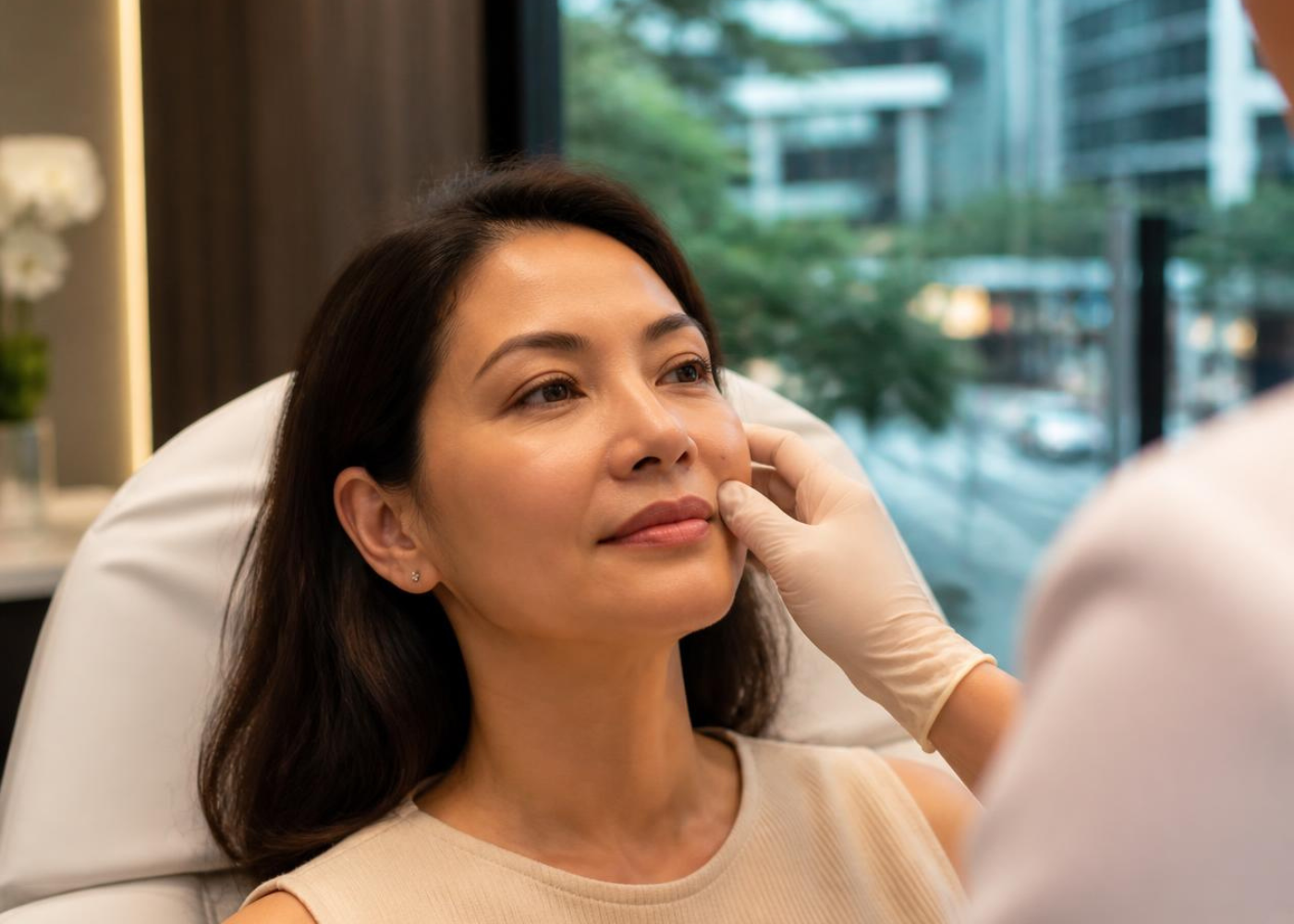
Both, sort of, but mostly the latter. Dr Ho points to evidence that appropriately selected boosters can reverse signs of photoageing and work as a preventive strategy, not just damage control. Boosters trigger biostimulation through multiple pathways, restoring the skin’s structural integrity and barrier function over time.
Dr Lan compares it to health generally: “You don’t wait until you’re seriously unwell before eating nutritious food or exercising. The goal isn’t to start treatments unnecessarily early, but to intervene appropriately before significant deterioration occurs.” So yes, prevention-led aesthetics is a real clinical strategy and not just clever marketing, though your budget may wish otherwise.
Risks and downtime: the honest version
Skin boosters are lower risk than fillers because of how they’re delivered: small droplets, injected superficially, spread across a broad area. That makes the filler-specific horrors like facial distortion and vascular occlusion far less likely. But lower risk isn’t no risk.
“A lot of people assume skin injections or skin boosters are risk-free or simple procedures,” warns Dr Ho, “but there are risks of complications such as nodules, prolonged swelling and infections.” Her full list also includes allergic reactions, inflammation, post-inflammatory hyperpigmentation and, bluntly, poor cosmetic outcomes.
Practically speaking, expect pinprick marks, redness and small bumps for a day or two after treatment. That said, mine completely diminished after the first day for both Profhilo and Re20, so it really differs from person to person.
What do skin boosters cost in Singapore?
Indicative per-session ranges (confirm with your clinic, as pricing varies by product, dose and doctor):
| Type | Examples | Typical price per session | Initial course |
|---|---|---|---|
| HA boosters | Restylane Skinboosters, Volite, Skinvive | $500 to $900 | 2 to 3 sessions |
| Profhilo | Profhilo | $800 to $1,200 | 2 sessions |
| PDRN | Rejuran, Plinest | $400 to $800 | 3 to 4 sessions |
| PDLLA | Juvelook | $600 to $1,000 | 2 to 3 sessions |
| ECM | RE2O | $800 to $1,500 | 2 to 3 sessions |
Maintenance is typically one session every six to twelve months once your initial course is done. If a price looks dramatically cheaper than these ranges, that’s not a bargain, that’s a red flag. Speaking of which.
Red flags when choosing a clinic
Both doctors were refreshingly blunt here. Walk away if you encounter:
The consultation that isn’t one. “The first red flag is the absence of a proper consultation with a doctor before treatment,” says Dr Lan. A chat with a “beauty consultant” or salesperson doesn’t count, adds Dr Ho.
Grandiose claims. Anyone promising to turn back a decade in one session is selling something, and it isn’t results.
Pressure tactics. Discounts designed to lure you in, packages pushed before you’ve been assessed, and anyone who makes you feel rushed. “Patients should never feel pressured into treatments through aggressive sales tactics,” says Dr Lan. “A good clinic should educate you, answer your questions honestly and recommend only what is genuinely appropriate for your skin.”
Mystery pricing. If the full cost only materialises once you’re in the chair, leave.
Where is this all heading?
Growth, basically. Dr Ho predicts more choice as manufacturers compete on formulations and delivery systems, and notes that pharma marketing has already pivoted to “skin quality” and “skin longevity” language. Dr Lan expects treatments to become increasingly personalised and regenerative, working with the body rather than masking things. He also predicts the stigma will keep fading: maintaining skin health is fast becoming “another form of self-care rather than something people feel the need to hide.”
The takeaway? Skin boosters aren’t the keys to the time machine you want them to be, but it might get your skin back a couple of years, and honestly, I’ll take all the win I can get.
Freia Aesthetics is located at Wisma Atria Office Tower, 19,-03, 435 Orchard Road, Singapore 238877; The Skin Longevity Clinic is located at 9 Scotts Road, 06-05 Scotts Medical Center at Pacific Plaza Singapore 228210