
A Singapore doctor and mum of three, Dr Katrina Gisbert-Tay on how parental stress transfers to children, and what to do before you walk through the door tonight.
A post went viral a few months ago on TikTok (it seems to have been taken down), and was reposted on Reddit. A young Singaporean woman shared her story: from a young age, her days looked like this — tuition since she was three, piano, violin, ballet, swimming. Seven in the morning to eight at night, every single day. She described a moment at 11 years old, opening her PSLE results, and hyperventilating in front of her entire class. This was one vivid marker of a much longer relationship with stress and pressure that she says has been building since childhood.
Her story isn’t rare. Stress is contagious.

What struck me most was that her story isn’t rare. I hear some version of it every week, from the parents I coach and from my own reflection in the mirror. Read the comments under any post like this and you’ll find hundreds of adults saying some version of the same thing – that was me. I became a mum at 22, in the middle of medical school. Back then, I thought stress was something you pushed through, a private tax you paid for wanting a good life for your kids.
Now a mum of three, one young adult and two teenagers, I’ve had more than two decades to watch that theory fall apart. And it’s taken me a decade of coaching senior leaders, executives and parents (and a lot of getting it wrong at home first), to understand something that changed how I parent and how I coach: stress is contagious. It doesn’t stay contained in the body carrying it. Stress fills the room the way energy does, long before anyone utters a word.
Our kids aren’t only absorbing our values and our ambition. They’re absorbing our stress. And they’re doing it by proximity, not instruction.
My kids could read my stress before I said a word.

I’d come home from a long shift at the hospital, completely spent, and my daughter, who was about five then, just wanted me to sit and play dolls with her. And some days I couldn’t. I wasn’t fully in my body. I’d hear myself say “not now, Mummy can’t do this right now” in a voice that was harsher than I meant it to be, and I’d watch her face fall.
There’s another moment I still think about. A week where work deadlines were piling up, and I came home not just to the usual logistics of the house, but to the emotional load of everyone in it. Homework, feelings, small crises, all needing something from me at once. I remember standing in the kitchen, completely overwhelmed, saying nothing, just moving through the motions. My son, who was about ten then, looked up at me and asked, quite simply, “Are you okay, Mum?”
I burst into tears. Not because his question made me sad, but because it struck a chord, and he called it out so simply, so plainly, when I thought I was SO good at holding it together. He had clearly been reading me far more closely than I realised.
Neither of these moments had anything to do with an exam. They were just ordinary, exhausted, everyday stress. But that’s exactly the point – kids don’t need you to explain that you’re overwhelmed. They can feel it before you’ve said a word, in any season.
It’s never really about the exam.
In many coaching sessions I run with parents at particular times of year, exams such as the PSLE come up in nearly identical language. It isn’t just an exam, it’s a rite of passage, a ‘sorting hat’, an event that half the household organises itself around for a year. And for many, the tuition timetable that comes with it gets extreme. Enrichment classes stacked on enrichment classes, weekends that look more like a corporate calendar than a childhood.
But if we’re honest with ourselves, that timetable usually isn’t actually about the child in front of us. It’s about our own fear of them falling behind. It’s about our own need to know we did everything we possibly could as parents. Underneath both of those is something quieter and harder to admit. For many of us, our childrens’ success has become proof of our own. If they struggle, some part of us reads that as our failure. The exam is real. But if we’re honest, I think a lot of the pressure around it is just us managing our own anxiety through our children’s packed routines.
Here’s the concept that changed things for me: Your child’s nervous system doesn’t just react to yours, it mirrors it.
Our brains are wired with what’s often called a mirror neuron system (MNS), which are cells that fire in a similar pattern whether we’re doing something ourselves, or watching someone close to us do it. It’s part of why a yawn spreads around a room, why one crying baby can set off another, and why a harsh, rushed voice at the dinner table can make an entire family go quietly tense without a single word being said.
Our children aren’t only listening to our words of encouragement. Their nervous systems are picking up the tension in our shoulders, our frantic breathing, the hurried tone of our voice, and mirroring it straight back. Which means the anxiety we think we’re managing quietly on our own, doesn’t stay ours – it transfers. And that transfer rarely happens through open conversation. It happens through our bodies and nervous systems.
Internal suffering is quiet, and the easiest to miss
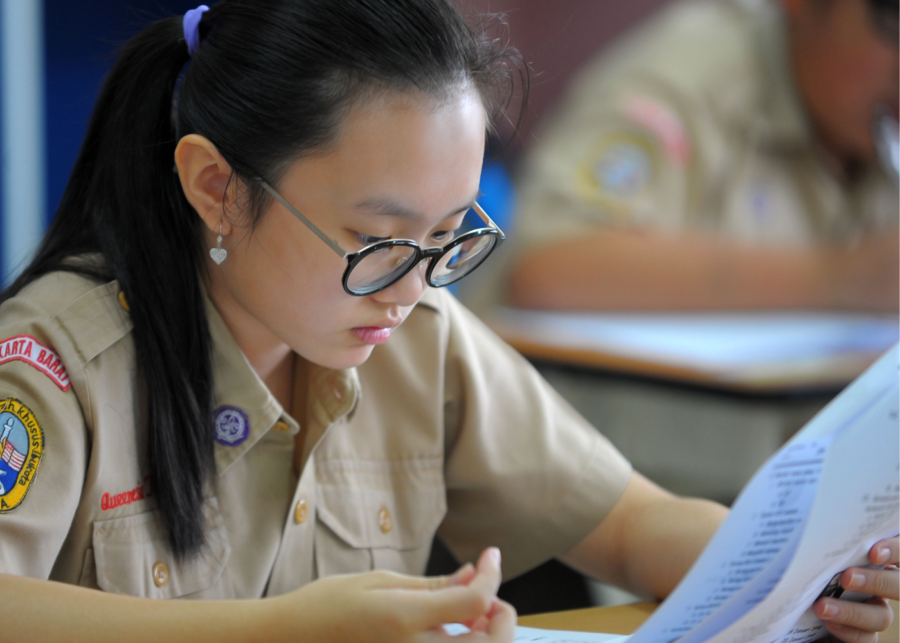
This is why the data can feel so contradictory. Singapore’s 2023 National Youth Mental Health Study found that roughly one in three young people aged 15 to 35 reported severe or extremely severe symptoms of depression, anxiety, or stress. Yet child psychology research consistently shows that parents and children rarely agree on the child’s emotional state precisely because while a tantrum is loud, internal worry is quiet. Kids absorb our unspoken stress, but express it in ways adults miss. That isn’t a parenting failure; it’s just the nature of internal states. The quietest suffering is the easiest for even a loving, attentive adult to miss.
When love sounds like urgency
Here’s the part I find hardest to admit, even now: how easily love gets wrapped in stress and our own anxiety. We offer comforting words like ‘I just want the best for you’ and yet deliver it with a clenched jaw, while rushing dinner, half-checking our phone, tapping a foot at the door because we’re already late for the next thing.
And our children don’t experience our intentions. They experience our nervous systems. It’s the same mechanism as before, just showing up in a different moment. Developmental researchers call this biobehavioral synchrony, parent and child physiology literally entraining to one another during interaction, starting in infancy and continuing well beyond it. It’s part of how babies learn to self-soothe from a calm parent, and it’s exactly how they learn to brace from a stressed one.
When a loving sentence comes out squeezed between a sigh,or a rushed glance at the clock, the child’s body ignores the words. It instead, absorbs the agitation and alarm. The uncomfortable truth underneath all of this is, you cannot hand your child a calm you don’t have yourself. Not through words. Only through your own body, first. None of which means the answer is to do less for your kids. If anything, it means being honest about what ‘doing enough’ actually requires.
And no, this isn’t a call to drop the tuition
I want to be careful here, because I’m not writing this from a place of judgement, and I don’t think any parent reading this needs another reason to feel like they’re getting it wrong. Parenting today is genuinely hard. The traditional village, grandparents next door, neighbours who kept an eye out, a slower pace of life, has largely disappeared. The safety net feels thinner than it did a generation ago. Comparison is everywhere, on every parent chat group and at every school gate. In an environment like that, structure and tuition and pushing hard aren’t irrational choices. They’re often the most loving, most protective option available.
So this isn’t a call to cancel every enrichment class or throw out the timetable. It’s an invitation to change the emotional weather inside the home while you and your child are navigating it all.
My advice on how to regulate yourself first

Before you look at your child’s timetable this exam season, it might be worth looking at your own pace first. Not with guilt, but with curiosity. What does your body do the moment you walk through the door after a hard day? What’s in your voice when you say “we don’t have time for this right now”?
Before you turn the doorknob, give yourself five seconds. Just five. Drop your shoulders. Unclench your jaw. Take one slow exhale, longer than the breath that came in. It’s one of the fastest ways to tell your nervous system to step out of fight-or-flight and soften. Let the day slip off you like a coat you’re finally allowed to take off.
Then cross the threshold with intention. Notice where you are, and let your energy recalibrate before you meet the people waiting for you. They don’t need you to arrive perfectly. They just need you to be present.
You don’t have to overhaul anything overnight. You just have to notice. Because the moment you start regulating your own nervous system, your child’s has somewhere calmer to land.
Be honest, whose stress is actually running the household this exam season? Yours or theirs? DM and share your thoughts.
About the Author

Dr Katrina Gisbert-Tay is a working mom of three, a licensed medical doctor and executive, wellbeing and parenting coach whose work centres on emotional regulation, nervous-system awareness, and the parallels between how adults cope with pressure and how children experience it. She became a parent at 22 while still in medical training, an experience that informs her perspective on high-pressure environments, care and responsibility. She is a Senior Partner at The Works Partnership and hosts the podcast, Unpolished Wisdom.

