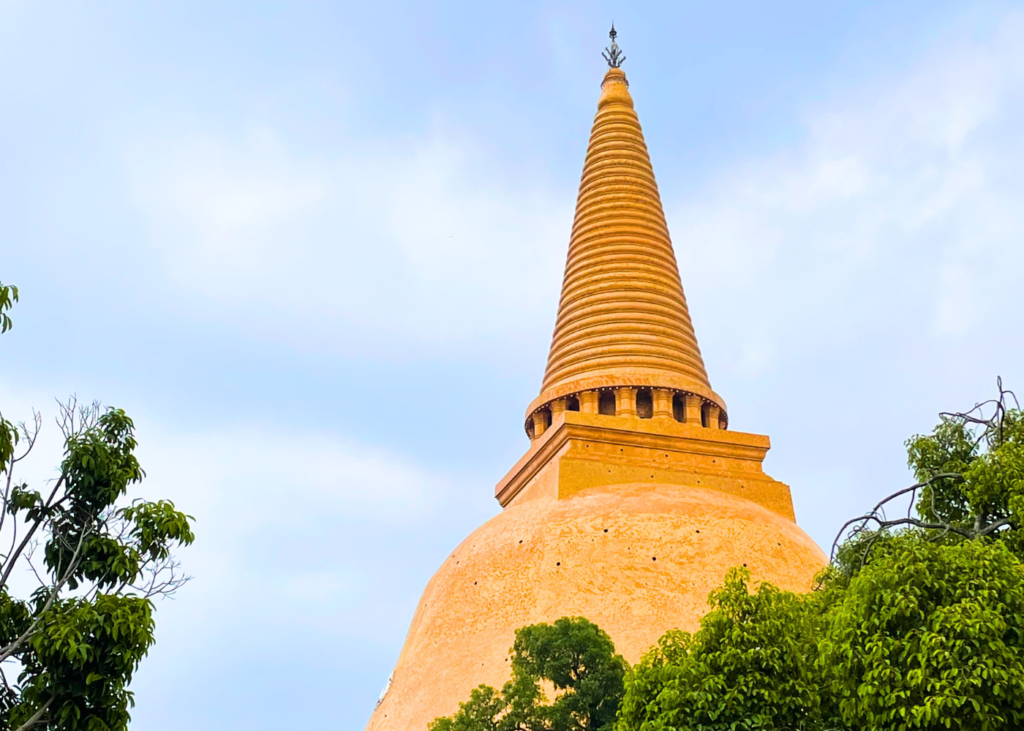
A private family tour offering a 1-day trip that turns Nakhon Pathom from an overlooked province into a family adventure
If you’re after a 1-day trip away from Bangkok with your kids, a private guided tour by Thailand Out and About lets you discover Nakhon Pathom without the usual “when are we going home?” complaints.
For tourists and many people who live in central Bangkok, Nakhon Pathom is often treated as just a stop on the way to Kanchanaburi, that’s more on the radar with travellers. But, this underrated province deserves far more attention from families, with plenty of things to do with kids minus the overwhelming crowds of more tourist-heavy destinations
That same belief is shared by Thailand Out and About, a boutique private tour company based in Bangkok. Their tours are intentionally slow-paced and personal. They focus on the kind of places locals genuinely enjoy, from old-school markets to hidden food spots.
The company is led by Nat Pholsangiemsak, a guide with more than 20 years of experience. While the team also organises tours to places such as Samut Songkhram and Ayutthaya, the Nakhon Pathom tour is designed for families because the province is quieter, more relaxed and gives kids the freedom to explore comfortably.
And as someone who has grown up with Nakhon Pathom being part of my life for as long as I can remember, I set off one Saturday to explore the province once again. But this time as a guest on a 1-day private tour by Thailand Out and About.
Thailand Out and About Nakhon Pathom tour: Details at a glance
Best for: Families looking for a kid-friendly day trip from Bangkok
Where: Pickup can be arranged from your hotel or home in Bangkok
How much: B5,500 per person for 2 travellers; B4,600 per person for 3–4 travellers; B3,900 per person for 5–6 travellers; B3,500 per person for 7–9 travellers; Free for children aged 0–2 (The price includes a private car or minivan, a local guide, lunch, snacks, drinks throughout the journey, temple entrance fees and 1 workshop at Patom Organic Village.)
Tour hours: Starting at 8am and goes until 4pm or later, depending on how long you’d like to spend at each spot.
Thailand Out and About Nakhon Pathom tour review: Rediscovering a province from my childhood
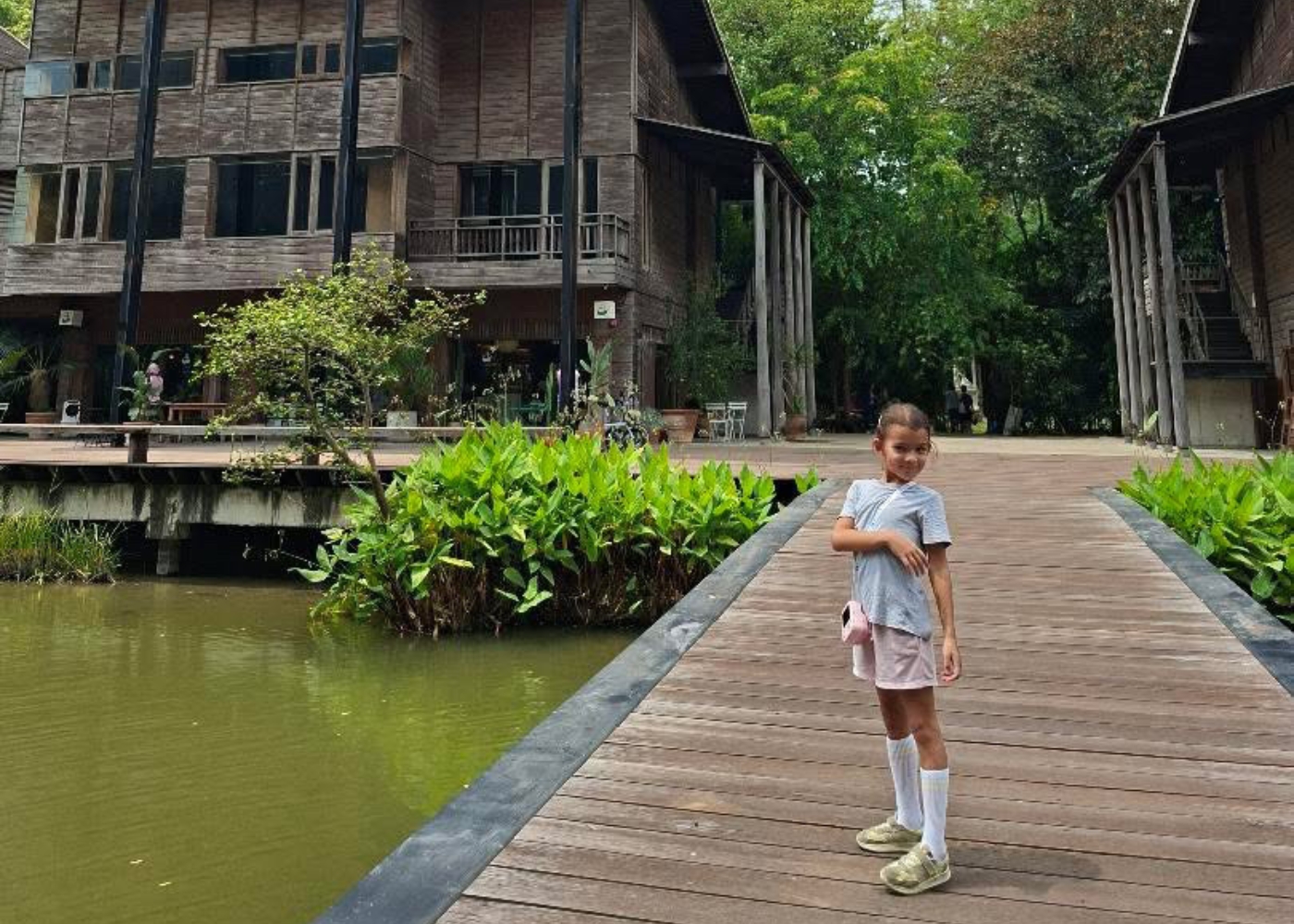
Before I get into my experience on this private tour, I should mention that Nakhon Pathom has quietly been part of my life for as long as I can remember.
I was born and raised in Bangkok, but every time I tell people where I live, they always ask the same question: “Is that really Bangkok?” My neighbourhood sits on the western edge of the city, just 10 minutes away from Nakhon Pathom.
Growing up, my family would often take me there for weekend outings to Don Wai Market and the Thai Human Imagery Museum. Even my high school organised field trips in the area. So while many people see Nakhon Pathom as just another nearby province, for me it has always felt familiar and full of memories.
I met up with Nat at 8am where he arrived in a Toyota Fortuner ready for the tour. I originally planned to sleep during the drive, but Nat’s energy and experience as a guide kept me awake the entire way. Throughout the ride, he shared stories about the province and explained why he believes Nakhon Pathom deserves far more attention from both tourists and local families.
As a father himself, Nat understands what kids actually enjoy, which is why this tour is designed with families in mind. There are no strict schedules and definitely no rushing from one attraction to another. The pace feels relaxed, giving children space to explore, ask questions and enjoy the experience naturally.
Another thing that stood out to me was how much sustainability is part of the tour experience. As a Thai guide married to a Danish woman, Nat is deeply passionate about reducing waste and thinking carefully about environmental impact. Many of the places included in the itinerary focus on organic produce, local businesses and sustainable practices.
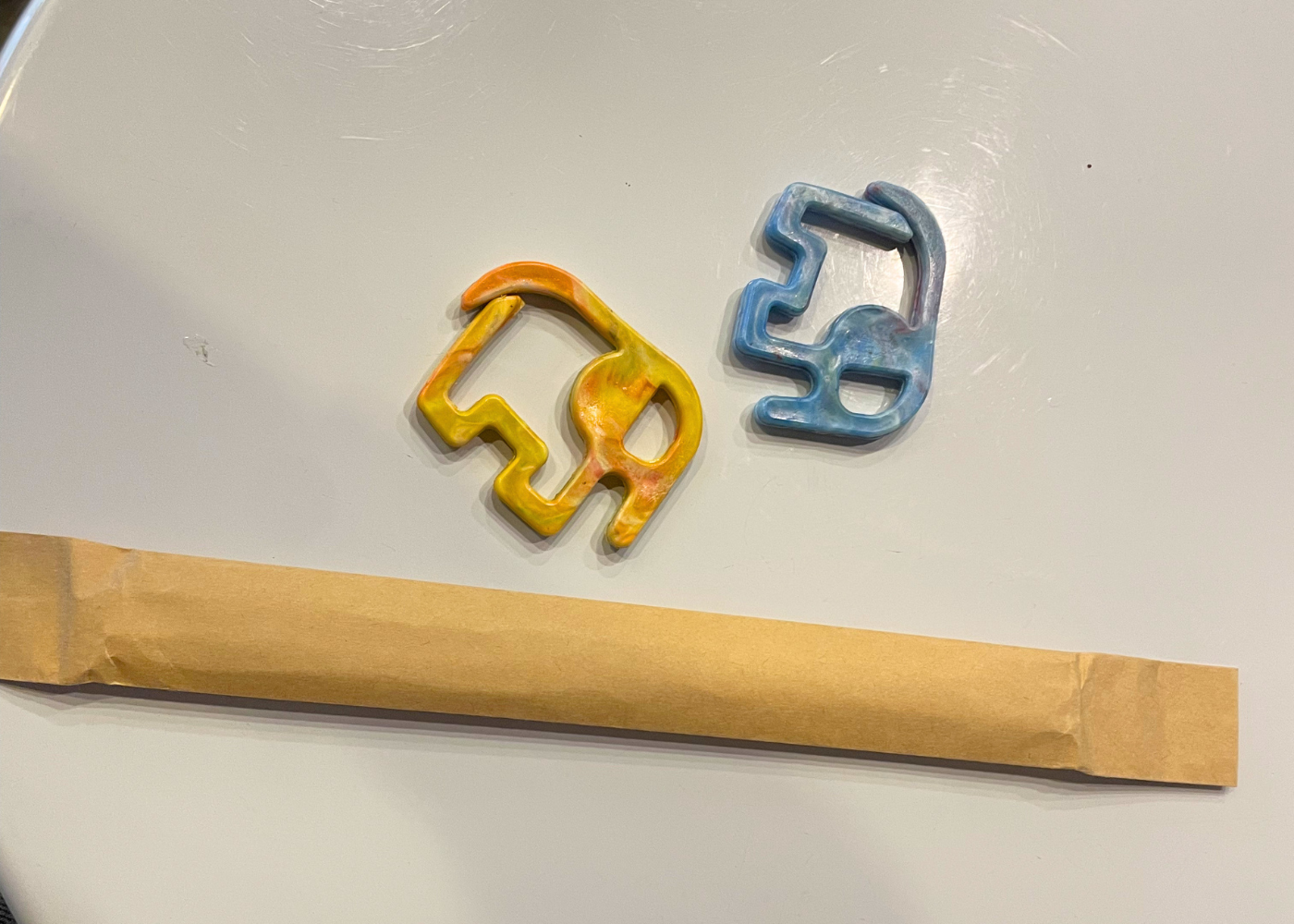
He even provided bamboo straws and cute elephant keychains made from recycled bottle caps to encourage me to reduce single-use plastic.
At one point, after I bought a bottle of water, he even asked to keep the cap so it could later be donated to an organisation that turns them into recycled crafts and keychains. Small details like this made the experience feel thoughtful rather than performative.
Our 1st and 2nd stops of the day
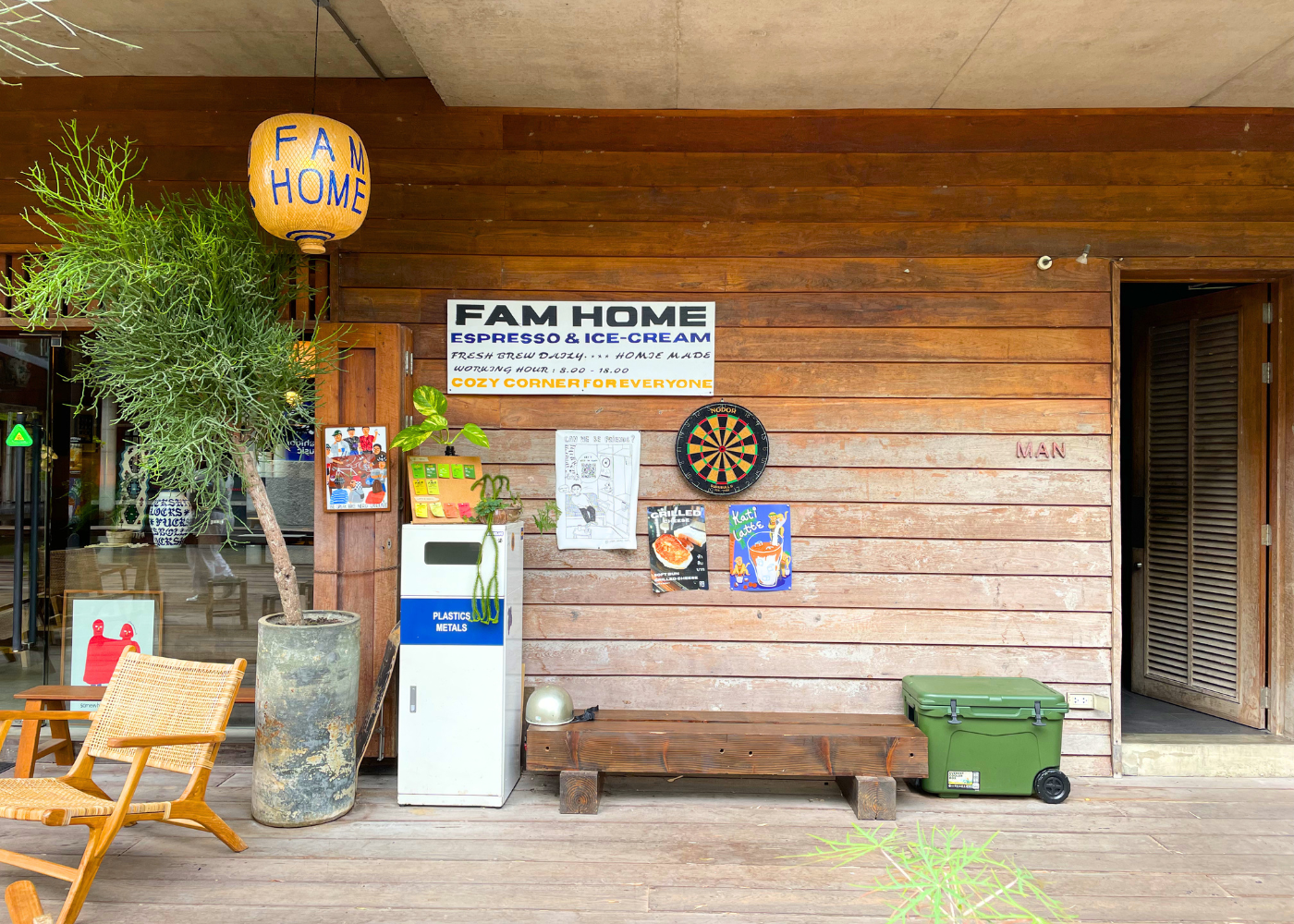
Just 40 minutes after leaving Bangkok, we arrived at our first stop: Mahidol University. And no, we weren’t there to attend a lecture. We came for breakfast and coffee instead.
The campus itself is huge, peaceful and filled with greenery. Nat brought me to Little Tree Grocery, a cosy homie-style cafe and grocery shop tucked inside the College of Music at Mahidol University. The atmosphere felt warm and relaxing. Think old wooden houses by the water, giant shady trees, homemade baked goods, organic products and slow mornings with coffee in hand.
Since sustainability is such a big part of the tour, the cafe also uses eco-friendly straws made from rice stems instead of plastic. There’s even a small bridge surrounded by water where you can stroll around and feed the fish.
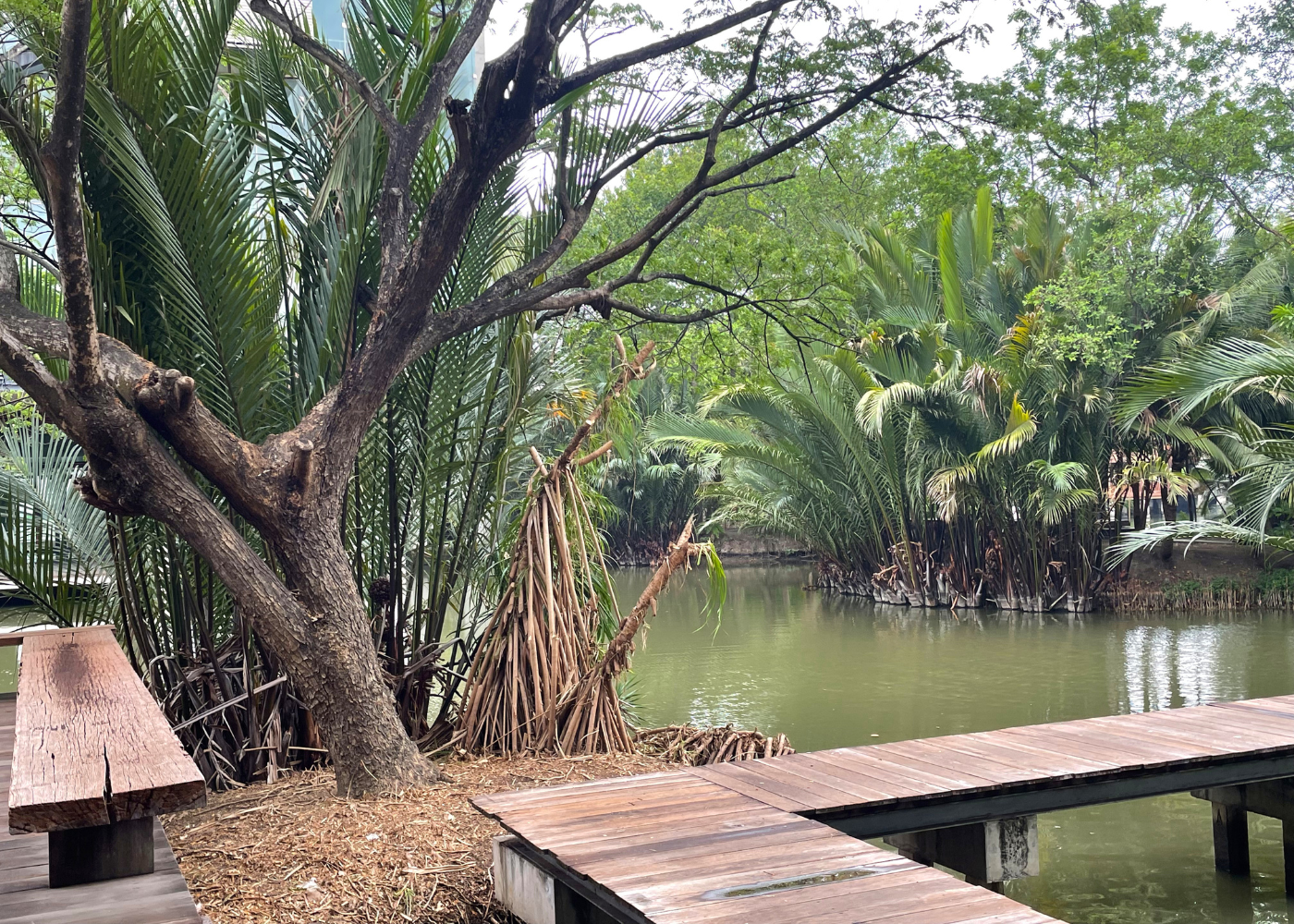
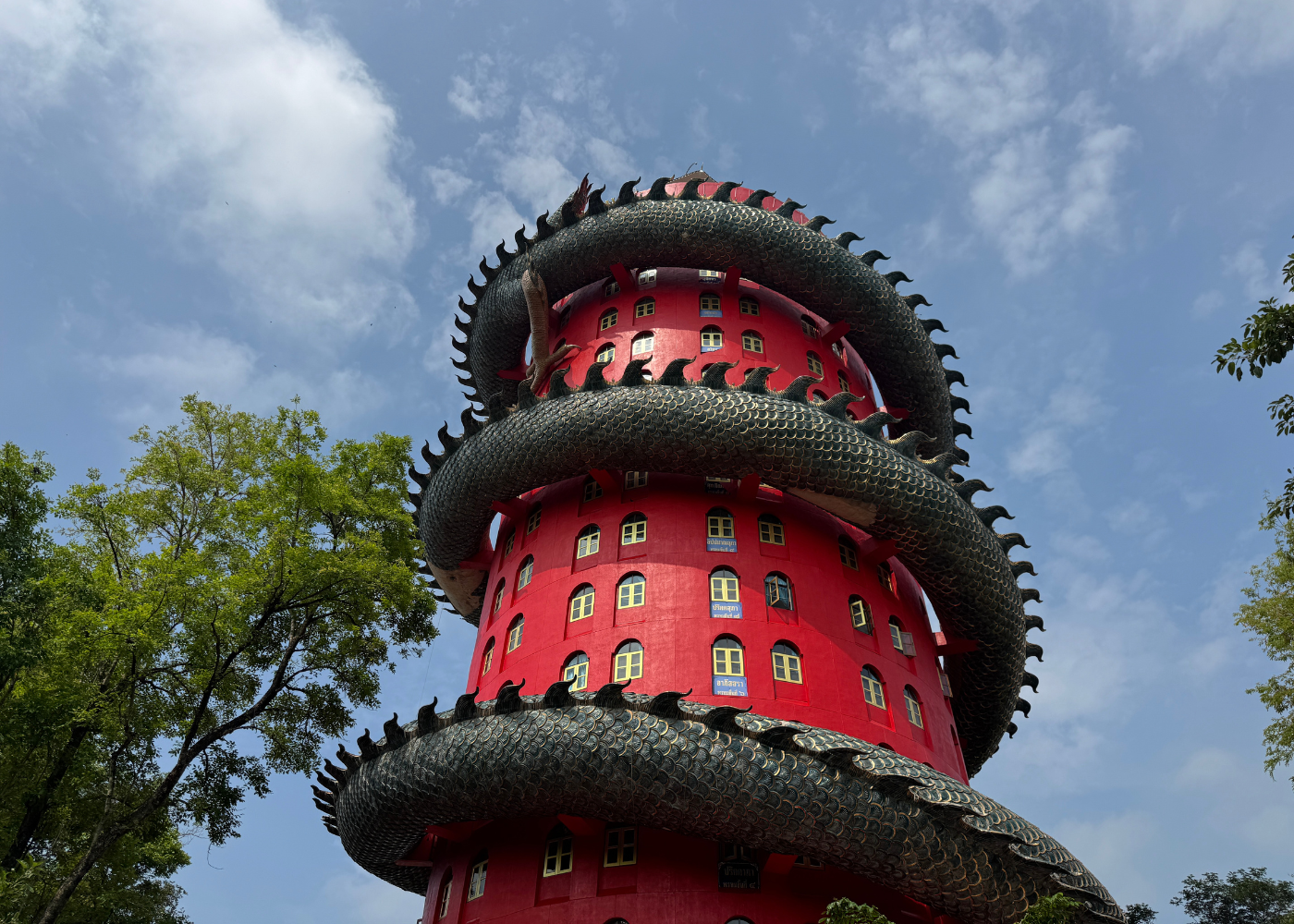
But since this was only our first stop of the day and I was still half asleep so we didn’t linger too long. Soon after we finished coffee, we headed off to a monastery known for its massive dragon-wrapped tower.

Sweeten up your inbox! Subscribe to HoneyKids Asia Thailand
3rd stop: Returning to Patom Organic Village as an adult
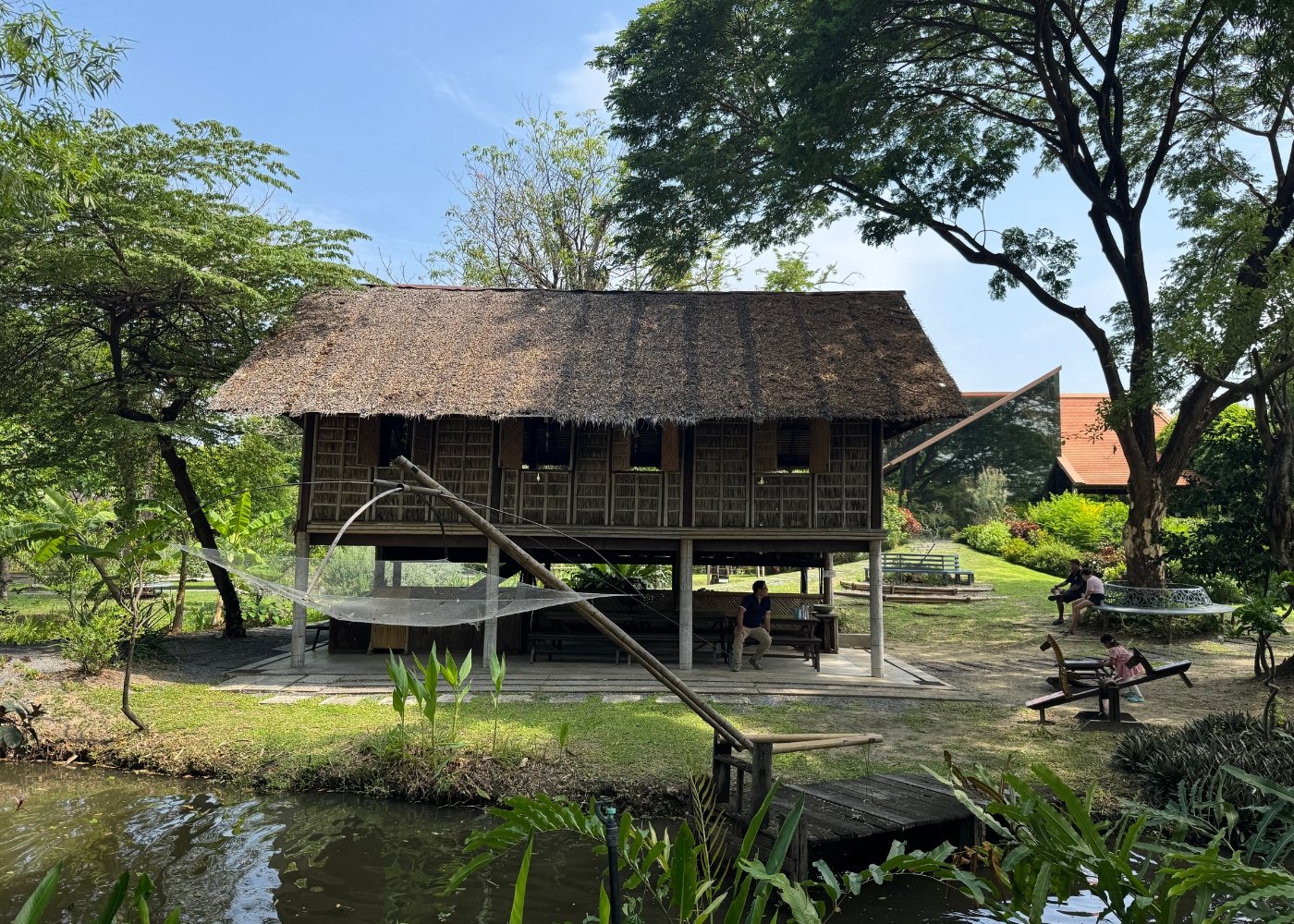
When Nat told me our next stop was Patom Organic Village, I bursted out laughing. This was actually a place my high school once brought me to for a field trip. Around 12 years ago, busloads of noisy teenagers came here mainly to learn about Thai culture through activities like Muay Thai demonstrations, traditional fish weaving and buffet lunches by the river. That was basically all I remembered about this place.
Arriving again now as a 29-year-old felt totally different. The atmosphere was quieter, greener and far more peaceful than I remembered. What I once saw as just a school-trip venue is actually a full organic lifestyle learning centre focused on sustainability, local wisdom and slow living.
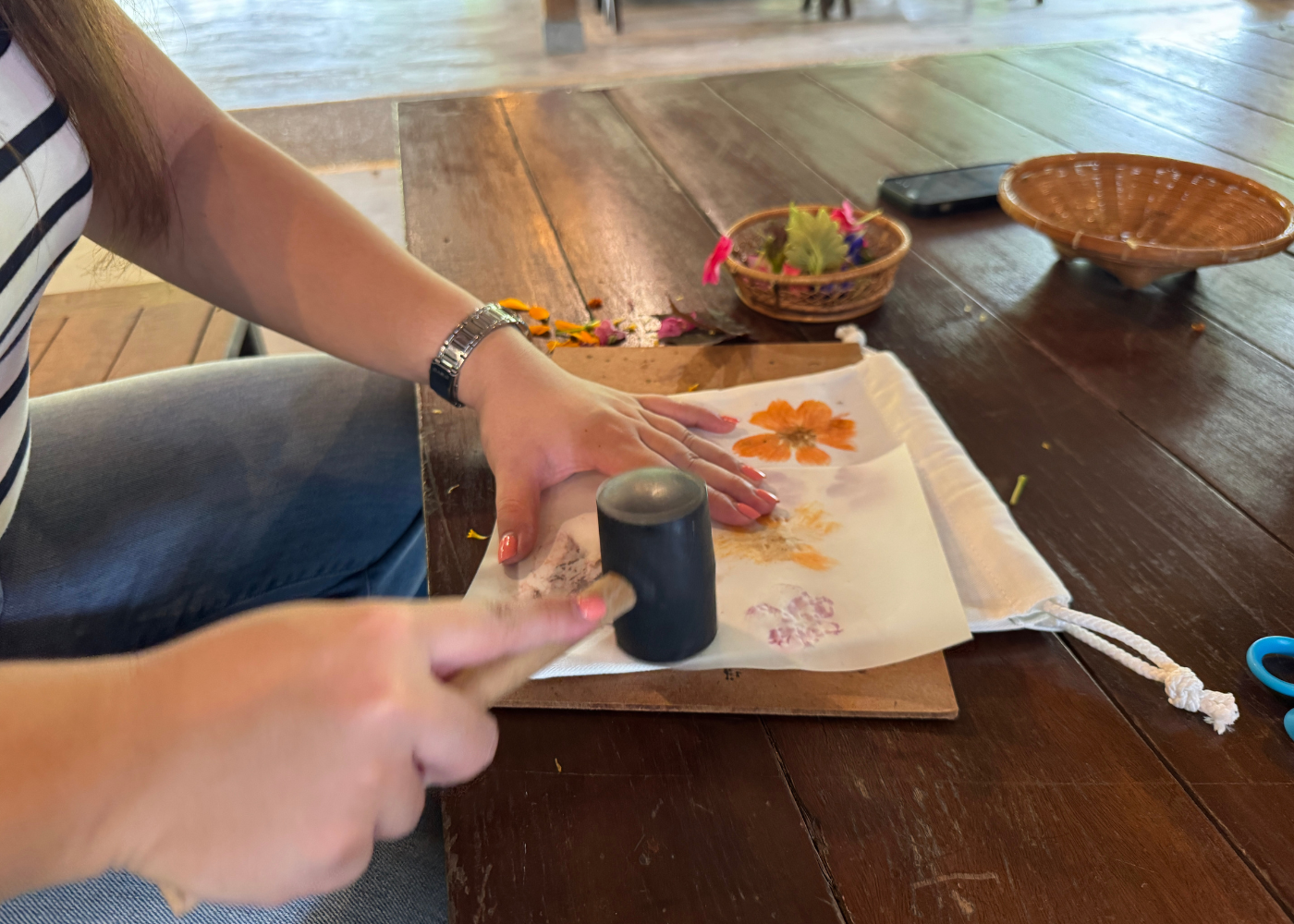
Nat brought me here for the workshops offered on-site. I can choose between activities such as rice planting, tie-dye, flower printing or making your own lemongrass body scrub. Since I’m an art lover, I naturally picked the flower-print workshop.
An instructor showed me how to do it by arranging fresh flowers onto a fabric bag, covering them with wax paper and then hammering the petals until the colours and shapes transferred onto the fabric. You could take as long as you wanted designing your own one-of-a-kind tote bag. I only spent around 10 minutes on mine because my stomach had already started demanding lunch.
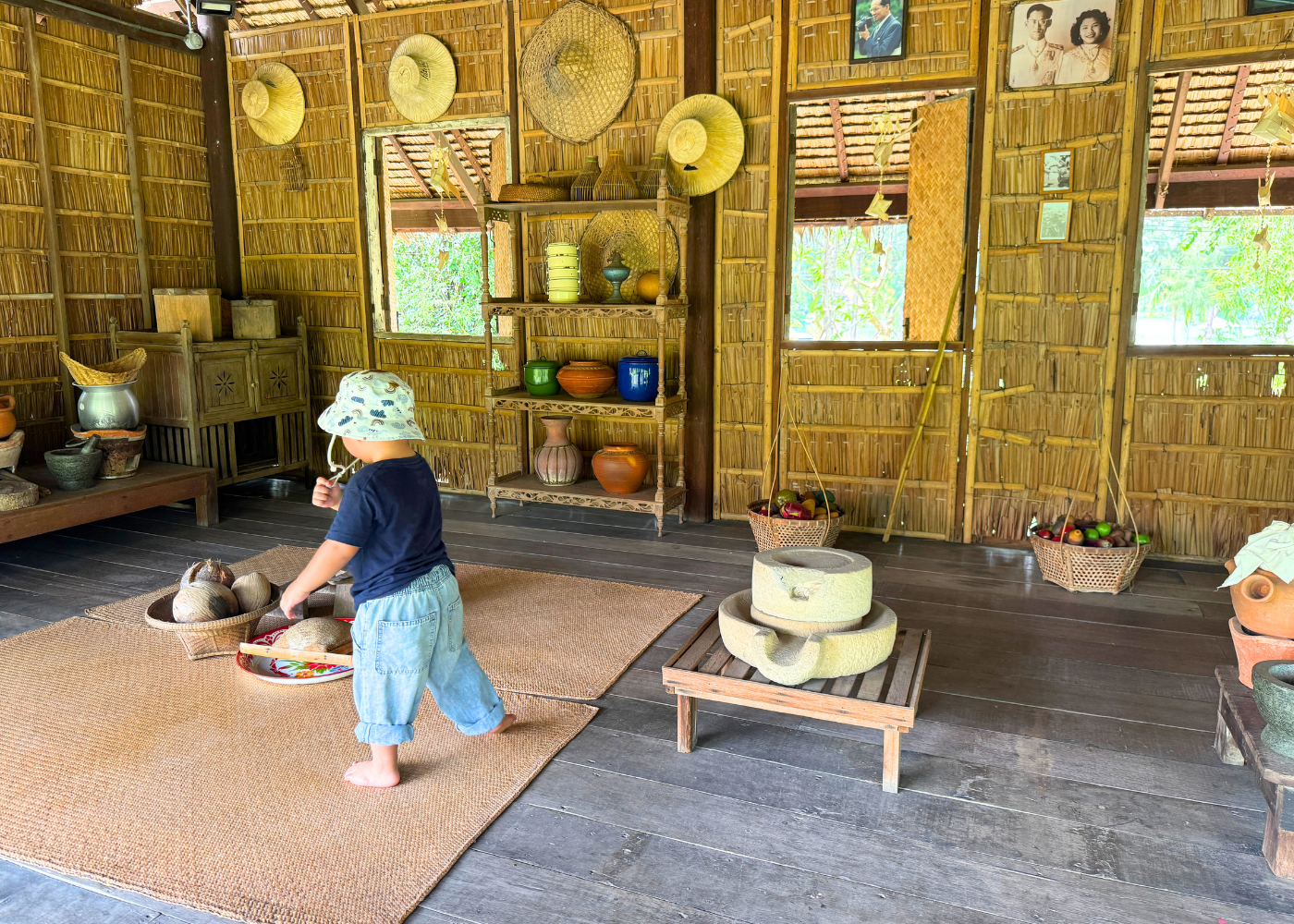
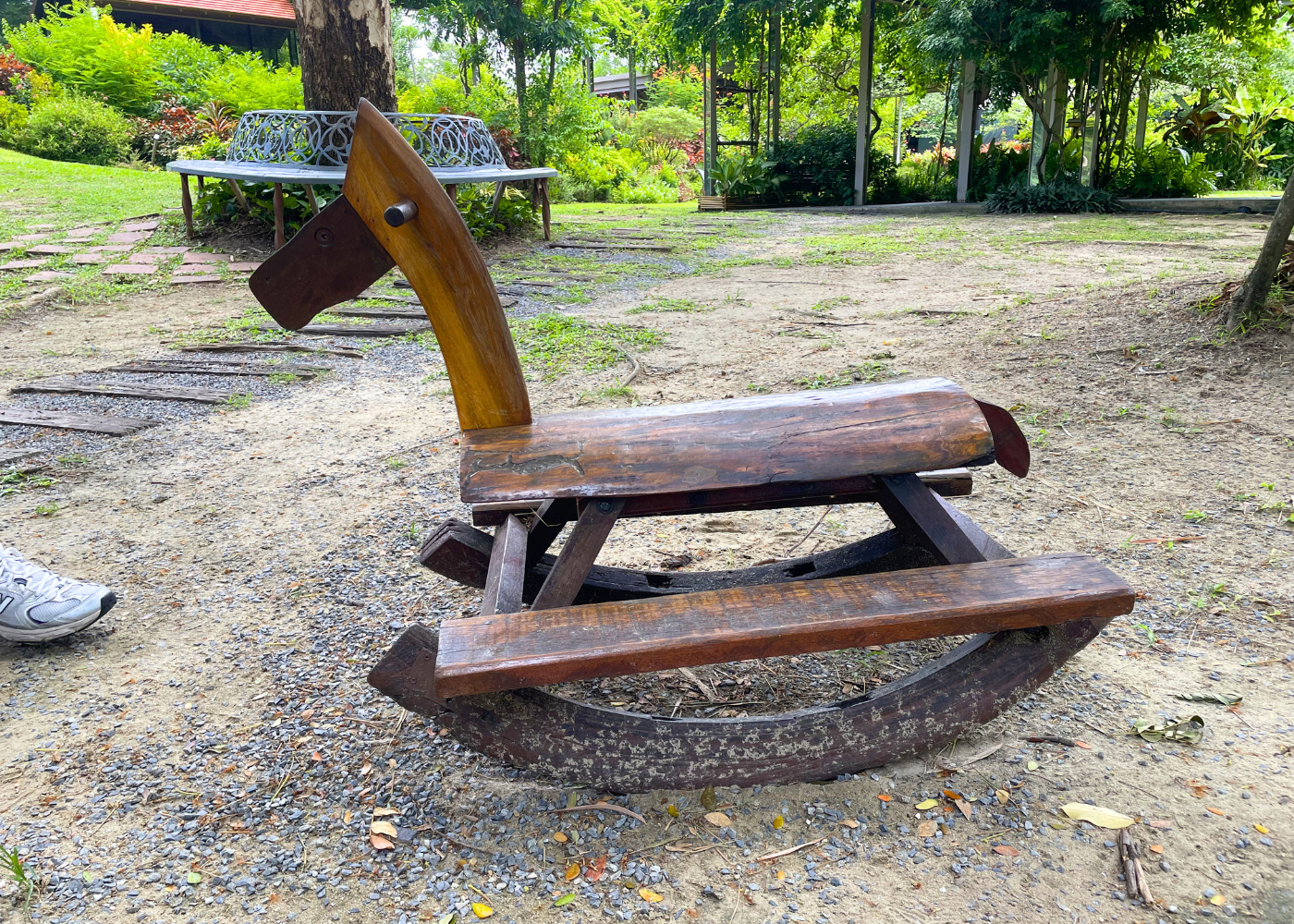
Before eating, I explored the traditional Thai-style house on the property, complete with old household items such as coconut graters, vintage cooking equipment and wooden furniture that recreated what a Thai home looked like decades ago. Outside, there were even seesaws and wooden rocking horses for kids to play.
Lunch was at the food court inside the village. Nat seemed to know almost every vendor personally and enthusiastically recommended what I should try. Everything here is made using local ingredients sourced from nearby farmers and producers, which made the meal feel fresh and community-driven.
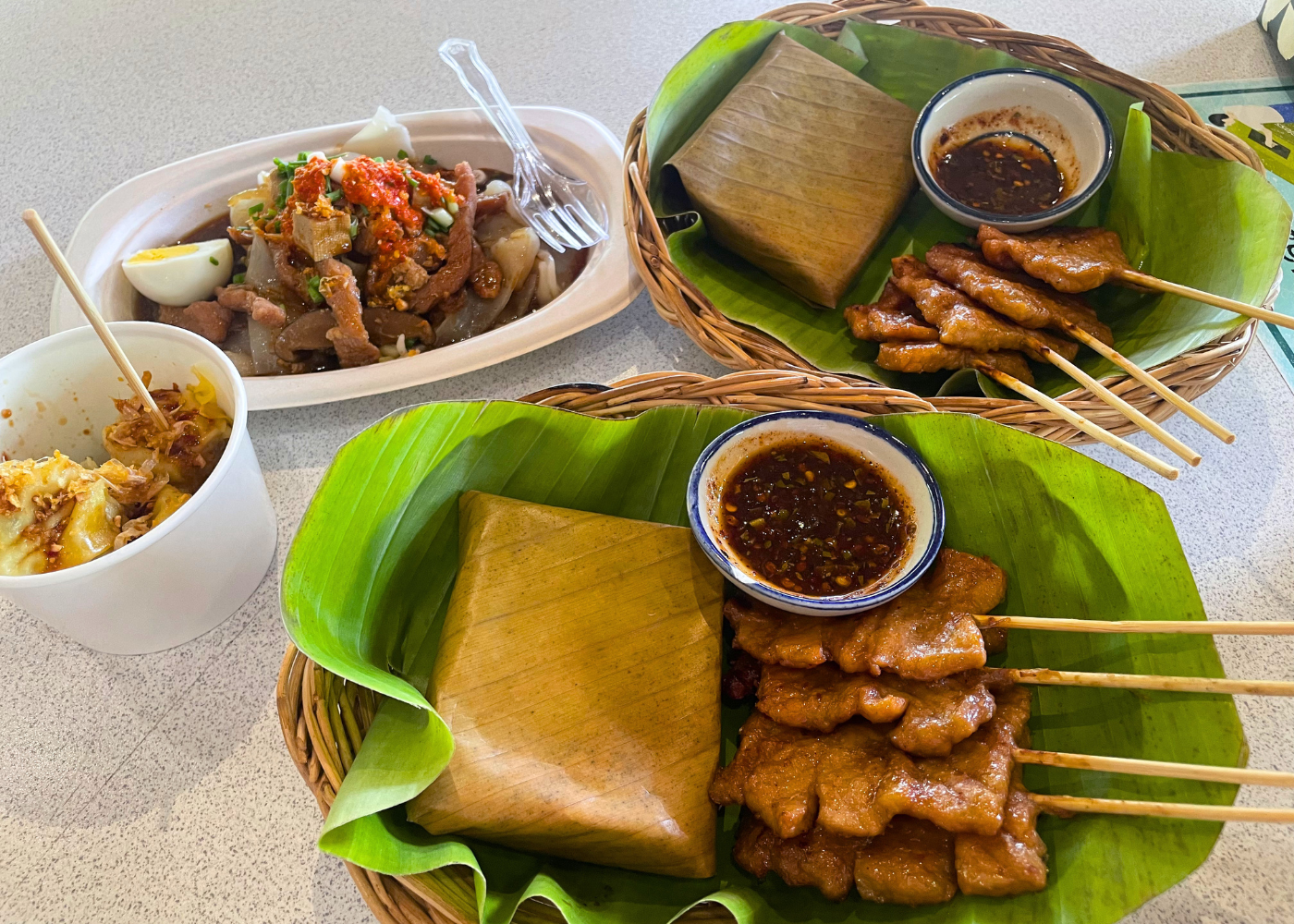
The highlight here was the grilled pork skewers made from naturally raised “Pit Pig” pork (หมูหลุม), a more eco-friendly style of pig farming that focuses on animal welfare and sustainability. And we ended up ordering way more food than expected.
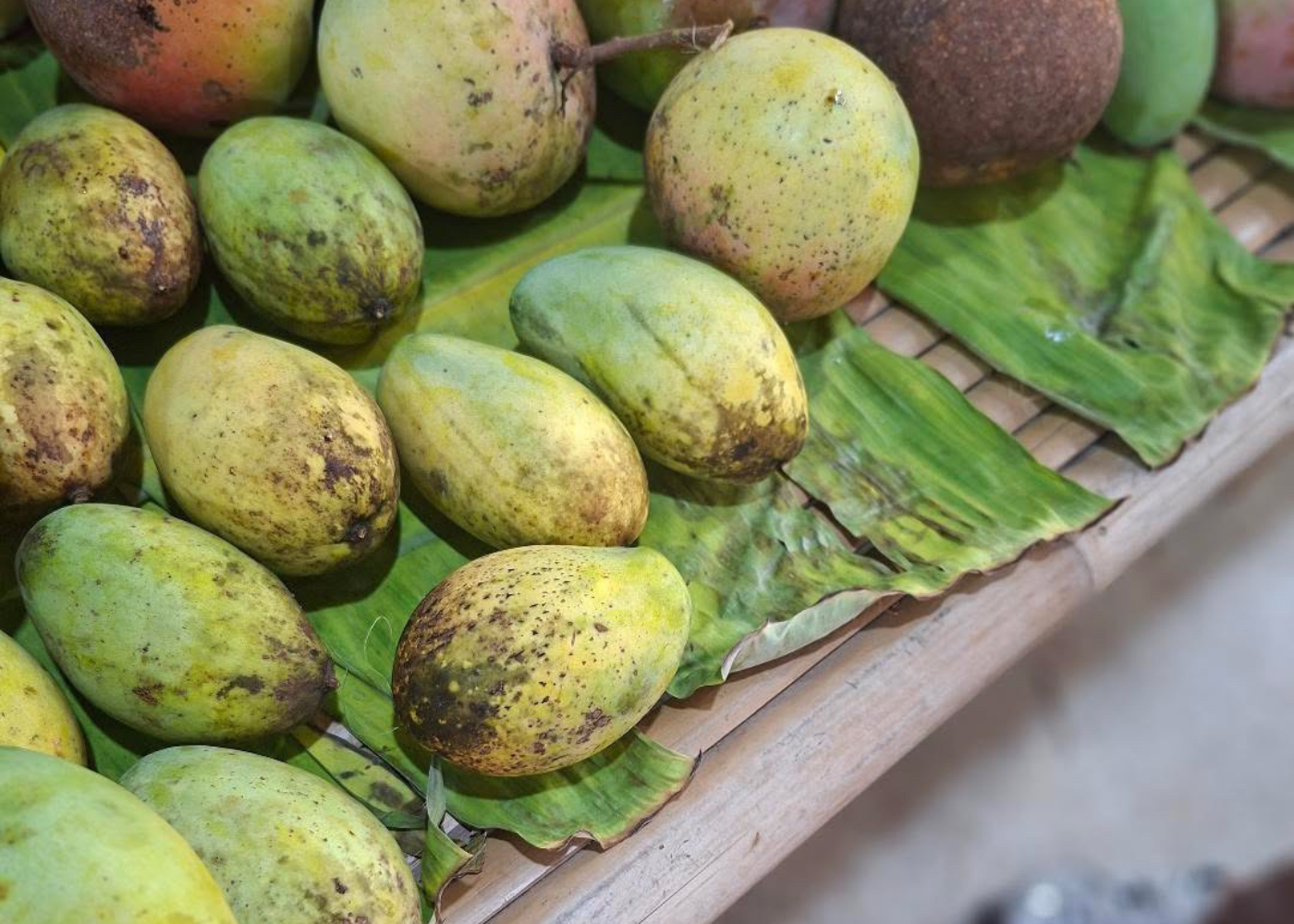
After lunch, I wandered around the small local market to walk off the food. Many of the stalls are run by nearby farmers and community members selling rice, soaps, honey, handmade goods, traditional toys and seasonal fruits.
The fruit prices here were shocking compared to Bangkok. I bought Nam Dok Mai mangoes, the type that’s usually expensive and harder to find in the city, for only B40 per kilogram.
4th stop: Wat Phra Pathom Chedi
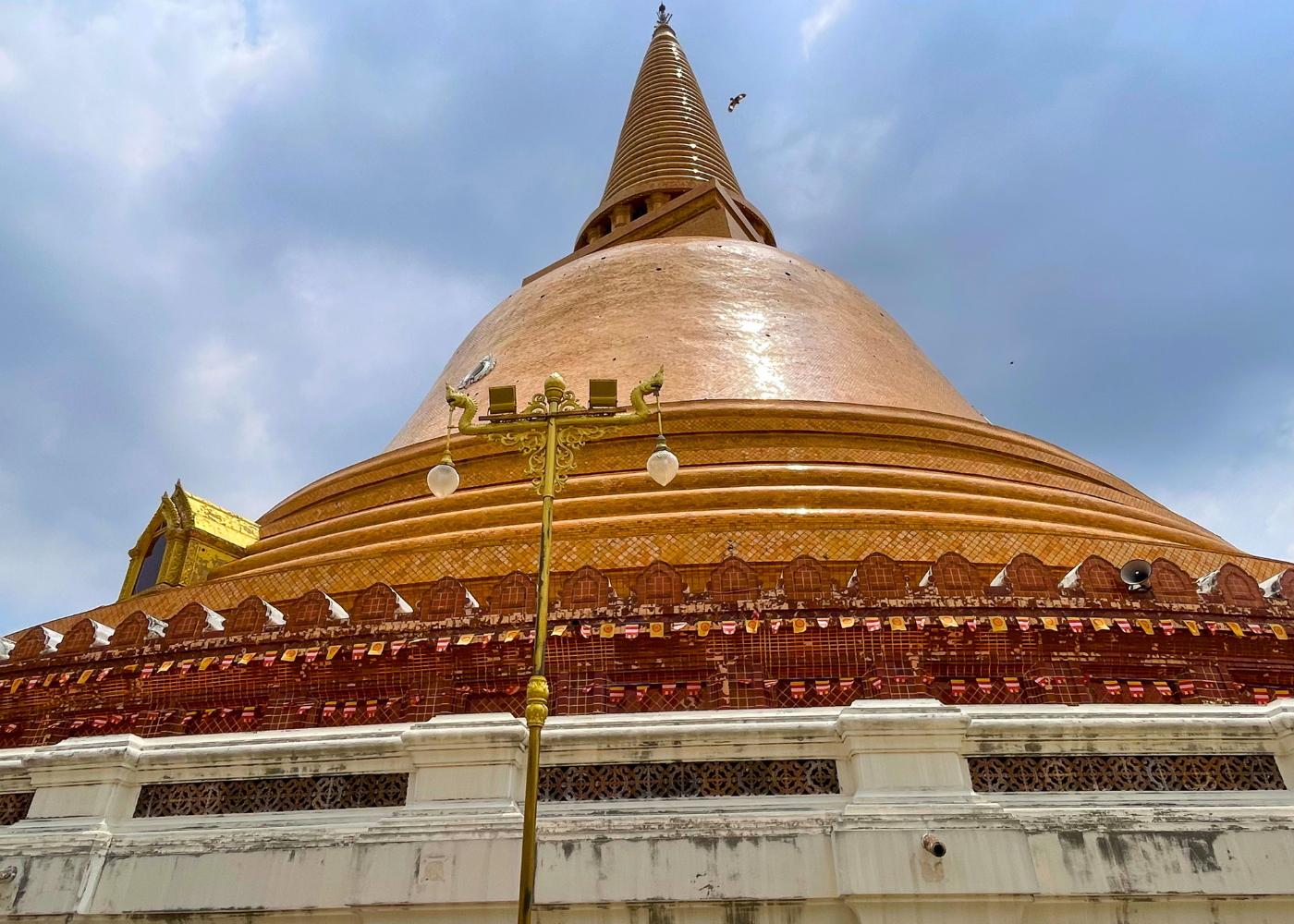
As someone already familiar with Nakhon Pathom, I kept wondering whether Nat would include Wat Phra Pathom Chedi in the itinerary. And of course, he did. Even though it was only a 1-day trip, it would not have felt complete without visiting this iconic landmark.
And if you think you might get sleepy after lunch, Nat somehow always knows how to keep the energy going. One thing that makes this private tour special is how much insight and storytelling he brings to every place we visit. During the drive, he kept me entertained with local folklore connected to the temple.
One story he shared was about a king who was told by a fortune teller that his son would one day kill him. Terrified by the prophecy, the king tried to get rid of the child, but the mother secretly floated the baby away down the river, where he was later raised by an old woman. I don’t want to spoil the ending, but I’m pretty sure you can guess where the story goes from there.
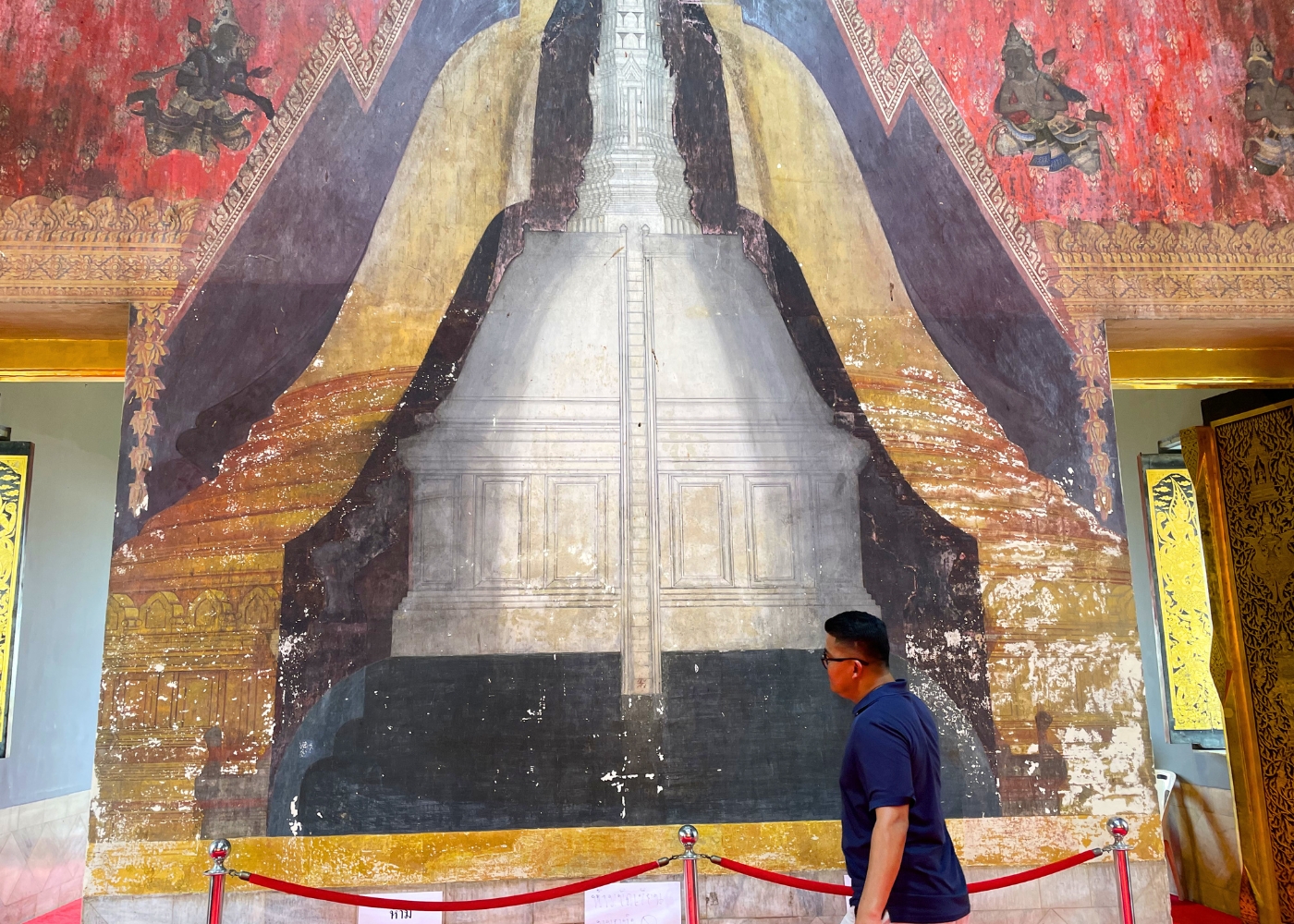
But beyond the folklore, the real history of this temple is just as fascinating. The original stupa dates back to the Dvaravati period – an ancient civilisation that existed in what is now central Thailand from around the 6th to 11th centuries – and is believed to be one of the oldest Buddhist sites in Thailand. Some historical accounts even suggest the site may date back to around B.C. 296, marking the early arrival of Buddhism in the region.
Centuries later, after the site had been abandoned and overtaken by nature, King Rama IV rediscovered the ruins while he was still a monk travelling through the area. Recognising its historical significance, he later ordered the construction of the massive stupa that now stands there today, completely covering the original structure.
Today, Phra Pathom Chedi is considered the tallest stupa in Thailand, standing at around 120 metres high.
As a Buddhist at heart, the first thing I did after arriving was pay respect at the temple and place gold leaf onto the Buddha statues. Every other time I had visited this venue was during its annual festival around October, when the grounds are packed with food stalls and crowds, so I never really had the chance to properly explore the temple itself.
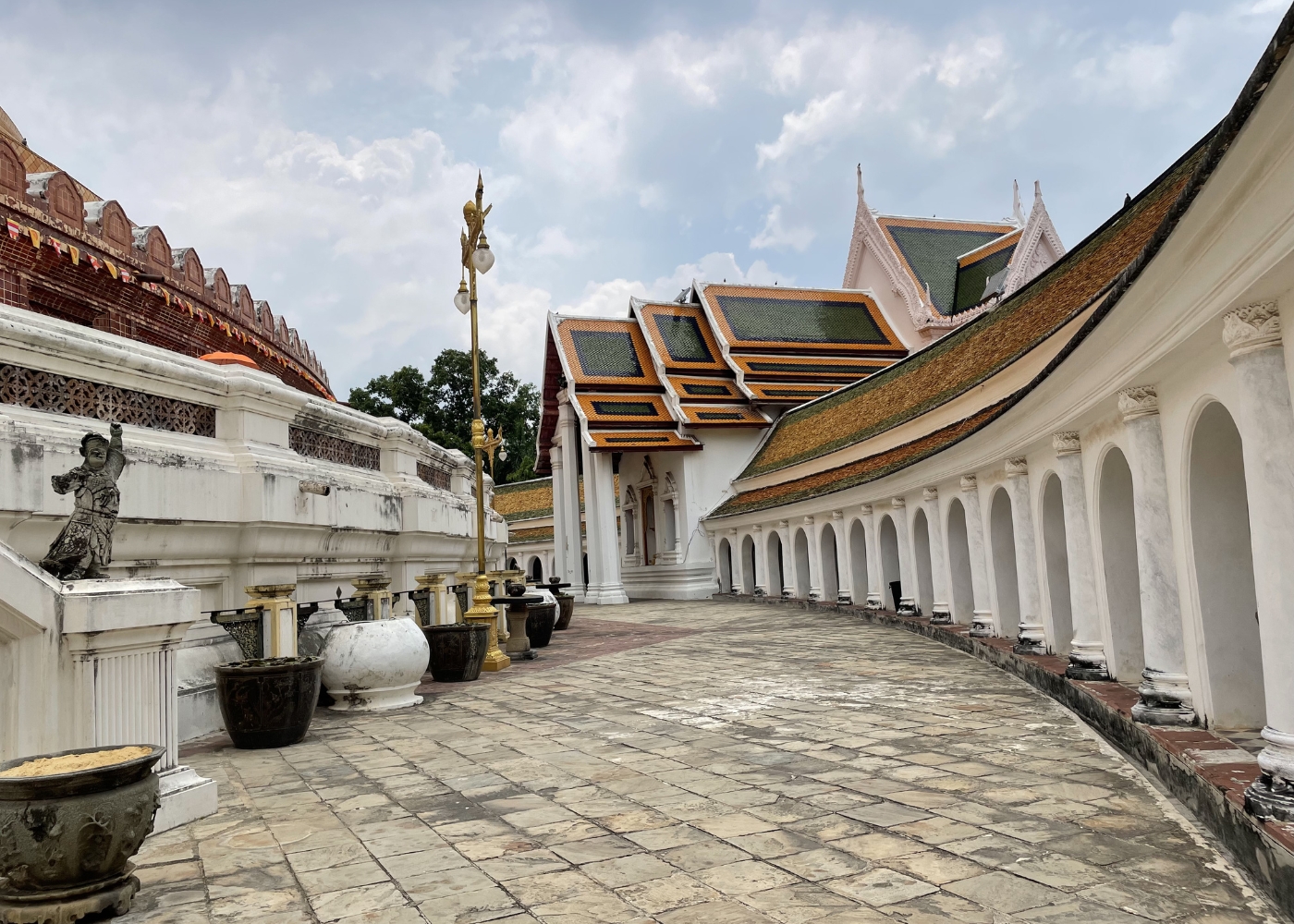
This time, Nat slowly walked me through the complex, explaining the history behind the temple, the Buddha images and the different architectural details along the way. He even brought me inside the prayer hall to see the old murals.
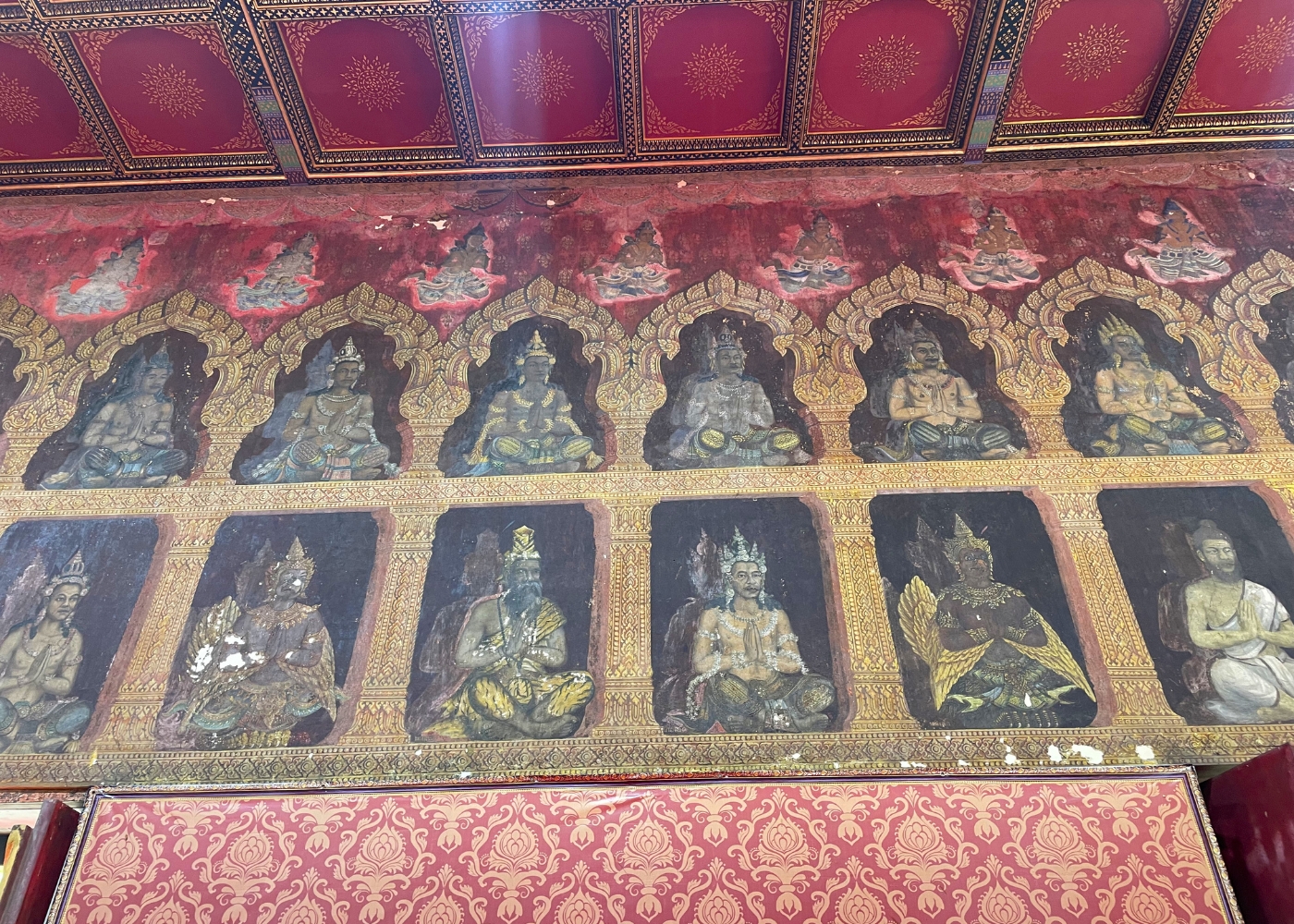
One thing I appreciated about this private tour was how Nat could answer almost every random question I had throughout the day. And the reason I’m even able to write about the temple’s history here without opening Google is because of everything he explained during the visit.
So if you’re visiting with kids, I think they’ll learn a lot about Thai history and Buddhism through the experience. Even if history isn’t really their thing, I believe Nat definitely knows how to keep everyone entertained throughout the journey.
Last stop: A hidden tofu factory loved by locals
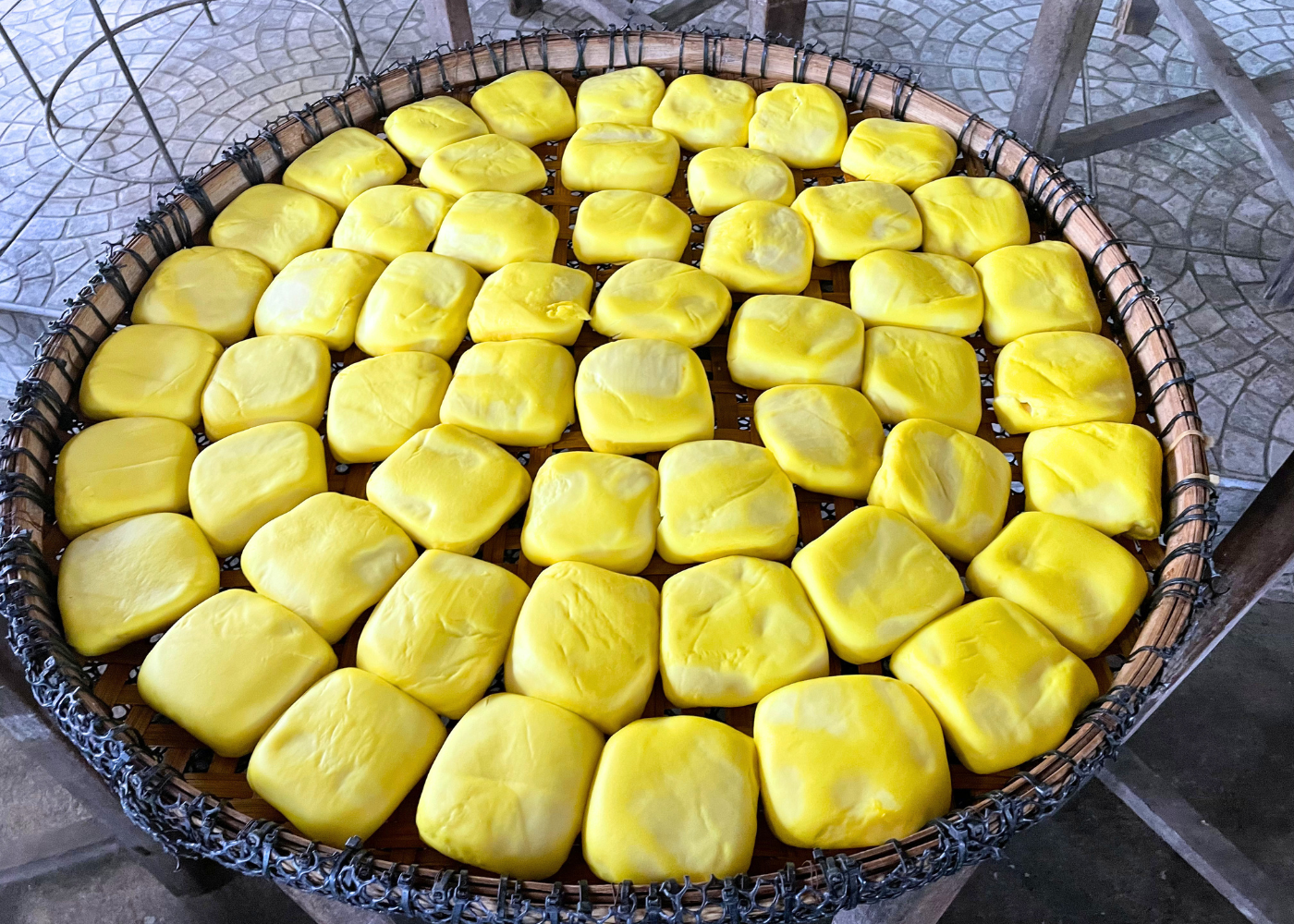
To end our 1-day trip, at around 2pm, Nat brought me to a tiny local tofu factory run by Khun Ek, a fourth-generation owner continuing his family’s century-old business today. As someone who is already quite familiar with Nakhon Pathom, this was still a completely new experience for me.
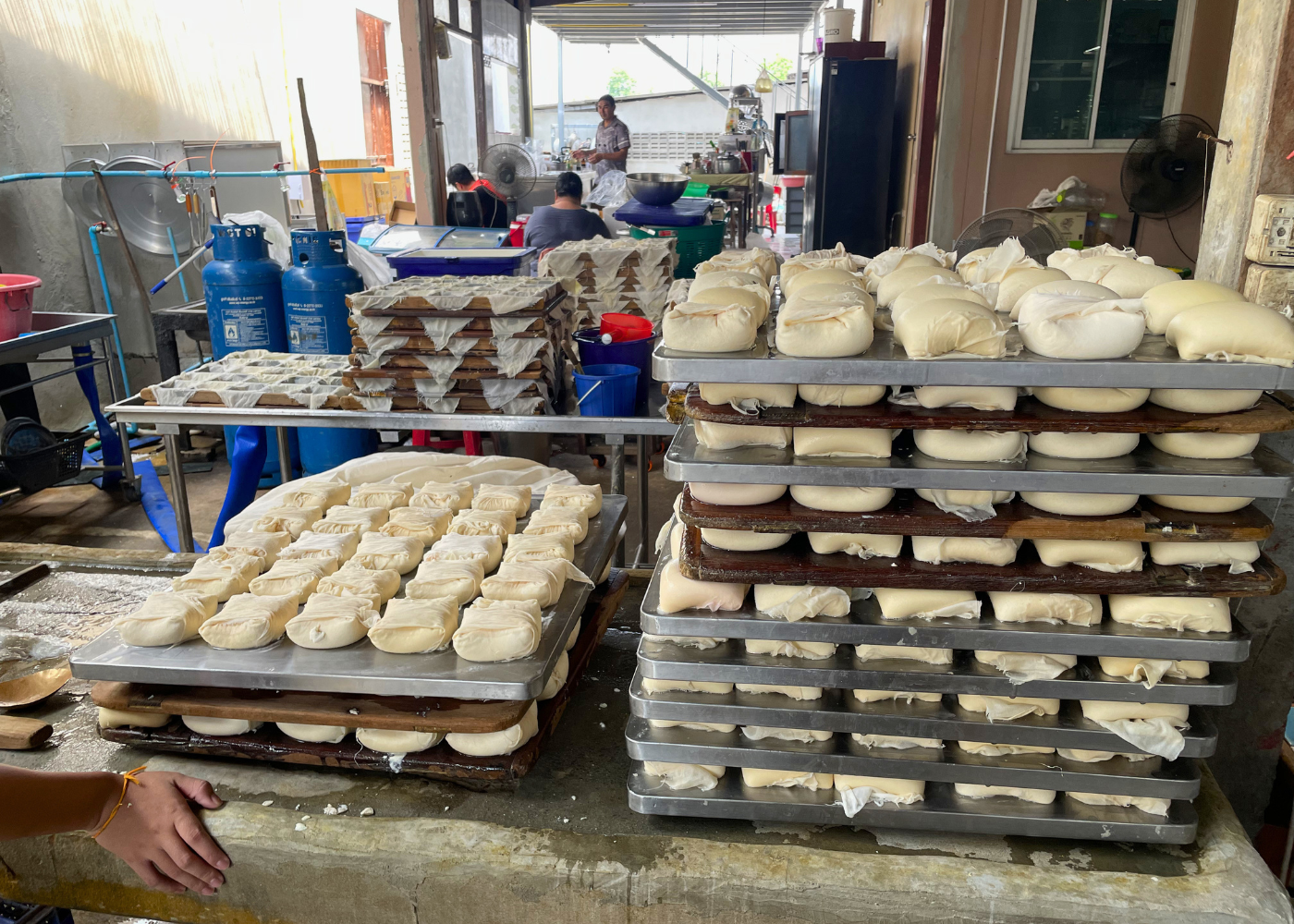
The factory itself remains deeply rooted in traditional methods and careful craftsmanship that have been passed down for over 100 years. Here, I got to watch how tofu is actually made up close and, even without fully understanding every step of the process, I still found it strangely calming to see how everything was done before the tofu was finally pressed into blocks by hand.
But the real highlight here was the freshly fried tofu. As soon as the shop opened at 2pm, locals started queueing for it. Some people even arrived early, knowing they would still need to wait at least 30 minutes to get a box.
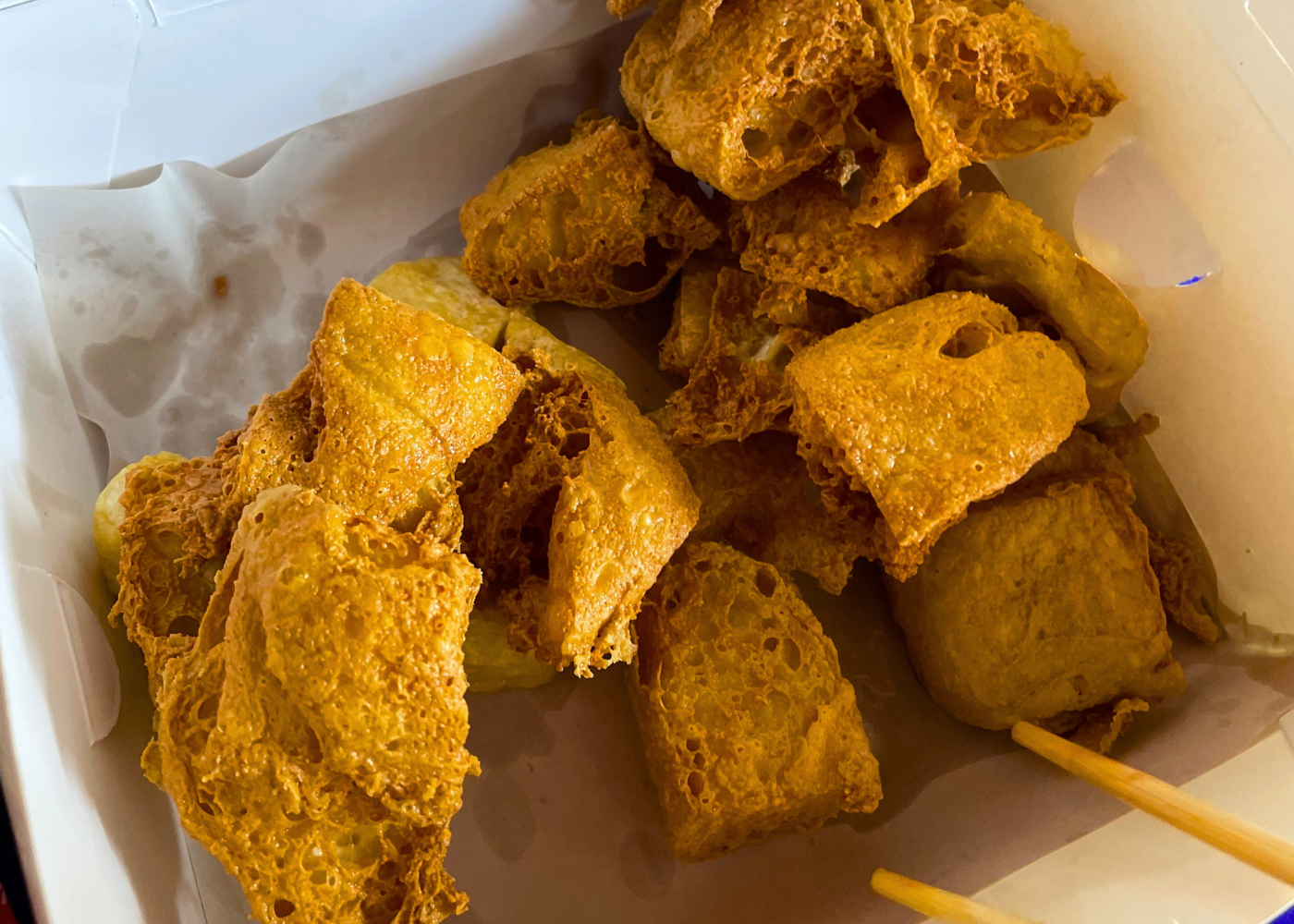
Luckily, Nat had already called ahead the night before so we didn’t have to queue at all. The fried tofu came in a simple box (B100). It was the best fried tofu I’ve ever had. The outside was perfectly crispy while the inside stayed soft, creamy and almost custard-like.
We ended up standing around an ice bucket table setup and somehow finished the entire box in less than 10 minutes. It was that good.
Another thing this place does really well is fresh soy milk sold in bottles. It tasted rich, fresh and far less sweet than the versions you usually find in supermarkets.
This place is truly one of those hidden gems mostly known by locals and I really appreciated how Nat included spots like this in the tour instead of focusing only on the usual tourist attractions.
Is Thailand Out and About Nakhon Pathom tour worth it?
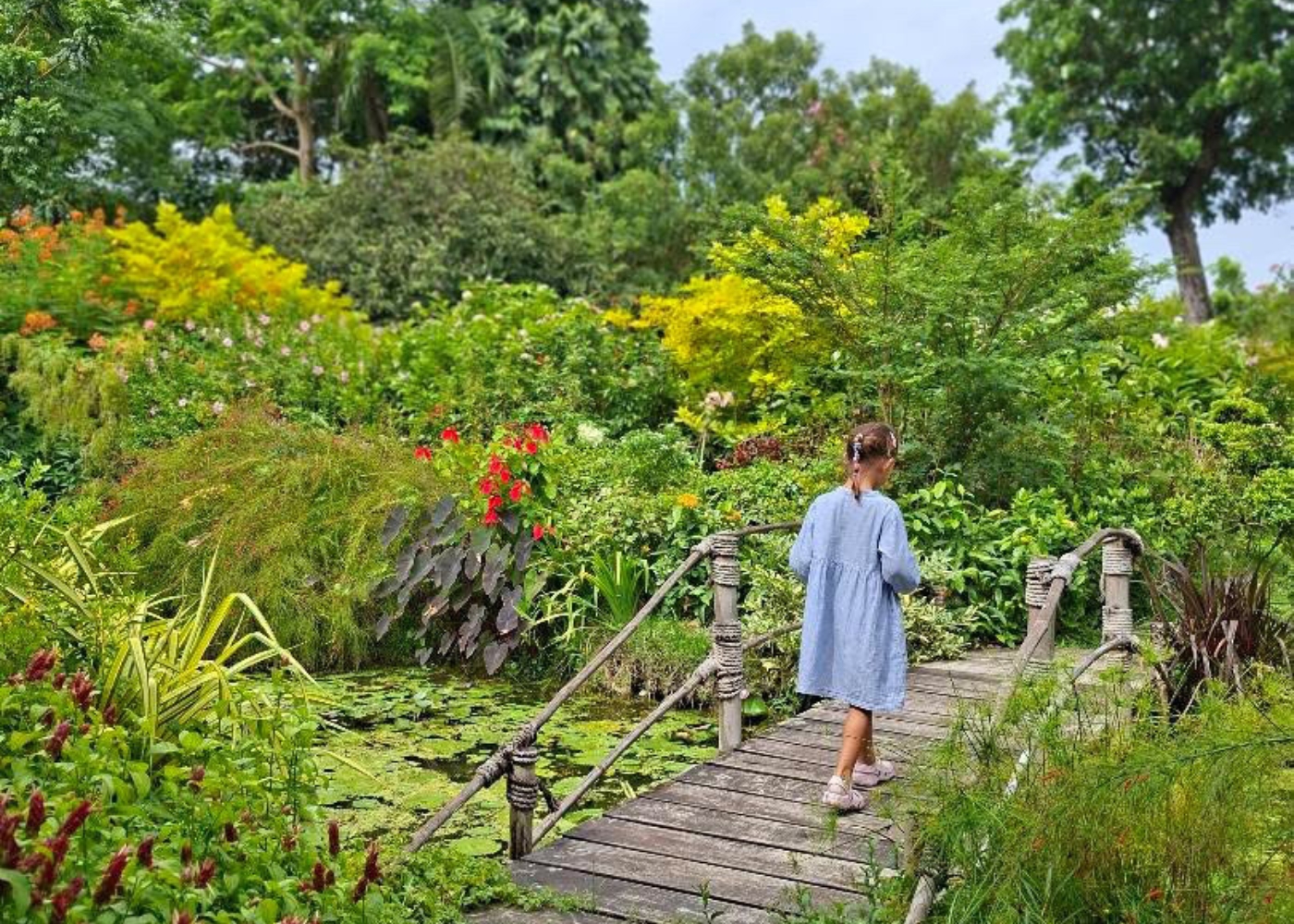
With how private and bespoke the experience feels, I think the tour is worth the money. We only spent around 8am to 3pm exploring throughout the day, but the experience never felt rushed.
For foreigners, this tour offers a chance to explore a side of Thailand that sits close to Bangkok yet still feels local, peaceful and far less crowded than the usual tourist attractions. Instead of hopping on a giant van tour with strict schedules, the experience feels slow, personal and flexible.
Another thing I appreciated was how family-friendly the entire journey felt. Nat told me that even when he is not personally guiding the tour, every guide is trained by him to create the same experience where kids can explore comfortably without feeling pressured or overwhelmed.
Sustainability is also naturally built into the trip rather than being treated like a marketing gimmick. From supporting local communities and organic businesses to reducing single-use plastic throughout the day, the tour feels intentional in a way many bigger tours often don’t.