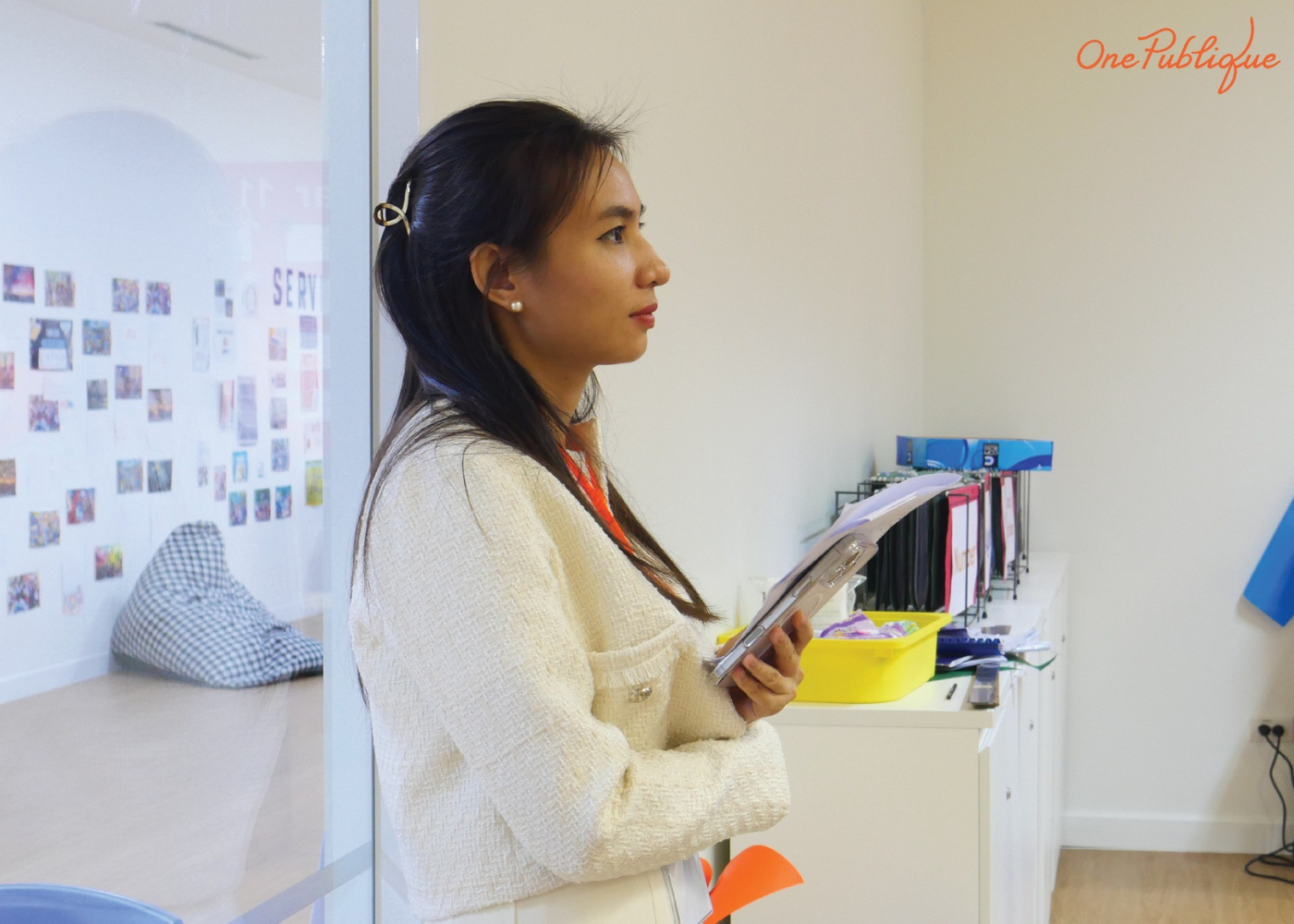
Alisa Chalerychit is the founder of One Publique, a learning space dedicated to teaching children how to think critically, speak confidently and engage with the world thoughtfully.
With a background in competitive debate, Alisa understands first-hand how skills like structured thinking, perspective-taking, and clear communication can shape a child’s confidence and future. Her own journey took her from national debate competitions in Thailand to studying Economics at Brown University.
She founded One Publique in 2022 in response to a gap she saw in traditional education that prioritises memorisation over critical thinking and real-world communication. Today, One Publique works with students to help them develop the skills they need to express ideas clearly, challenge assumptions, and find their own voice in an increasingly complex world.
Critical thinking, debate and public speaking are often called “soft skills,” yet they feel increasingly essential. Why do you believe these skills are especially important for children growing up today?
Being able to present yourself well gives students a real advantage, from school and university interviews to future careers. If children can communicate their ideas clearly and thoughtfully, they stand out. These skills aren’t just a “nice to have” – there is real structure and discipline behind them and the benefits compound over time. Starting early gives students a lasting edge, especially as academic and job markets become increasingly competitive.
On a human level, confident speakers are often more expressive and self-assured. Many school subjects require presentations, yet public speaking is rarely taught as a standalone skill. We see students come to us after uncomfortable classroom experiences that make them fear speaking up. When children are equipped with the right tools early on, they feel more prepared, confident, and positive about expressing themselves. They will be generally happier about it, too.
How has the modern world changed how children need to think and communicate?
I would say AI is a game changer. It is a powerful tool but sadly it doesn’t come with a manual for kids and even adults on how to use it.
Tools like ChatGPT give students an illusion of “understanding.” We often see students use generative AI to write debate speeches, only to repeat words they don’t fully understand or struggle to respond to rebuttals because the ideas aren’t truly theirs. We see this happen not only in our classes, but also at international competitions with students from around the world exhibiting the same patterns.
At One Publique, we have a strict generative AI policy. Students may use it only for grammar checks and fact-checking, not for developing speeches. We also ask students to handwrite their work rather than use devices. Writing by hand encourages reflection, helps them internalise their ideas, and improves eye contact and confidence when speaking.
How do you teach critical thinking to primary school children?
We teach students critical thinking through interactive learning, where they are encouraged not just to speak, but to understand and present their ideas logically. In public speaking classes, students learn to organise their thoughts, support ideas with reliable sources and follow logical reasoning in writing their speeches. In debate, they practice asking “why” and “how,” exploring multiple perspectives, and analysing case studies to strengthen their critical thinking.
Early signs of strong critical thinking?
The signs of strong critical thinking includes asking thoughtful questions, explaining their opinions and aren’t afraid to challenge ideas respectfully.
How do debate and public speaking help children find their voice?
Debate and public speaking help children find their voice because the process is real and personal. From shaping ideas to delivering a speech, students are constantly reflecting on their own beliefs and values.
One student, for example, spoke about inventing “Empathy Shoes” that let people experience life from someone else’s perspective. Inspired by her parents’ careers, she imagined the shoes helping business leaders better understand their teams and bringing women’s perspectives into male-dominated fields.
We don’t put words into our students’ mouths. They want to say things their own way, and we respect that. Our role as coaches is to help them reflect on what they’re trying to express, refine their message, and strengthen its impact, without changing their voice.
One thing you’d change about education today?
Of course, I want every school to teach debate (laugh)! I think debate is a great tool for kids to understand any subject. You can debate alternative historical endings in history class. You can debate the merits of different characters in an English class. You can even debate whether zero is an even number in a math class!
What can parents do at home?
Read with your kids. Tell them about the world in kid-friendly stories. Limit the time on screen.
I think it’s a good idea to have a clear prescribed timeframe of when kids can use their devices. Personally on device usage, I think the more delayed, the better. Even I, a full grown adult, try to be device-free so I can be mindful during family time.
How will AI change how children grow up?
AI works like a shortcut to gain knowledge at the cost of children losing the chance to practice critical thinking.
In the past, you usually explored information from various sources before making a judgement on the information. However, these days, the information is readily available at your finger tips. It is not clear to me yet how this fast access to knowledge will deepen students’ clarity on a topic and help them be able to articulate their understanding.