
Bangkok is a big, busy, and often overwhelming city, especially for families visiting or newly settled here. But once you understand how the public transportation system works, getting around Bangkok can actually be surprisingly manageable, even with kids.
From sky-high trains to underground metros, ride-hailing apps to river ferries, Bangkok offers multiple ways to move around the city depending on where you’re going, who you’re travelling with, and how much time (or patience) you have. Here’s a practical, family-friendly guide to navigating Bangkok’s public transportation with confidence.
Is Bangkok Easy to Get Around?
Short answer: yes, once you know your options.
Bangkok traffic is infamous, but the city has invested heavily in rail transport over the past decade. Today, there are multiple BTS Skytrain and MRT – what we call our underground metro – lines, colour-coded and expanding, making it easier than ever to reach shopping areas, neighbourhoods, schools, and family attractions without sitting in traffic.
That said, most families use a mix of transport modes, depending on distance, time of day, and whether kids are involved.
BTS Skytrain: Fast, Reliable, and Family-Friendly
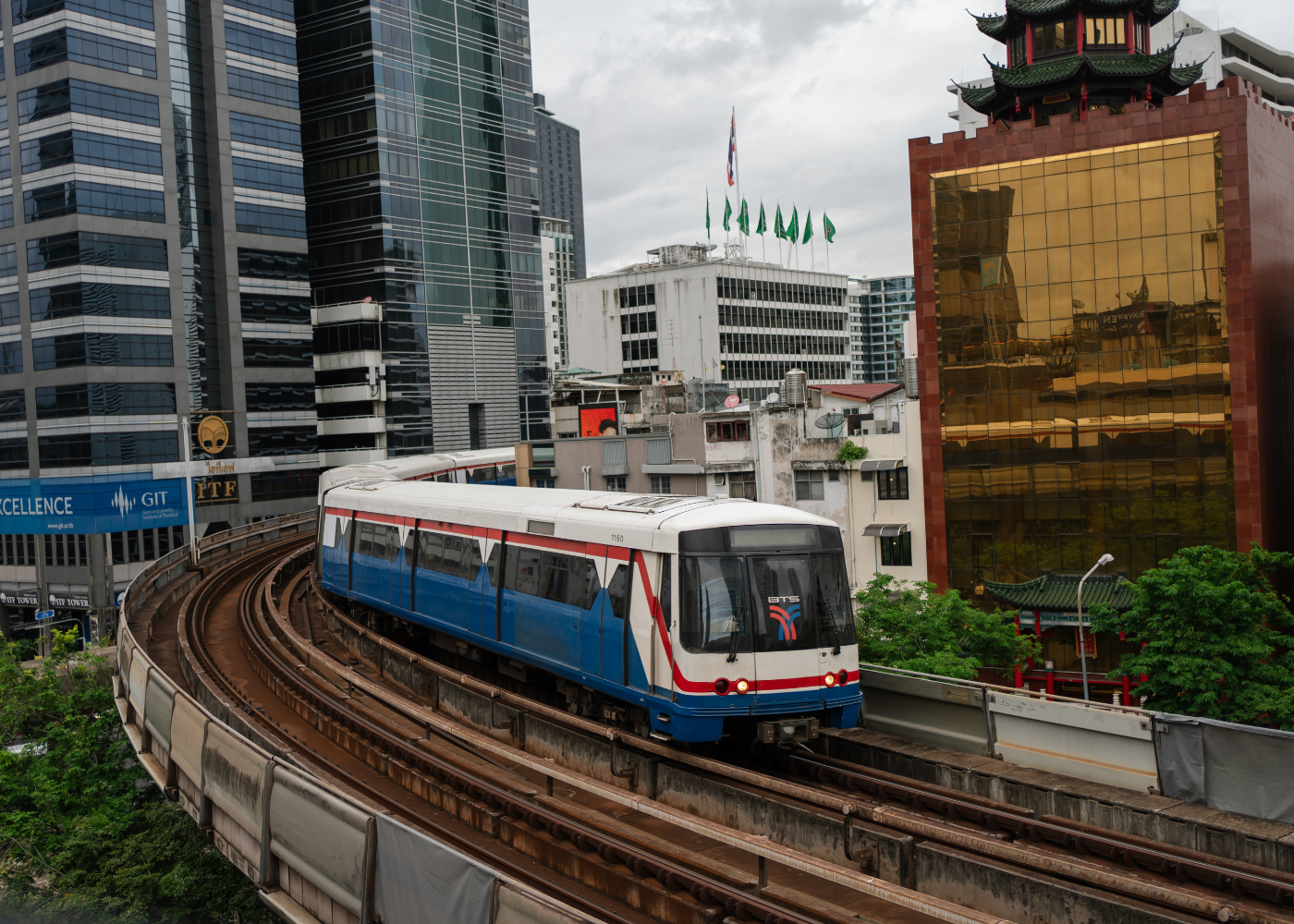
Why families love the BTS
- Avoids traffic completely
- Clean, air-conditioned, and safe
- Stations are well-marked in English
- Easy access to malls, parks, and attractions
Understanding the BTS lines
Bangkok’s BTS network has grown significantly and now includes multiple colour-coded lines:
- Sukhumvit Line (Light Green): Runs north to south through key areas like Mo Chit, Siam, Asok, and Phra Kanong.
- Silom Line (Dark Green): Connects Silom, Sathorn, and Thonburi.
- Gold Line: A short but useful line connecting to IconSiam, popular with families
Local tip: Most stations have lifts, though not all entrances are stroller-friendly. Lightweight or foldable strollers work best.
MRT Underground: Expanding and Convenient
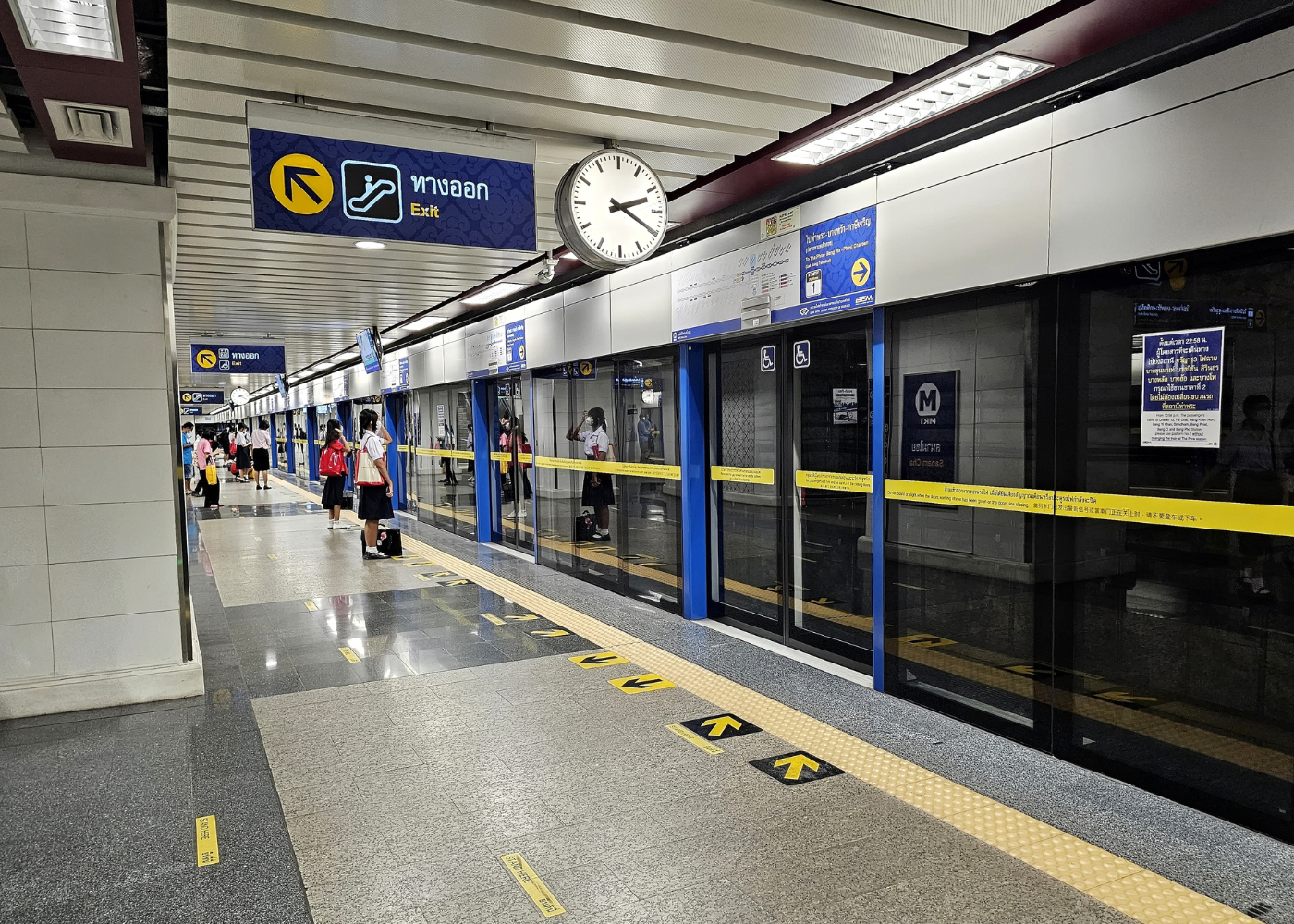
Key MRT lines families should know
- Blue Line: A loop line (so don’t worry about getting on the wrong platform) connecting major areas like Chatuchak, Silom, Chinatown, and Rama 9.
- Purple Line: Serves northern suburbs, useful for families living outside the city centre.
- Yellow & Pink Lines: Newer monorail lines serving eastern and northern neighbourhoods.
Local tip: The MRT is generally more stroller-friendly than the BTS, with wider gates, lifts, and clearer underground navigation
Taxis, Grab & Bolt: When Convenience Matters
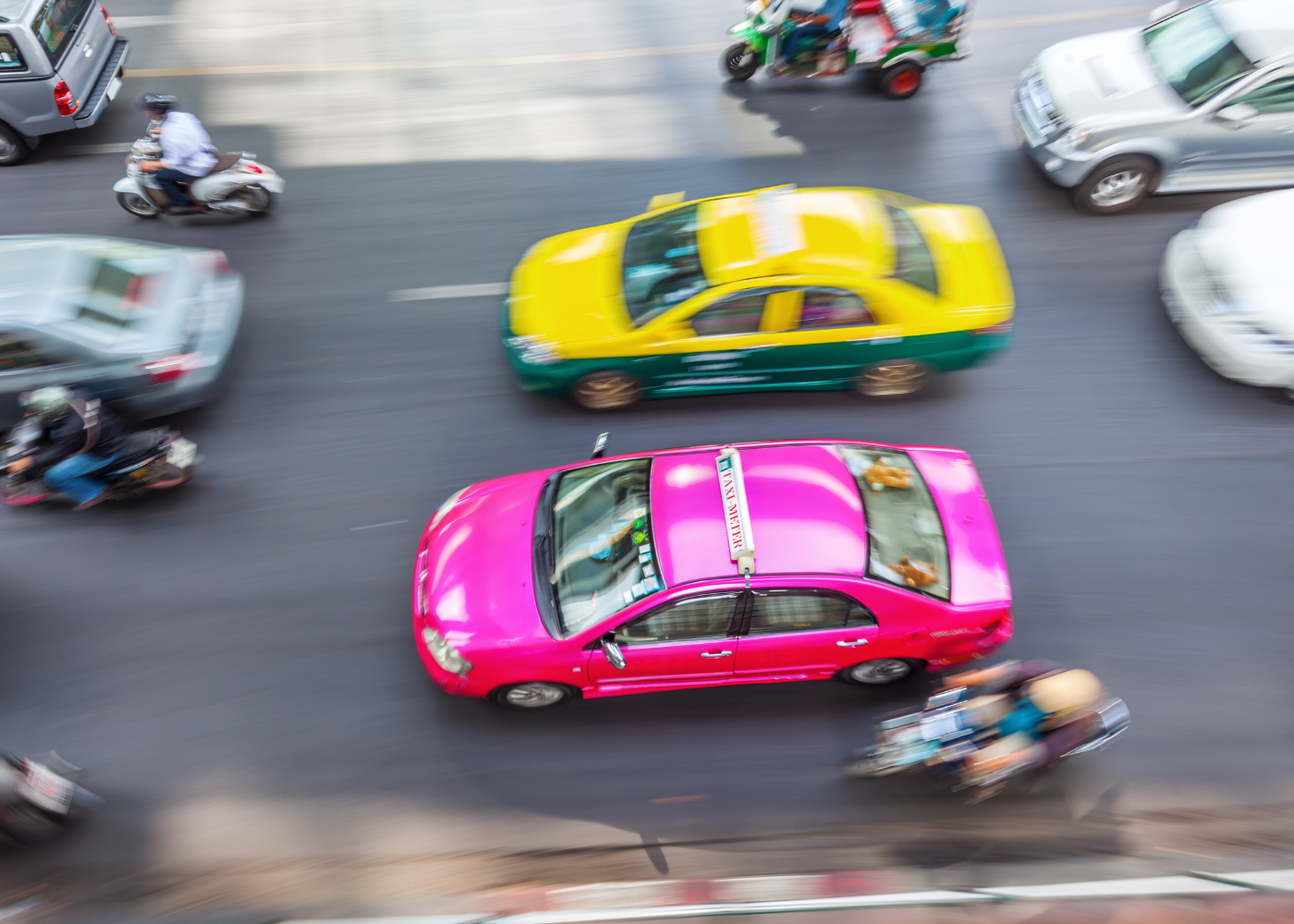
Ride-hailing apps
- Grab: Most widely used; reliable, English-friendly
- Bolt: Often cheaper, but availability can vary
Note: Uber is not available in Southeast Asia.
These apps are ideal when:
- Travelling with toddlers or tired kids
- Carrying bags, scooters, or strollers
- Heading somewhere not close to a train station.
Local tip: Metered taxis are also plentiful, but traffic and occasional refusal during rush hour are common frustrations.
River Boats & Ferries: A Bangkok Classic

- Chao Phraya Express Boats connect areas like Sathorn, Old Town, and Nonthaburi province.
- Hotel and mall shuttles (including IconSiam) offer free river ferries.
River boats are great for:
- Weekend family outings
- Visiting temples and museums
- Avoiding road traffic.
Note: Life jackets are available, but parents should keep a close eye on younger children
More Local Tips for Getting Around Bangkok With Kids
- Travel outside rush hours (7–9am, 4–7pm) when possible
- Use Google Maps. It’s accurate for BTS/MRT routes
- Choose stations connected to malls for lifts and toilets
- Always carry water and plan for heat
Final Thoughts
Bangkok’s public transportation system has evolved into a multi-layered, modern network that works well for families once you understand how to use it. Whether you’re hopping on the BTS, navigating the MRT’s expanding colour lines, booking a Grab, or cruising down the river, getting around the city doesn’t have to be stressful.
With a little planning and flexibility, Bangkok becomes a city that families can explore confidently, comfortably, and even enjoyably