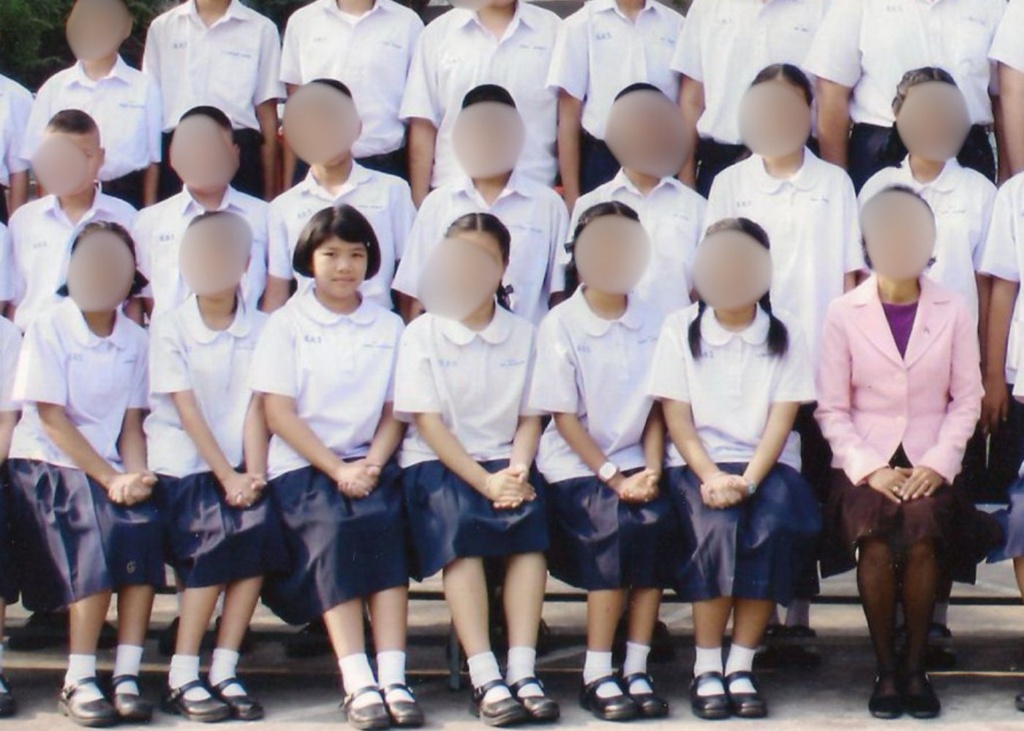
As someone who got caned in Thai school, here are my thoughts on Singapore’s stricter disciplinary measures for bullying, including standardising caning.
When I heard that the Ministry of Education in Singapore had announced stricter disciplinary measures for bullying, including standardising caning, honestly, the first word that came to my mind was “why?”
I am now 28 and the image of an old lady walking into the classroom with a long cane still haunts me. In Thailand, caning has long been seen by some schools as the best way to instil discipline.
But to be honest, it left me with trauma, both from being punished myself and from watching my friends go through it.
Fortunately, the Thai government banned this practice in March 2025 by removing the law that had allowed adults to physically punish children entirely. Many countries around the world have done the same. So when it came to Singapore’s new measures – and while I definitely do not condone bullying – I couldn’t help but wonder: is this really the right solution?
What is Singapore’s new anti-bullying plan?
Before I share my own experience and thoughts, here is what Singapore’s new anti-bullying plan is about.
The Ministry of Education has announced new measures to deal with bullying in schools. They spoke with more than 2,000 teachers, parents, students and members of the public before making the plan.
One of the biggest changes is punishment. Under the new plan, caning will be standardised across schools by 2027. This means schools will follow the same rules on when caning can be used, how it should be carried out and who is allowed to do it. It is meant to be used for serious bullying cases and repeated bad behaviour.
The move has sparked debate, with some people supporting stricter discipline while others question whether physical punishment is the right way to stop bullying.
My colleague, Faz Gaffahe, the editor of HoneyKids Asia Singapore – who is raising her children in Singapore – has also shared her thoughts on it. Read her full take here.
Growing up in Thai schools with caning

In Thailand, if you asked me to picture a teacher, I would imagine a strict older woman holding a cane rather than a warm mentor students felt comfortable approaching. For me, teachers were authority figures to fear, not people to talk to.
So why were Thai teachers allowed to punish children?
Historically, Thailand followed a traditional legal view that gave adults the right to discipline children physically. This came from the Civil and Commercial Code of 1925, which allowed parents or guardians to “punish the child in a reasonable manner for disciplinary purposes.” Because the word “reasonable” was never clearly defined, it was often interpreted to include caning, slapping and other forms of corporal punishment.
When I started school in 2000, caning and slapping were still seen as normal. My mum once told me I had been spanked in kindergarten because I wet the bed. Looking back, I wonder why adults thought that was acceptable when children were simply being children.
As I grew older, punishment became normalised around me. And I accepted it as part of school life. I learned that mistakes could lead to pain or embarrassment. Instead of feeling excited to learn, I often felt anxious about getting something wrong.
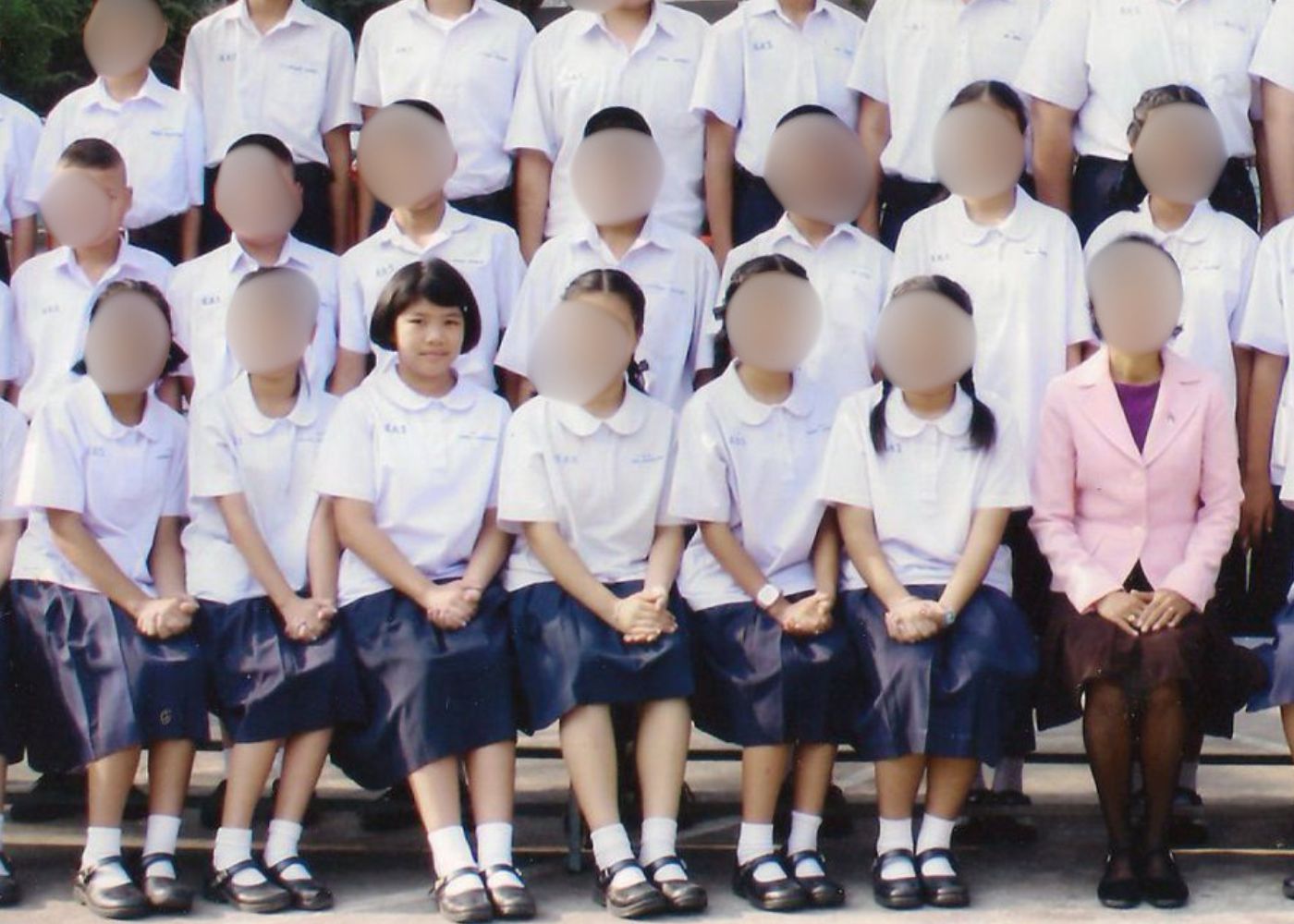
Bullying was also rarely taken seriously. Sometimes it came not only from classmates, but from teachers themselves. Students with darker skin might be mocked as “ดำ” (black), while overweight students could be called “หมู” (pig). People dismissed these as jokes, but children often carried those words for years.
Punishment was handed out for ordinary behaviour including not doing homework, submitting work late or talking in class. I always got slapped on the hands with a cane because I chatted in class and someone noted my name and told the teacher.
I still remember a group of students being caned in front of the whole school after accidentally kicking a ball into the principal’s car. I didn’t even want to look at them. Those moments were meant to teach discipline, but what I really learned was fear.
It was not until 2005 that the Ministry of Education officially banned violent punishment in schools. Caning and slapping were no longer allowed.
But in reality, the hitting often continued.
Research by the Thailand Development Research Institute (TDRI) and UNICEF has shown that deep-rooted social attitudes can be harder to change than laws. Many students stayed silent because they feared retaliation, while schools often chose to protect their reputation rather than confront abusive teachers.
There was a time in high school in 2011 when one teacher proudly said she had slapped a student so hard that their teeth came out. Years later, the same teacher was filmed hitting students again and the video spread online.
Many former students then shared similar experiences. Yet instead of taking serious action against the teacher, the school reportedly focused on getting the video removed.
Only in March 2025 did Thailand make another major step forward by removing the legal phrase that allowed adults to punish children “in a reasonable manner.” The new law states that discipline must happen without physical or mental abuse.
It was a historic shift but for many of my generation, it came long after the damage had already been done.
Does caning actually stop bullying? Here’s what the research says
When I saw the news that Singapore would legalise caning for bullying, it brought back many memories for me.
Of course, bullying should be punished – and again, I’m not here to argue that bullying shouldn’t be punished. But it also left me wondering whether physical punishment is really the best way to do it. It’s like: responding to violence with violence??
And I am not the only one asking that question. Research has raised the same concern.
A widely cited 2016 meta-analysis by Elizabeth Gershoff and Andrew Grogan-Kaylor found that children who are hit are more likely to develop aggression, anxiety, low self-esteem and behavioural problems.
Hitting may stop behaviour in the moment, but it often teaches fear rather than understanding.
Another study from Harvard University researchers in 2021 used brain scans to examine the effects of corporal punishment. It found that children who were physically punished showed heightened responses to threat cues, suggesting their brains may become more sensitive to fear and stress.

That stood out to me because it matched my own experience. School punishment left me carrying fear for years. I did not dare to speak up or ask questions in class. It was not until university, in an international programme, that professors encouraged open discussion. Even when my answers were wrong, they responded kindly and treated mistakes as part of learning.
Later in working life, I noticed how deeply those old school experiences could shape adults too. I liked to share ideas openly, but some older Thai colleagues saw that as rude because they believed younger people should stay quiet in meetings.
To me, that showed how punishment culture does not only affect children in the moment. It can shape confidence, communication and hierarchy long into adulthood.
I think the real question is not whether punishment is needed. It is whether fear should still be mistaken for discipline.

Sweeten up your inbox! Subscribe to HoneyKids Asia Thailand
What does effective school discipline actually look like?
I totally disagree with caning as a punishment. There must be better ways for schools to respond and many schools around the world have already shown that there are.
Recent research from institutions such as Stanford University, University of Chicago and the National Education Association suggests that effective discipline has moved away from harsh “zero-tolerance” punishments and toward systems that teach behaviour, build responsibility and repair harm.
One common model is Positive Behavioral Interventions and Supports (PBIS), where schools clearly teach students skills such as managing anger, resolving conflict and showing respect, just like they would teach maths or science. Students who need more help then receive targeted support instead of automatic punishment.
Another growing approach is restorative practice. Instead of simply punishing a bully, students are asked to understand the harm they caused, listen to the person affected and take steps to make things right. This focuses on empathy and accountability rather than fear.
Research also shows the most effective classrooms are not built on intimidation, but on high standards with strong support. Good teachers set clear boundaries while also creating an environment where students feel safe, respected and able to learn from mistakes.
Final thought
As someone who was traumatised by caning, I do not believe it is a good way to punish bullying. To me, violence does not teach children how to behave better but it teaches fear and can leave lasting scars.
As of 2026, 69 countries worldwide, including Sweden, Japan, Brazil, and Thailand, have fully banned all forms of corporal punishment. Many of these legal changes were made to align with the United Nations Convention on the Rights of the Child, which views corporal punishment as a violation of a child’s right to protection and physical dignity.
At the same time, I understand that different cultures view discipline differently and this perspective comes from my own experiences. What may be accepted in one country may be rejected in another and perhaps it may work in Singapore.
So what do you think? What is the most effective way to teach children right from wrong?