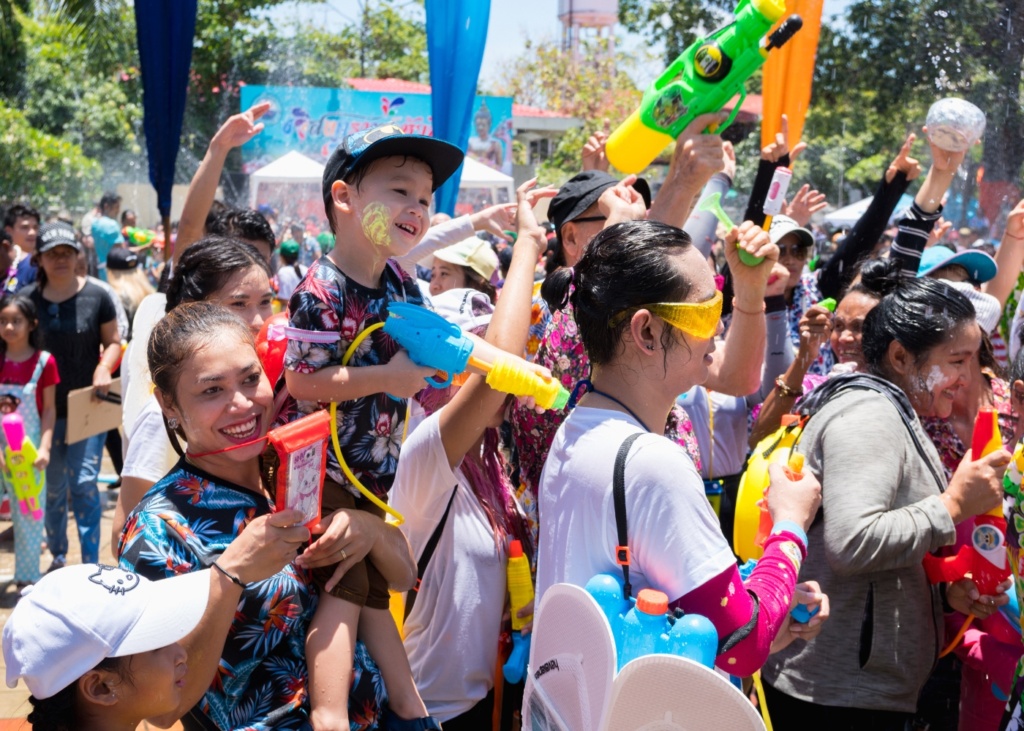
Planning a trip during Songkran? Here’s the real deal on how to navigate Thailand during the country’s biggest holiday.
What is Songkran in Thailand?
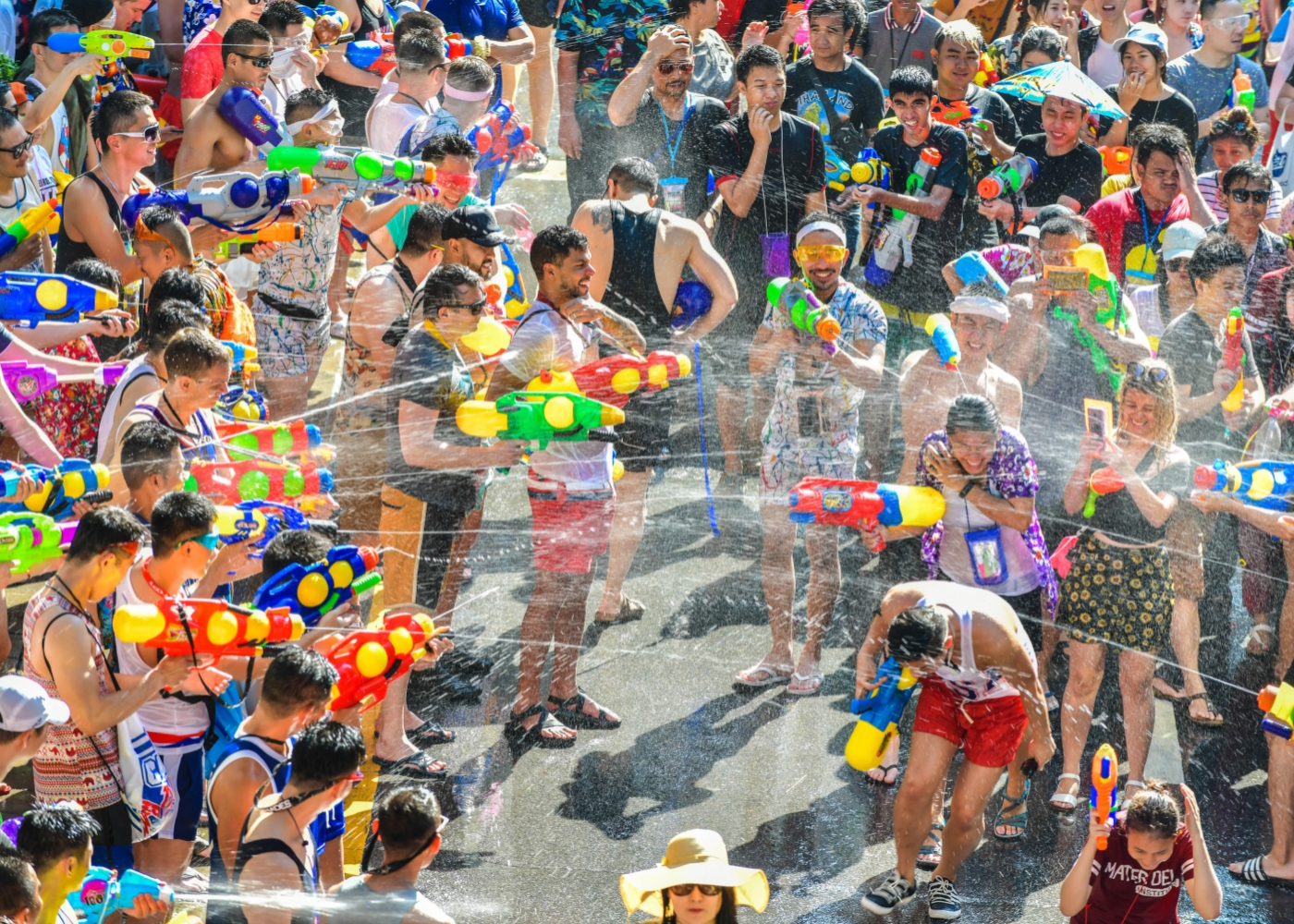
Songkran is Thailand’s traditional New Year festival, celebrated every year from 13–15 April (though festivities often last longer in some areas). It’s one of the country’s most important cultural events. Think of it like our version of Christmas, the festival blends family time, good food (loads of it), with meaningful spiritual traditions.
The meaning behind Songkran, at its core, Songkran is about renewal, cleansing, and respect. The word Songkran comes from Sanskrit, meaning “to move” or “to pass into”, marking the sun’s transition into a new zodiac sign. It symbolises washing away bad luck and starting the new year fresh.
Why do they pour water on Songkran?
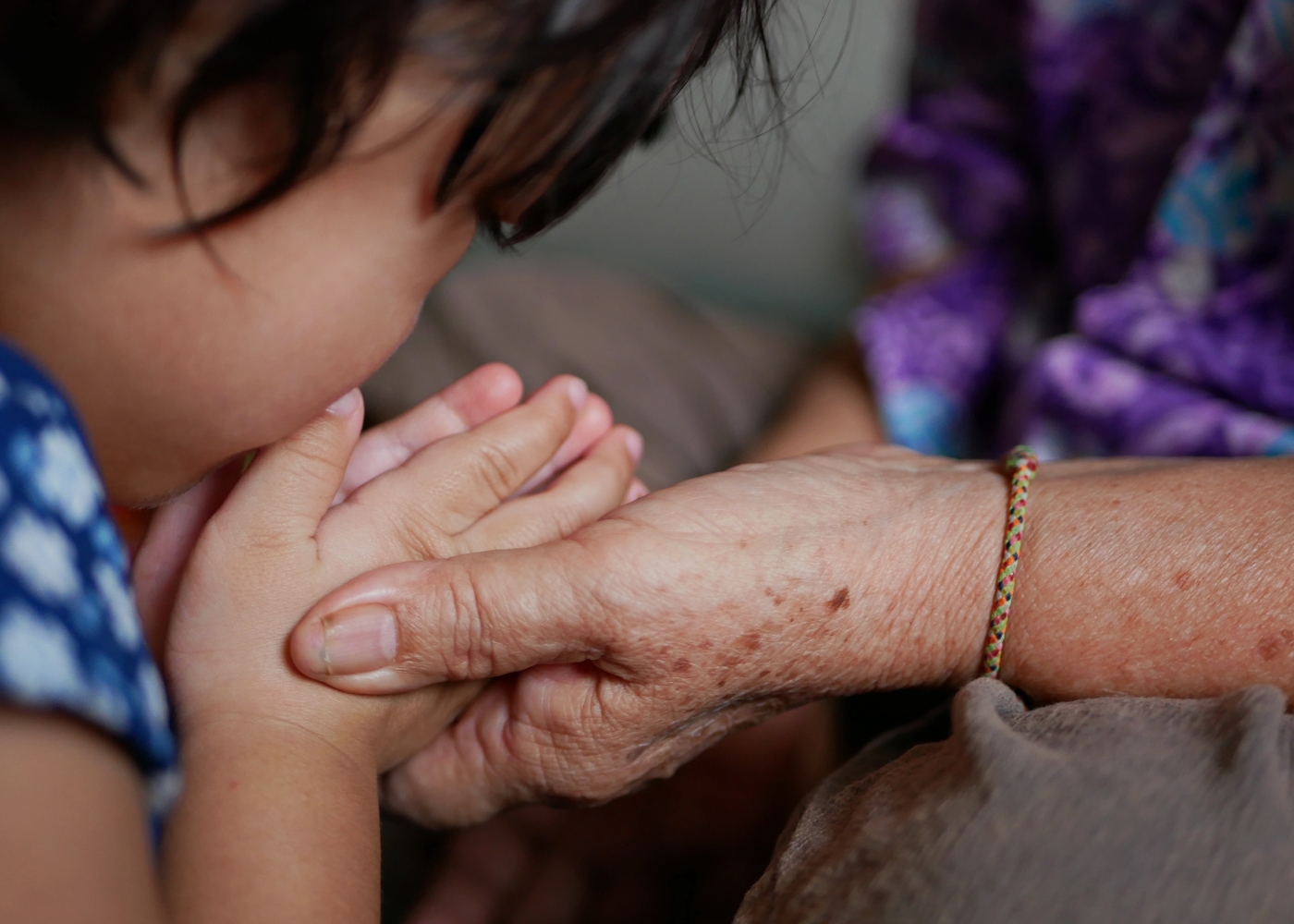
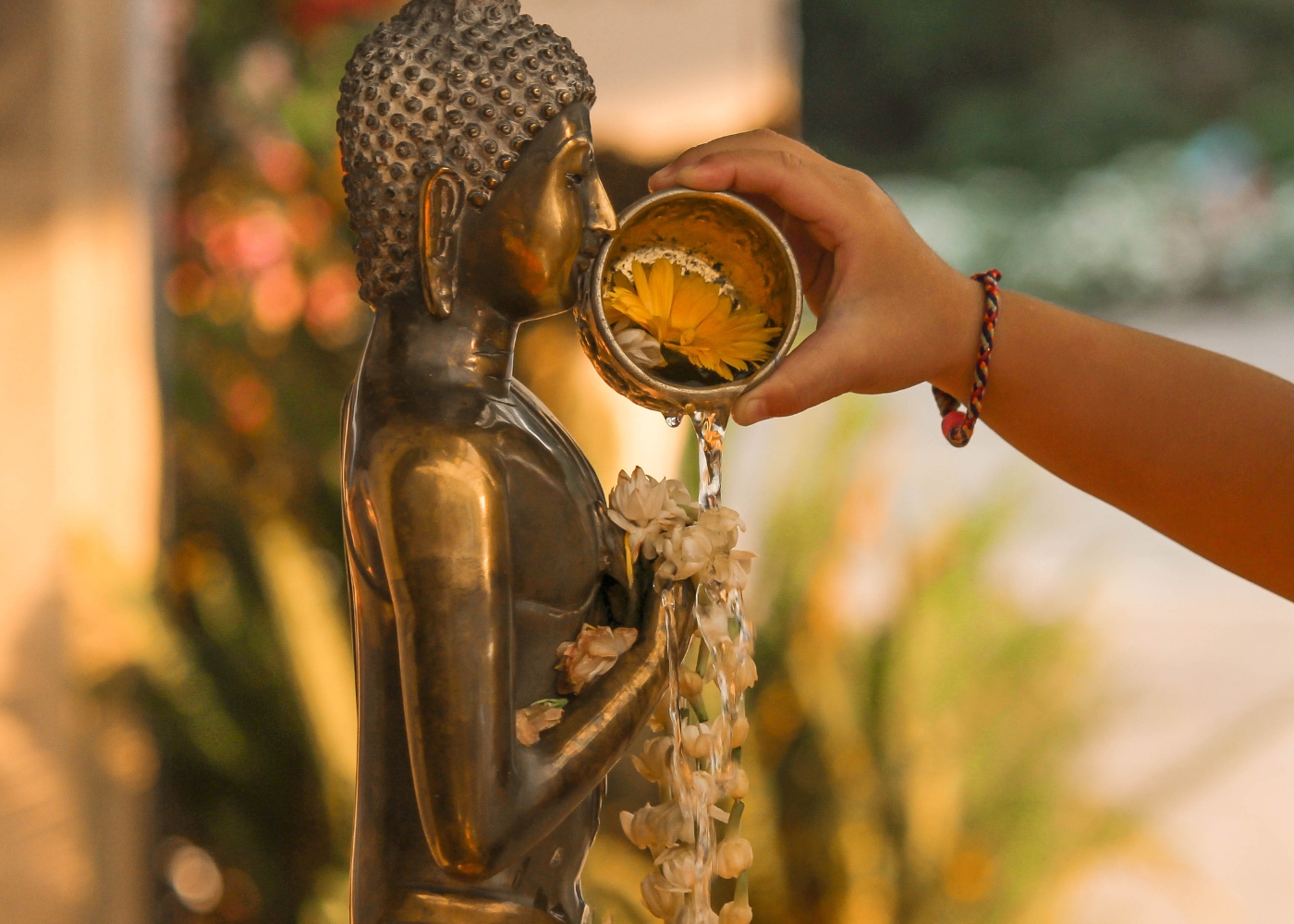
Why all the water, you asked? The globally-renowned water fights you see today actually come from a more traditional practice:
- People gently pour scented water over Buddha statues for blessings and good luck
- Younger generations pour scented water over elders’ hands – known as rod nam dam hua or รดน้ำดำหัว – to show respect and receive good wishes
Over time, this evolved into the massive, playful nationwide water festival you see today, especially in cities like Bangkok and Chiang Mai.
Is everything closed during Songkran?
What stays open
In places like Bangkok, a lot are still operating:
- Shopping malls
- Convenience stores (7-Eleven, etc.)
- Hotels and major restaurants
- Public transport like the BTS or MRT still run as normal, you might just see people with soaked clothes carrying water guns riding them.
These are your go-to spots for staying dry, cool, and well-fed.
What might be closed
This is where you’ll feel the holiday vibe:
- Smaller independent shops and cafes
- Many street food stalls (vendors travel home to outside of Bangkok
- Banks and government offices
- Some local markets
So yes, not everything is open, but it’s far from a shutdown.
Getting around
Expect things to be… a bit chaotic.
- Traffic can be unpredictable due to water zones
- Taxis and rideshares are harder to find
Is it a good time to visit Thailand during Songkran?
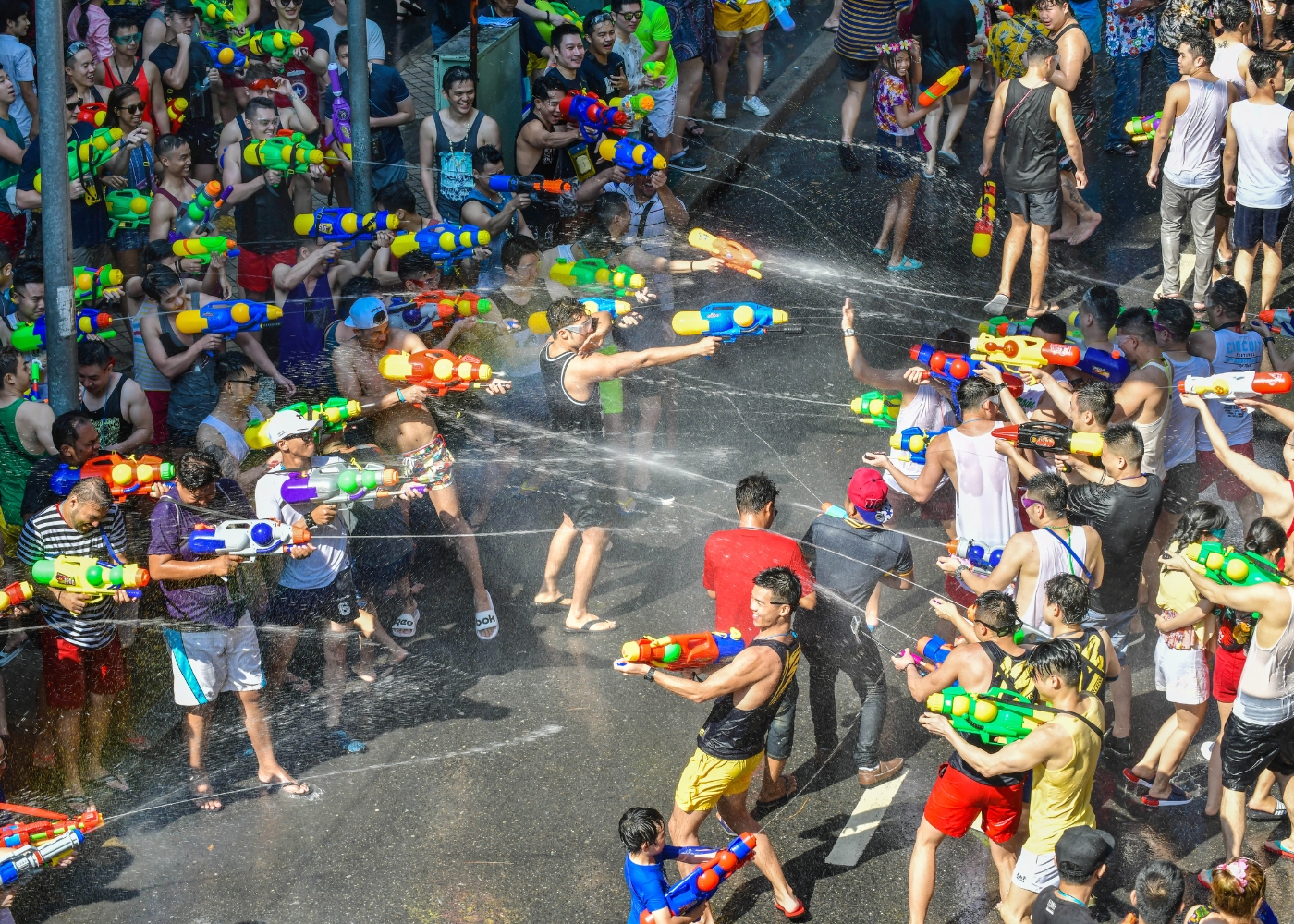
If you love energy, chaos and festivals, then YES.
Visiting Thailand during Songkran can be unforgettable as the whole country turns into a giant water fight. You get a once-a-year cultural experience. There’s a unique mix of tradition with full-on street parties.
If you prefer calm, sightseeing, or control, then maybe not.
There are some real trade-offs like how you will get soaked repeatedly and not always by choice. The crowds can be intense, especially in hotspots that will make leisure walking impossible. Many shops and services will be closed.
If you want to travel within the country, the flights will be full and double the price, the trains will be fully booked months in advance.
It’s also the hottest time of year and the temperature can easily touch 40 degree Celsius.
For families or first-time visitors
It can go either way:
- Fun, memorable, very interactive for kids
- Can be overwhelming, messy, and tiring if not planned well
Pro tip: Quieter neighborhoods or resorts can give you a “light” Songkran experience without the chaos.
So, here is the verdict
- Go during Songkran if: you want culture, fun, don’t mind unpredictability
- Avoid it if: you want a relaxed, sightseeing-focused holiday
Why is Songkran 3 days?
13 April (Wan Maha Songkran): This is the beginning of the Thai New Year according to Brahmin-Hindu belief. It is the day when the sun moves into Aries.
14 April (Wan Nao): This is the middle day, or the transitional day between the old year and the new year. Traditionally, it is believed to be a day when one must refrain from arguing or quarreling, so as not to bring bad luck for the entire year.
It is also celebrated as Family Day in Thailand.
15 April (Wan Thaloeng Sok): This is New Year’s Day, marking the change to a new era or the day for making merit to welcome the new astrological year.
Why three days specifically?
The structure reflects a broader Southeast Asian and ancient Hindu-Buddhist concept of transition over time, not an instant reset:
Day 1 → Release the old
Day 2 → Pause and purify
Day 3 → Begin the new
It mirrors how many traditional calendars treat New Year as a process, not just a single midnight moment.

Sweeten up your inbox! Subscribe to HoneyKids Asia Thailand
What not to do during Songkran?
Do not pour water on anything before pouring water on Buddha images
According to Buddhist belief, when paying respect to the Triple Gem, one must not pour water on anything else before pouring water on Buddha images. There are 2 main reasons:
- In Buddhism, the Triple Gem is considered the highest sacred entity worthy of reverence.
- In Thai tradition, Songkran is a long-standing cultural practice and pouring water on Buddha images is a central ritual, symbolising the cleansing of negativity.
Therefore, if you plan to make merit by pouring water on Buddha images, this should always be done first.
Do not keep the house dirty during Songkran
It is believed that during Songkran, we should welcome new and auspicious things. Cleaning the house helps remove any lingering negativity from the past year and symbolises welcoming good fortune into the new year.
Do not use rude or inauspicious language
Speaking and doing only good things will bring auspiciousness throughout the year. Conversely, speaking or behaving will bring misfortune that stays with you for the entire year.
Do not kill animals or take life
During Songkran, one should refrain from killing animals. Instead, it is encouraged to make merit by preserving life. For example, releasing birds or fish, or redeeming the lives of cattle or buffalo. Acts of giving life are believed to increase one’s merit and spiritual blessings.
Do not work
There is a belief that working during Songkran will lead to continuous hardship throughout the year. Since Songkran is a long holiday, it is encouraged to rest fully. This helps refresh both body and mind in preparation for the year ahead.
Can you avoid Songkran in Bangkok?
Short answer: yes, but only if you’re intentional about it.
During Songkran, Bangkok isn’t a completely unavoidable chaos. However, certain areas absolutely are.
Places you cannot avoid it
If you go anywhere near these, you will get soaked:
- Khao San Road
- Silom Road
- Parts of Sukhumvit (especially around Nana/Asok)
These are full-on water war zones from late morning to evening.
Places where you can mostly avoid it
You can still have a relatively dry, calm experience in:
- Malls
- Cafes, restaurants and indoor attractions
- Residential neighborhoods away from main roads
What should you wear to Songkran?
You will get completely soaked during Songkran and stay that way for hours. The goal is comfort, quick-drying, and not losing anything valuable.
Go for:
- Light, quick-dry clothes like sportswear, gym tees
- Loose, breathable outfits because it’s extremely hot
- Bright or floral shirts as this is very Songkran vibe
- Dark or lined clothing if you want to avoid transparency when wet
Avoid:
- White or thin fabrics as they go see-through fast
- Denim. They are heavy and uncomfortable when soaked
- Anything expensive or sentimental
Pro tip:
Many locals wear Hawaiian-style shirts and shorts. It’s almost the unofficial uniform.
Practical extras you’ll thank yourself for:
- Waterproof phone pouch. This is an absolute must, even if you’re not planning to go to a party area.
- Small crossbody or dry bag and carry a bit of cash as well.
- Sunglasses with a strap or they will get knocked off otherwise.
What shoes do you wear on Songkran?
This matters more than people expect as you’ll be on your feet for hours.
Best options:
- Flip-flops, rubber sandals as they are easy, cheap and quick-drying
- Strapped sandals. There will be water every where so this is better if you’ll be walking a lot
- Water-friendly sports sandals. The best balance of grip and comfort.
Avoid:
- Sneakers. They get waterlogged and heavy.
- Slippers with no grip. They are easy to slip on wet streets.
- Anything leather as they will get damaged.