What DSA is, how the timeline works, and the honest answer to the question every parent asks: what actually helps, years before you apply.
Self-proclaimed kiasu parent or not, it’s time to assemble. We know the stressors of choosing a primary school that has an affiliation with a secondary school for less drama, we also know the PSLE hustle, and we’re all too familiar with the DSA talk during weekend extra classes. Direct school admission, or DSA, is the pathway that lets your child into secondary school on talent instead of a PSLE score. It is also the pathway that has quietly created an entire prep industry aimed at nine-year-olds. Here is what’s real, what’s noise, and what’s worth doing long before the portal opens.
What is direct school admission in Singapore?

Direct school admission (DSA) is a Ministry of Education scheme, introduced in 2004, that allows Primary 6 students in Singapore to secure a secondary school place based on a talent before their PSLE results are released. Schools set their own selection criteria and run their own trials, auditions and interviews. Secondary schools can fill up to 20% of their non-Integrated Programme Secondary 1 intake this way.
That 20% cap matters: DSA is a side door, not a main entrance, and most children at any given school did not come in through it.
DSA is the pathway that lets your child into secondary school on talent instead of a PSLE score. It is also the pathway that has quietly created an entire prep industry aimed at nine-year-olds. Here is what’s real, what’s noise, and what’s worth doing long before the portal opens.
What is direct school admission in Singapore?
Key facts at a glance
| Who it’s for | Primary 6 students applying to Secondary 1 |
|---|---|
| Cost to apply | Free, via the MOE DSA-Sec portal |
| Login | One parent’s Singpass |
| Choices allowed | 3, each pairing a school with a talent area, maximum 2 at the same school |
| Non-school achievements | Up to 10 entries |
| Intake cap | Up to 20% of a school’s non-IP Secondary 1 places |
| PSLE still required? | Yes |
| Can you transfer later? | No |
| Commitment | 4 years, or 6 on an Integrated Programme track |
When do DSA applications open?
The 2026 exercise, for admission to Secondary 1 in 2027, ran on this timeline. The next cycle follows the same shape, opening in early May 2027.
| Stage | 2026 dates |
|---|---|
| Applications open | 6 May, 11am |
| Applications close | 2 June, 4.30pm |
| Shortlisting notifications | From early July |
| Trials, auditions and interviews | July to August |
| Outcomes released by schools | 17 to 28 August |
| School preferences ranked in portal | By 4.30pm, 23 October |
| Results, with PSLE | November |
Dates shift slightly each year, so check MOE’s DSA-Sec page rather than a screenshot from a group chat. The School of the Arts runs a separate application that opens much earlier, in late March.
What are schools actually assessing?
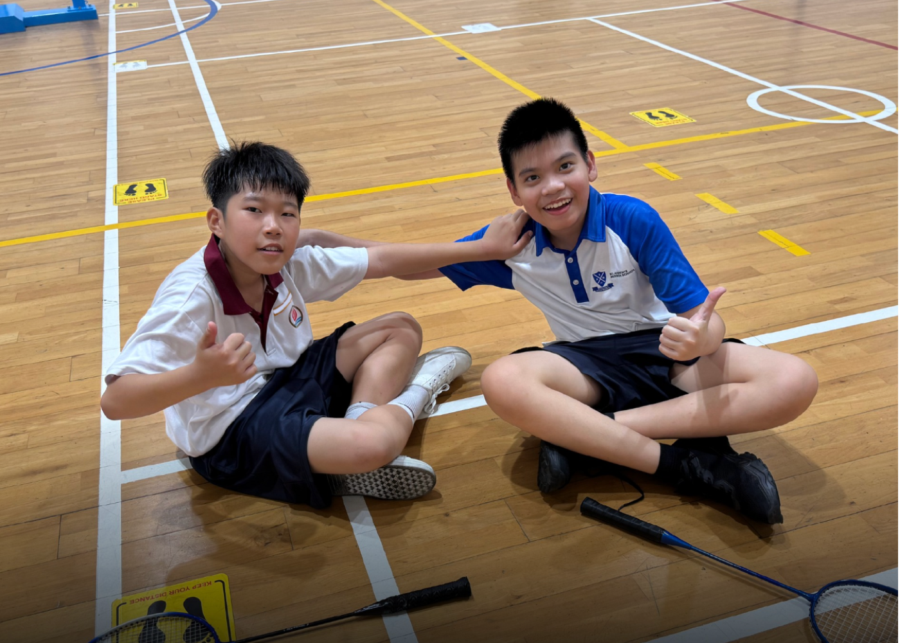
Medals help, but they are not the whole point.
Selection panels look at consistency, coachability, and whether a child can talk about their own thing with something other than rehearsed enthusiasm. A national-level athlete who cannot explain what they learned from losing will lose out to someone less decorated who can. Schools have been doing this for two decades and are very good at telling a developed strength from a polished performance.
The strongest applications tend to share a shape: a few years of sustained involvement, a visible line of improvement, and a child who is clearly the author of their own interest.
How early should you start preparing for DSA?

Here is the honest version: There is a real industry built around this. Tuition centres run DSA preparation from Primary 4, complete with portfolio building and interview workshops. Private sports academies run curated DSA camps. There are books advising parents on which activities the prestigious schools tend to value, which is a sentence worth reading twice.
In fact, when I was looking for a piano teacher when my son was in primary one, the first school we went to encouraged us to enrol him not only in their school, but a second instrument to increase his chances of getting through to a secondary school through DSA.
MOE has acknowledged that this creates inequity and has introduced measures to widen access, but the underlying dynamic is simple: money buys more coaching hours, and more coaching hours do not buy a talent.
What compounds over years is much less purchasable.
Ages 5 to 8: let them be bad at things
This is the stage for volume and low stakes. Try the sport, the instrument, the drawing, the coding club. Drop the ones that do not stick, without turning it into a referendum on character. The most useful thing that happens in these years is that a child works out what they voluntarily return to. You cannot install that later. Resist the urge to pick their talent area for them at six, because a child performing someone else’s interest is very easy to spot in an interview at twelve.
Ages 9 to 10 (P3 to P4): let something get harder
When one interest pulls ahead, back it properly. Better coaching, a real team, an actual ensemble, a competition or two. Not because DSA rewards it, but because this is the age where children find out whether they enjoy a thing enough to be bad at the next level of it. Persistence through a plateau is the quality every selection panel is trying to detect, and the only way to have it is to have gone through one.
Ages 11 to 12 (P5 to P6): keep the receipts, then get out of the way
Start a folder. Certificates, competition results, CCA records, photographs of work, dates and levels. Not because a folder is impressive on its own, but because reconstructing four years of achievements in May of P6 while also doing PSLE revision is genuinely miserable, and the detail that gets lost is always the good stuff.
The other job in this window is conversation, not coaching. Your child should be able to say why they like the thing, what they have actually done, which achievement matters most to them and why, and how they manage it alongside school. That is not a script. It is a child who has thought about their own life, which is worth having regardless of what happens in August.
Keep the academics steady while you’re at it. Plenty of families let training and portfolio polishing eat into schoolwork, then find themselves with an offer they cannot meet the Posting Group for.
Is there help if you can’t afford coaching?
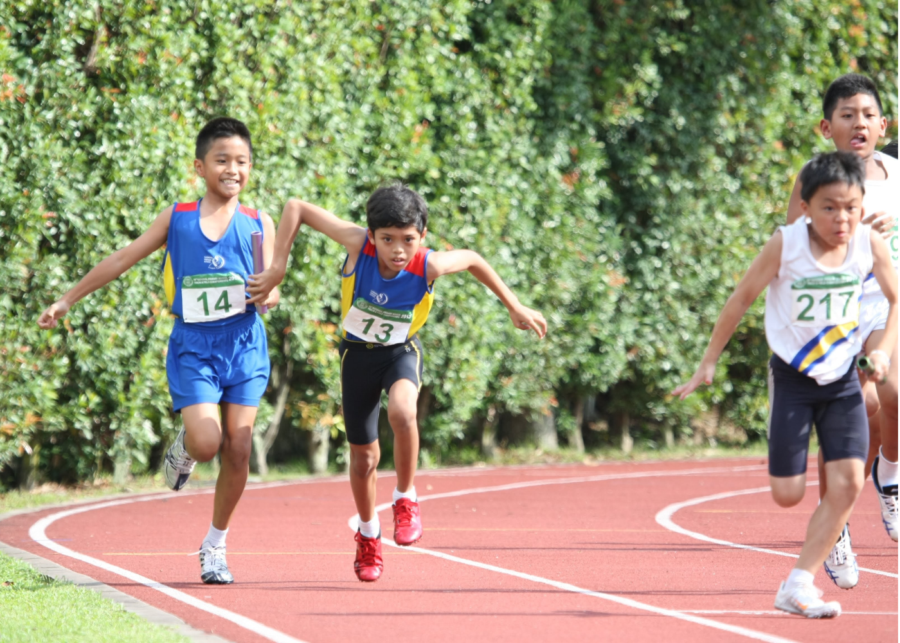
Yes, and it is underused.
The Junior Sports Academy, run by MOE with the National Youth Sports Institute, gives selected Primary 4 and Primary 5 students up to two years of coaching at no fee. Schools nominate students for it, so ask your child’s form teacher directly rather than waiting to be noticed.
For costs more broadly, there is the MOE Financial Assistance Scheme and the Opportunity Fund, and for independent schools there is the Independent School Bursary. If your child is talented and training costs are the obstacle, ask the primary school before you rule anything out. Schools have discretion and information that does not always make it onto a website.
What happens if your child doesn’t get a DSA offer?
Most applications do not end in an offer. That is arithmetic, not judgment. A 20% cap across a heavily oversubscribed system means the majority of applicants get a no.
Two things worth saying out loud to your child, ideally before the outcome rather than after. First, a no from a selection panel is a statement about fit and available places, not about whether they are good at the thing. Second, they still get to keep doing it. The activity was never the application.
And the S1 Posting Exercise is not a consolation prize; it is how most of the country gets into secondary school, and it works.