A rainbow baby changes everything. And nothing. Nurul Rasheed writes about how welcoming new life after loss taught her to hold joy and grief in the same breath.
There are two versions of me as a mother.
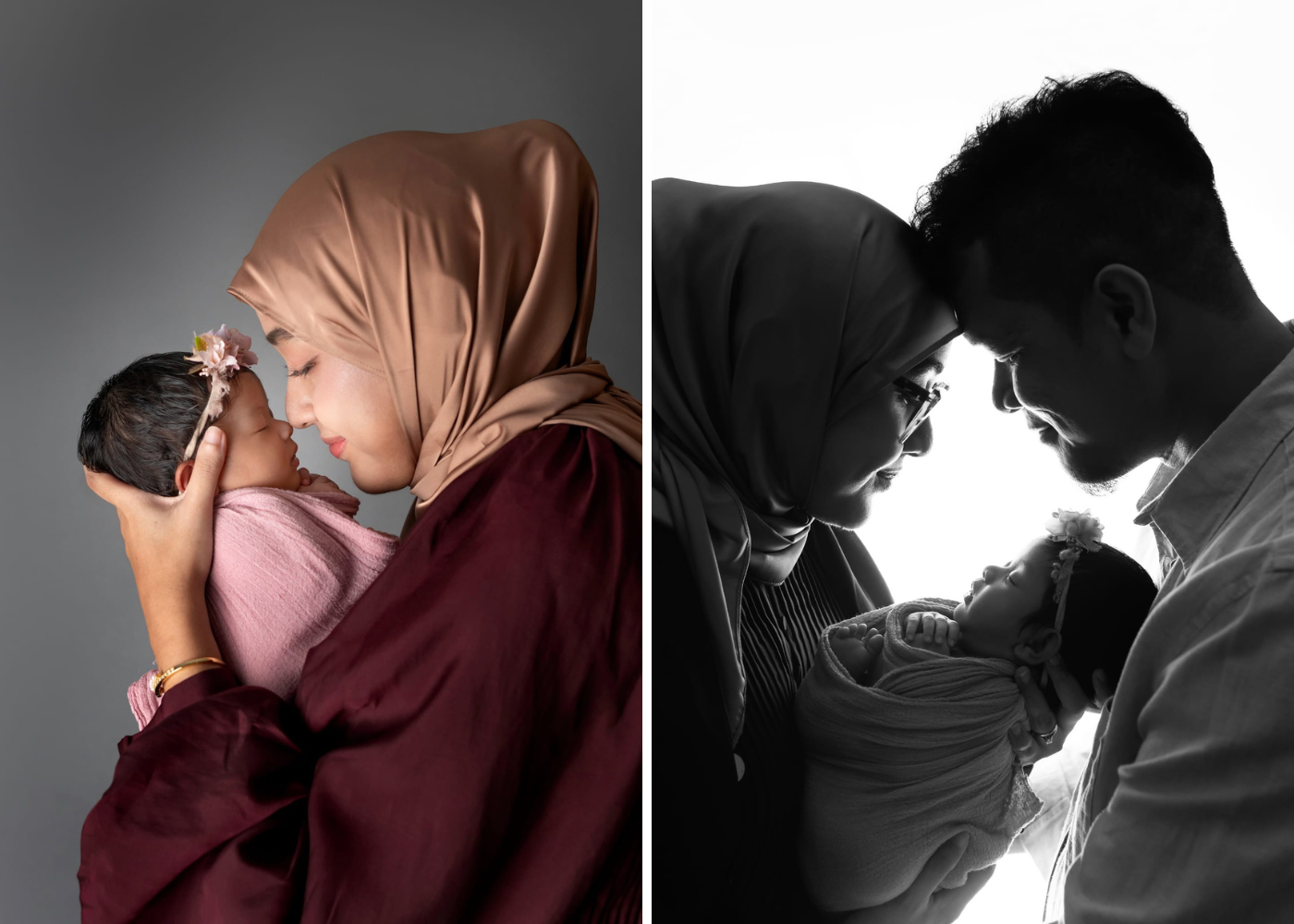
One was born out of trauma and grief, after losing my son Emir Mateen in 2023 at 25 weeks. And then, somewhere between that heartbreak and healing, another chapter was written for us when we found out I was pregnant again with my daughter Emira Iman. We welcomed her in February this year.
They call babies like her “rainbow babies” — born after loss, after storms, after the sky has broken open and poured grief into your life. It’s a beautiful term, but also a complicated one. Because rainbows don’t erase storms. They exist because of them. Through her I learnt how to hold hope in one hand and grief in another.
I want to tell you what that actually looks like. Not the polished version. The real one.
The weight of love before you even meet them
Pregnancy after loss is not the same innocence as before.
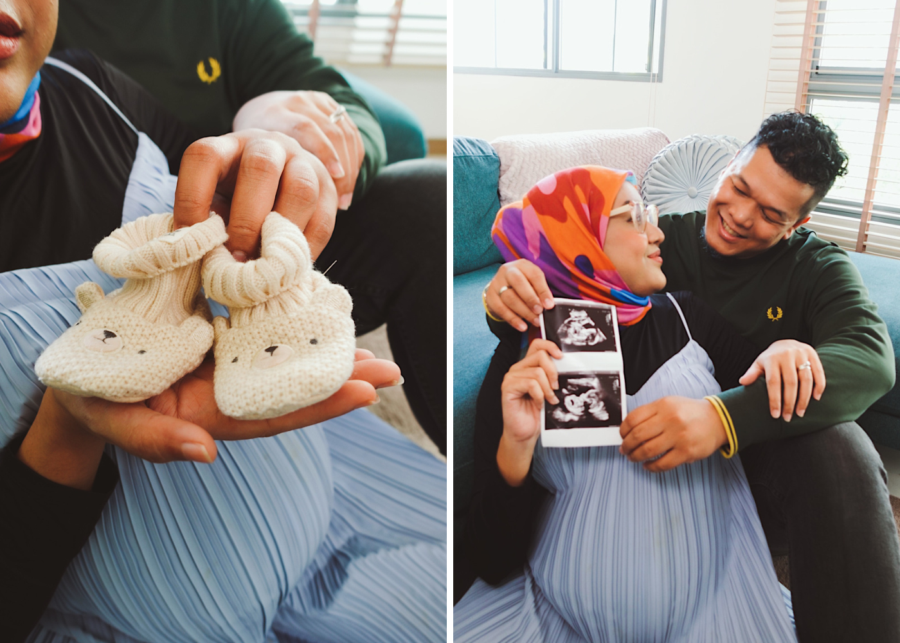
With Emira, every milestone felt fragile. I didn’t “count down” the weeks. I survived them. Every week that passed was a quiet relief. I found myself holding joy and fear in the same breath. I didn’t allow myself to fully exhale. Not yet.
Even the small things: a scan, a kick, a heartbeat, an ache, carried weight. I remember watching the monitor intensely during check-ups, whispering a prayer and searching for reassurance in every flicker of movement. It wasn’t just excitement. It was vigilance.
There was one scan, around 20 weeks, where the sonographer went quiet for a moment too long. Just a beat. Maybe she was adjusting the probe. Maybe she was just focused. And then she asked us to walk around and come in again because the baby was not turning. In that silence, my entire body went cold. My husband and I looked at each other and words did not need to be said. When she finally said, “Everything looks good,” I didn’t feel relief. I felt the delayed collapse of a wall I hadn’t realised I’d built. And then I cried in the car for ten minutes before I could even start driving home.
When we shared the news with people closest to us, their congratulations were gentler this time. Quieter. They’ve walked the worst-case scenario with us. They know what it means to lose. The probability is not zero, and none of us said it out loud… but all of us knew it.
There were things I refused to do during the pregnancy. I refused to set up nursery. I refused to buy any baby clothes. It was my husband who took care of our to-do list and went ahead to buy the big items first without me as I was not ready. I didn’t set up the cot until the last possible moment. I couldn’t. Setting it up felt like tempting something. So the room stayed half-ready, half-held-back — a physical representation of how I was moving through the whole pregnancy: one careful step at a time.
And so, you love differently. Not less, never less. But deeper, more cautiously, more consciously.
When she finally arrived
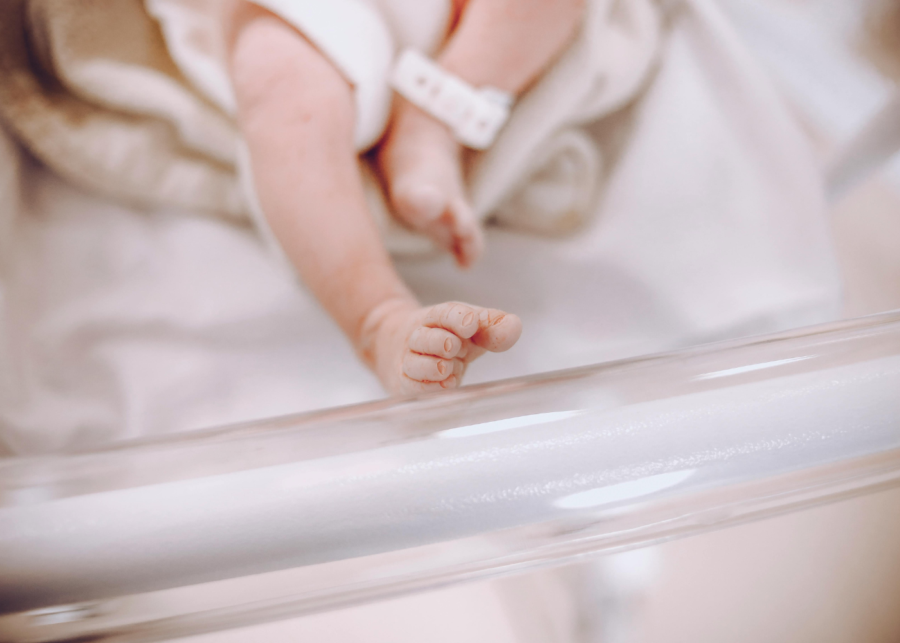
I remember closing my eyes in the operating theatre, the cold of the room pressing in. My husband was beside me, holding my hand, his thumb moving in small circles against my knuckles the way it always does when he doesn’t know what else to do. He was whispering prayers quietly into my ear. The kind you say when you mean them with everything you have. All I could think was: Please let her be okay. Please let her be alive. Please let her cry. I need to hear her cry.
Because with Emir, there was no cry. That’s the thing they don’t prepare you for. The silence. A delivery room that should be loud, and isn’t. I carried that silence inside me for a long time. It lived somewhere just behind my sternum.
Then it happened. Not a full cry at first. A gurgle. Soft. Almost tentative. Then came her voice again — unmistakably louder, sharper, rising into what I now know as her signature: a shrill, siren-like cry that cut through everything. As if she was announcing herself, “Mummy, I’m here.”
I looked at her and I cried. Not the pretty kind. The kind that comes from somewhere so deep it doesn’t feel like your own body producing it. I thought: You’re here. You’re really here. And right behind that thought — quieter, more private — I thought of him. I always will.
In that moment, relief came before joy. Not the loud, dramatic kind. A quiet, overwhelming release. Like finally exhaling after holding your breath for nine months. Maybe longer. Like putting down something very heavy that you’d been carrying for so long you’d forgotten what it felt like to have empty hands. It is a moment I will never forget.
Holding both joy and grief at the same time
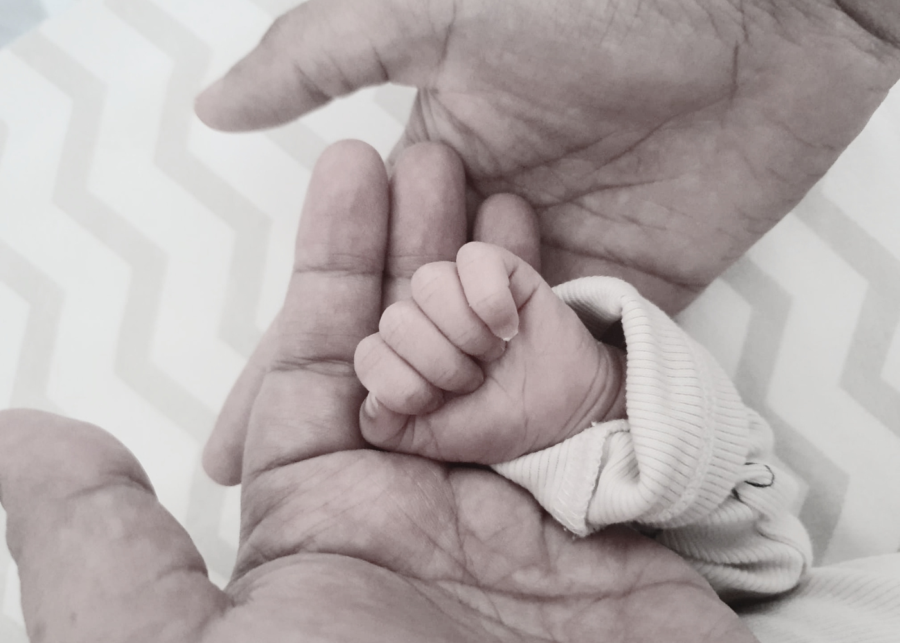
When you have a rainbow baby, there’s this unspoken expectation, even if no one says it outright: that you should just be grateful. That you should “move on.” That you should be happy all the time because at least your baby is here.
Motherhood doesn’t work like that. Not for anyone. And especially not for those of us who have known loss.
Babies do not replace babies. Having Emira does not erase what came before. She is her own person, and her own story. And yet, she exists in a space shaped by loss. That does not make our joy smaller. If anything, it makes it deeper.
There are moments when I hold Emira and feel an overwhelming gratitude so big I don’t know what to do with it. And then there are the 3am feeds, the ones where the house is completely still and it’s just her and me and the dark, where it all catches up with me. Where I sit in that chair and I think about Emir. What his weight might have felt like in my arms. Whether he would have been loud like her, or quiet. Whether he would have had her same little frown when the light bothers him. I don’t cry every time. But I hold him in those moments. The way you hold someone who isn’t there. You learn to do that.
Sometimes I catch glimpses of her and see him. In the way she holds up her arms while asleep. The way her lips curve. In the particular tilt of her head when she’s listening to a sound.
With every milestone she hits, I feel both the fullness of it and the hollow beneath it… the shape of everything I missed with my firstborn. Her first bath. Her first real smile. The morning we brought her home from the hospital, I sat in the back seat beside her car seat and I held her hand the whole way. The whole way. Because I never got to do that before. Because going home empty-handed is something no parent should ever have to know. And now I do know, and I also know this — and both of those things are true at the same time.
Grief doesn’t disappear when a baby arrives. Now, it sits quietly beside me. It no longer consumes — but it remains. A reminder that this life I am holding is not something I take for granted. Not for a single second.
The village that held me up
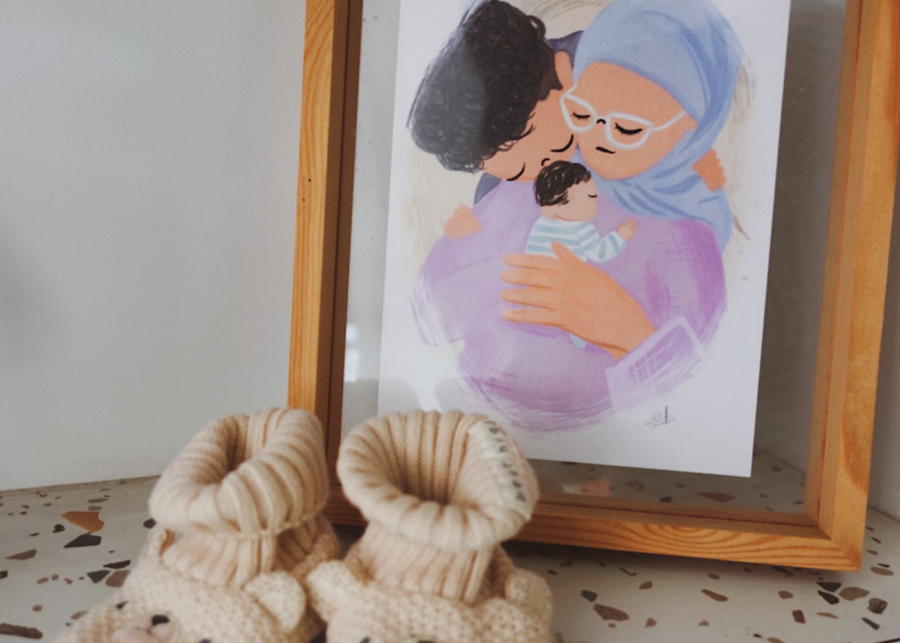
I am deeply grateful for the people around me; my village. Not because they told me to be strong. But because they gave me space to feel. They understood that gratitude and struggle can coexist. That I could love Emira with my entire being and still have hard days. That I could be thankful — and tired. That I could feel joy and still carry something heavier underneath it, and that didn’t make me ungrateful. It made me honest.
There were people who speak about Emir by name, not just as a reference to the loss, but as a person, and that wrecks me in the best possible way. To have your child’s name spoken out loud, months after the world has moved on, is a gift I cannot describe. It means: we remember him too. He counted. He was here.
So when you speak to parents like us, hold space for both. Celebrate with us, yes. But also understand that our joy may come with layers you cannot see. And sometimes, the most loving thing you can do is not pretend those layers aren’t there.
A mother before this day
Mother’s Day used to feel complicated. Because I was already a mother. Just not in the way the world could see.
Last Mother’s Day, I had no baby in my arms. I had a memory, a name, a small box of things I can’t bring myself to go through yet. I had a day the world was celebrating loudly while I moved through it quietly, trying not to let it undo me in public. I went about the day as normally as I could. I smiled when I needed to. And when I got home, I let it out.
This year is different. This first Mother’s Day with Emira in my arms feels surreal… not because I have become a mother, but because I am finally able to hold my motherhood in a visible way. The world can see it now. I can say it out loud without the conversation becoming heavy. That is a gift I don’t take lightly.
And still, I think of the baby who isn’t here. Not as a shadow over this day. As part of it. Because my heart learnt how to love as a mother before I ever held Emira. It learnt in the hardest classroom. Now, it simply holds more.
Faith as an anchor
Our journey to get here was a long one. And through everything, the loss, the silence, the tentative hope, the guarded joy, our anchor has been faith. It stripped away the illusion of control and replaced it with something I didn’t know I needed more: surrender. The kind that doesn’t mean giving up, but giving over. Trusting that the plan is larger than your grief and deeper than your fear.
There is a certain kind of surrender that comes with loss. An even bigger one that comes with receiving again. Both ask everything of you. Both change you permanently. When I look at Emira now, I see both a gift and a responsibility. Not just to raise her well with intention, but to remember how difficult it was to get here. That everything we have is entrusted to us. That she was always a mercy, not a given.
She is our rainbow. And in her first gurgle, her loud, unapologetic cry, her quiet moments of sleep, in the solid weight of her in my arms at 3am, she reminds me of something I am still learning every day: that after the storm, the sky does not return to what it was. It becomes something else entirely.
And sometimes — not always, but sometimes — it becomes even more beautiful.
Nurul Rasheed is a Singapore-based communications professional with over 15 years of experience. After nearly a decade of marriage and a long journey towards her dream of having a family, she now navigates the intricacies of motherhood with her earthside baby and angel baby. She hopes to create space for more honest conversations around grief, healing and the realities of motherhood.